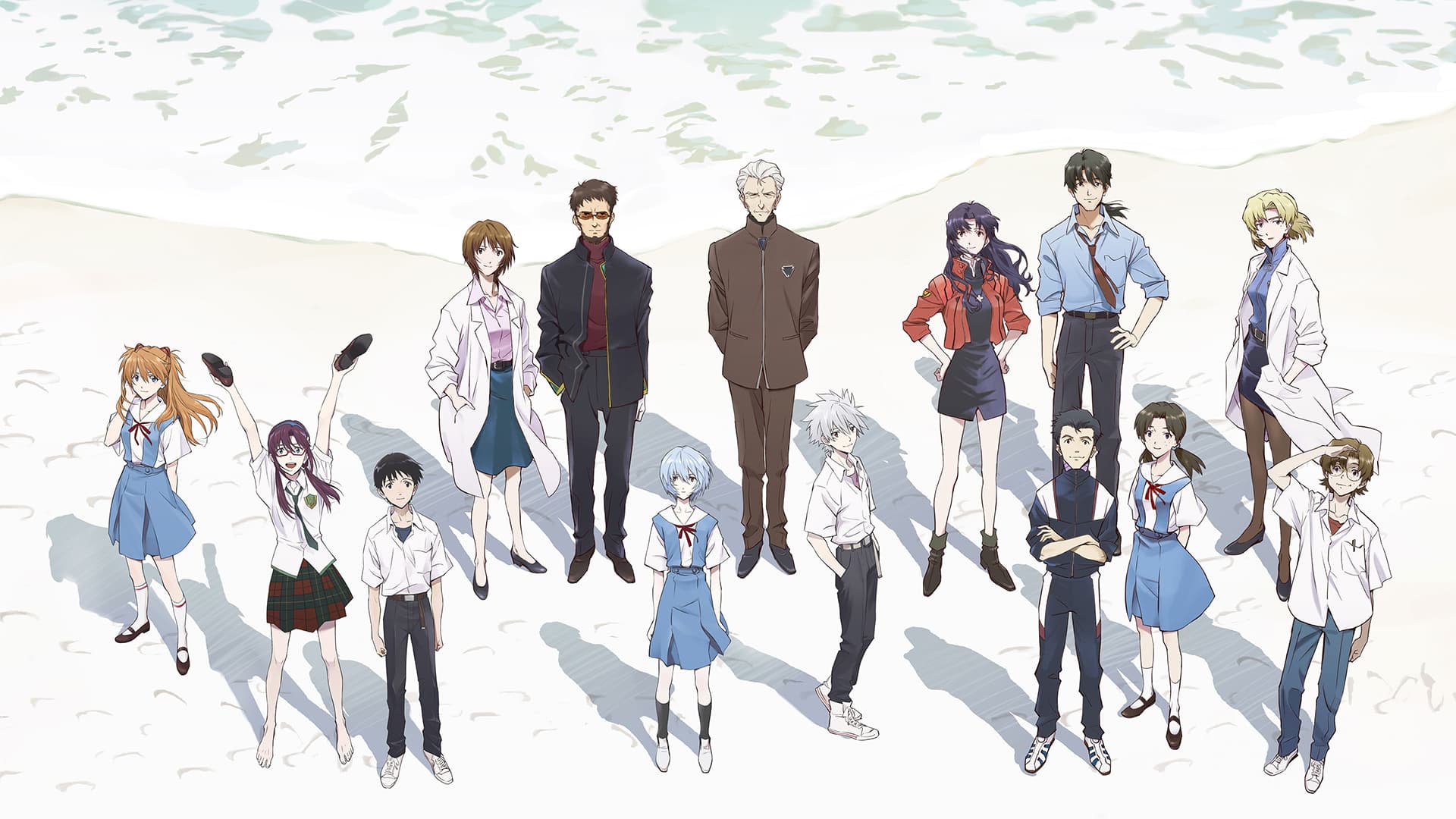

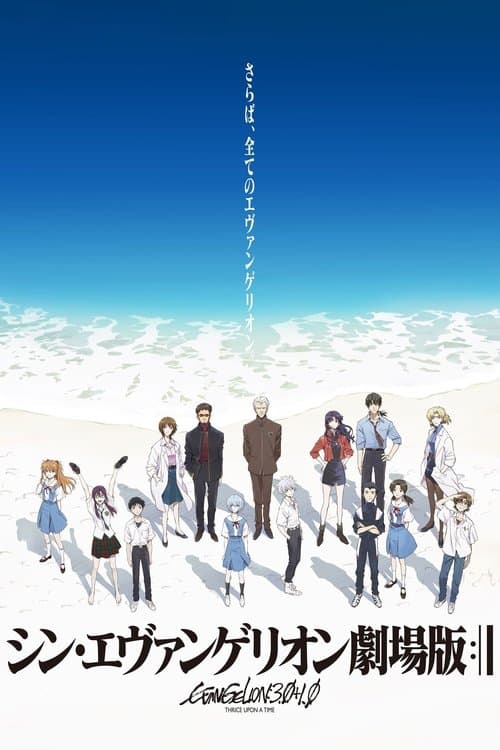
Evangelion: 3.0+1.0 Thrice Upon a Time
シン・エヴァンゲリオン劇場版:||
Does this age rating seem accurate to you?
Detailed parental analysis
Evangelion: 3.0+1.01 is a science-fiction animated film with a dense, gruelling and profoundly melancholic atmosphere that shifts in its second half towards abstract and personal symbolism. The plot follows Shinji Ikari, a traumatised teenager, confronted one last time with an imminent apocalypse and his own inner wounds in a definitive conclusion to the Rebuild saga. The film is addressed exclusively to adolescents and adults already familiar with the franchise; newcomers have no chance of grasping its meaning without having watched at least the three preceding instalments.
Parental and Family Portrayals
The father-son relationship is the central dramatic nexus of the film. The father is for a long time a figure of abandonment, coldness and destruction, and the entire saga has constructed around this relationship an architecture of intergenerational wounds. This final chapter chooses to offer reconciliation, not through erasure of the past but through dialogue finally made possible. The film explicitly states that toxic transmission can be broken, that the son is not condemned to repeat the father's mistakes, and that this rupture comes through words rather than violence. This is one of the narrative's most solid moral propositions, accessible to discussion.
Violence
Violence is intense and multiple in form. Battles involve giant mechas, firearms and massive large-scale destruction, with considerable visual power. An explicitly graphic scene shows a man shot in the head, brain matter visible, in a brief but unambiguous sequence. Another moment visually depicts an object ejected from an eyeball. Characters are brusque and physically aggressive with one another, with a scene of imposed physical force upon a character in distress. Violence serves the narrative's purpose concerning trauma and cyclical destruction rather than spectacularising it for pleasure, but its intensity remains high and certain images are difficult to forget.
Underlying Values
The film constructs a sustained critique of imposed sacrifice logic, the instrumentalisation of the child by adult figures of authority, and the ideology of 'only the chosen one can save the world'. The first part explicitly valorises the ordinary collective, everyday gestures, patient reconstruction by anonymous people, in direct opposition to the solitary messianism of previous episodes. Shinji's arc is that of a character who learns to relinquish the burden of carrying the world alone and to accept the care of others. These values are structural and affirmed, not implicit, and constitute a remarkable counterpoint to classical chosen-one narratives.
Social Themes
The first half of the film insistently establishes a vision of post-apocalyptic reconstruction where rural agricultural communities recover simple, solidary and rooted rhythms of life. This picture functions as a reflection on collective resilience, the value of nourishing work and the possibility of living with dignity outside dominant structures of power. Ecology here is less an intellectual theme than a concrete practice shown with tenderness.
Sex and Nudity
The film includes non-sexual nudity, notably a breastfeeding scene and full female nudity in which sensitive areas remain covered. These representations stand within the tradition of the franchise and are neither suggestive nor eroticised.
Language
Crude language is present in sporadic fashion, with a few insults and profanities whose register corresponds to situations of tension or distress. The intensity remains moderate and the emotional context justifies these occurrences without trivialising them.
Strengths
The film is a closing work of rare emotional ambition, which accepts disappointing spectacle expectations in order to take time for care, silence and speech. The first half, devoted to scenes of communal life and shared meals, is filmed with deliberate gentleness that contrasts effectively with the apocalyptic violence to come. The chosen resolution, which rejects messianic sacrifice in favour of a gesture of liberation and responsibility, is a courageous narrative stance. For a teenager who is a fan of the franchise, the film offers dense reflection on trauma, family legacy and identity construction that far exceeds the codes of the genre. The 155-minute runtime is entirely justified by the narrative breathing space the film grants itself.
Age recommendation and discussion points
This film is not addressed to young children or adolescents without prior knowledge of the franchise, and is not recommended before age 14 due to graphic violence and sustained emotional weight. For an adolescent aged 15 to 16 who is familiar with the saga, it can be a particularly rich support for discussion. Two angles naturally impose themselves after viewing: how can a damaged father-son relationship be repaired, or at least named, without erasing what has been done, and why does the film choose to present healing as a collective rather than heroic matter.
Synopsis
In the aftermath of the Fourth Impact, stranded without their Evangelions, Shinji, Asuka and Rei find refuge in one of the rare pockets of humanity that still exist on the ruined planet Earth. There, each lives a life far different from their days as an Evangelion pilot. However, the danger to the world is far from over. A new impact is looming on the horizon—one that will prove to be the true end of Evangelion.
About this title
- Format
- Feature film
- Year
- 2021
- Runtime
- 2h 35m
- Countries
- Japan
- Original language
- JA
- Studios
- khara
Content barometer
- Violence4/5Strong
- Fear4/5Intense
- Sexuality1/5Allusions
- Language2/5Moderate
- Narrative complexity3/5Complex
- Adult themes0/5None
Watch-outs
- Death
- Violence
Values conveyed
- Perseverance
- Forgiveness
- resilience
- reconciliation
- solidarity
- hope