Ernest & Celestine: A Trip to Gibberitia
Does this age rating seem accurate to you?
Detailed parental analysis
Ernest and Célestine: The Journey to Charabie is an animated film with a gentle and poetic tone, tinged with a visual lightness that contrasts with the gravity of its subject matter. Ernest and Célestine set off on a journey to Ernest's native country, Charabie, where music is forbidden by decree, and they find themselves caught up in a cultural resistance against an authoritarian regime. The film is primarily aimed at children from 6 years old, but its political subtext makes it also a relevant topic for conversation for families with older children.
Social Themes
Totalitarianism is the central driving force of the narrative: in Charabie, music is forbidden by the authorities, and those who practise it risk arrest. The film depicts an oppressive regime with a clarity accessible to children, without ever tipping into anxiety. Civil disobedience is presented as a legitimate and courageous response to unjust laws, making it an ideal starting point for discussing with a child the difference between a fair rule and an arbitrary one. The treatment remains muted and metaphorical, but the political message is real and deliberate.
Underlying Values
The film structures its narrative around freedom of expression and the right to art as an irreducible common good. Resistance to unjust authority is valued without ambiguity, which deserves to be discussed with the child to distinguish legitimate disobedience from mere rule-breaking. The friendship between Ernest and Célestine, two beings of different natures, also carries a message of acceptance of difference that runs throughout the film without being heavily emphasised.
Violence
Violence remains within the bounds of animated children's storytelling, but a few sequences have real intensity. Célestine nearly gets swept away by a snowstorm in a scene that may worry younger viewers. Ernest is arrested by police and imprisoned, and officers use fire hoses against characters. A van falls into a ravine and is destroyed. These elements are treated without gore or cruelty, but they establish an authentic narrative tension that may surprise a child under 5 years old.
Parental and Family Portrayals
Ernest's maternal figure plays a role in the narrative, introduced in a scene where her voice causes great fright to her son before being recognised. This relationship deserves attention: it touches on the question of Ernest's family past and what returning to his native country represents for him, with a discrete but present emotional weight.
Strengths
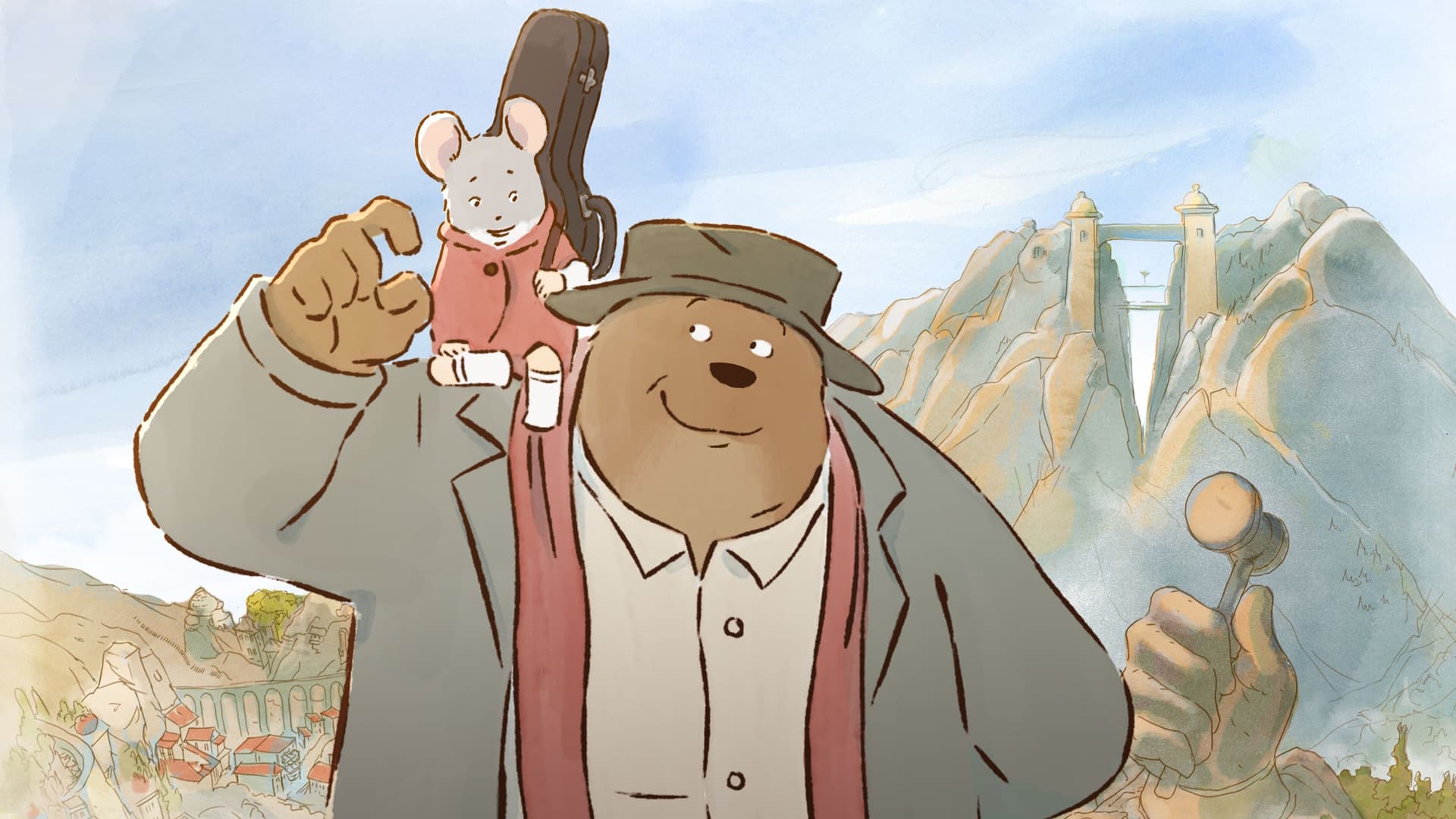
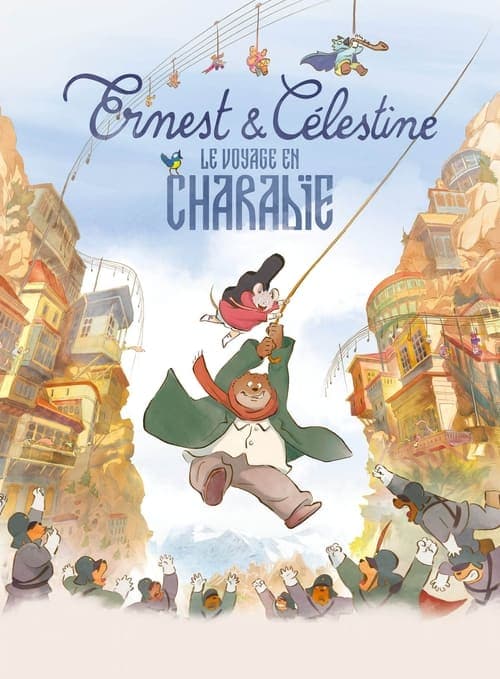
The film extends with consistency the graphic universe of the first film, with a warm watercolour style that gives each frame a visual texture rare in contemporary animation. Its principal merit is to treat a serious political subject, cultural oppression and the prohibition of art, with a lightness that does not betray the gravity of the subject matter. Music occupies a central and non-decorative place in the narrative, making it a useful film for discussing with children what art represents in a society. The narrative is less emotionally powerful than the first film in the series, but it gains in thematic ambition what it perhaps loses in intimacy.
Age recommendation and discussion points
The film is suitable from 6 years old without major reservations. Two angles of discussion are worth opening after viewing: why do some governments forbid music or art, and what does this tell us about their relationship with power? And how do we distinguish a rule we must respect from a rule it is right to refuse?
Synopsis
Ernest and Celestine are travelling back to Ernest's country, Gibberitia, to fix his broken violin. This exotic land is home to the best musicians on earth and music constantly fills the air with joy. However, upon arriving, our two heroes discover that all forms of music have been banned for many years - and for them, a life without music is unthinkable. Along with their friends and a mysterious masked outlaw, Ernest and Celestine must try their best to bring music and happiness back to the land of bears.
About this title
- Format
- Feature film
- Year
- 2022
- Runtime
- 1h 20m
- Countries
- France, Luxembourg
- Original language
- FR
- Directed by
- Julien Chheng, Jean-Christophe Roger
- Main cast
- Lambert Wilson, Pauline Brunner, Michel Lerousseau, Céline Ronté, Lévanah Solomon, Jean-Marc Pannetier, Christophe Lemoine, Georges Caudron, Jean-Philippe Puymartin, Charlotte Hennequin
- Studios
- France 3 Cinéma, Les Armateurs, StudioCanal, Folivari, Melusine Productions
Content barometer
- Violence2/5Moderate
- Fear2/5A few scenes
- Sexuality0/5None
- Language0/5None
- Narrative complexity1/5Accessible
- Adult themes0/5None
Values conveyed
- Courage
- Friendship
- Acceptance of difference
- freedom
- creativity