
Encanto
Does this age rating seem accurate to you?
Detailed parental analysis
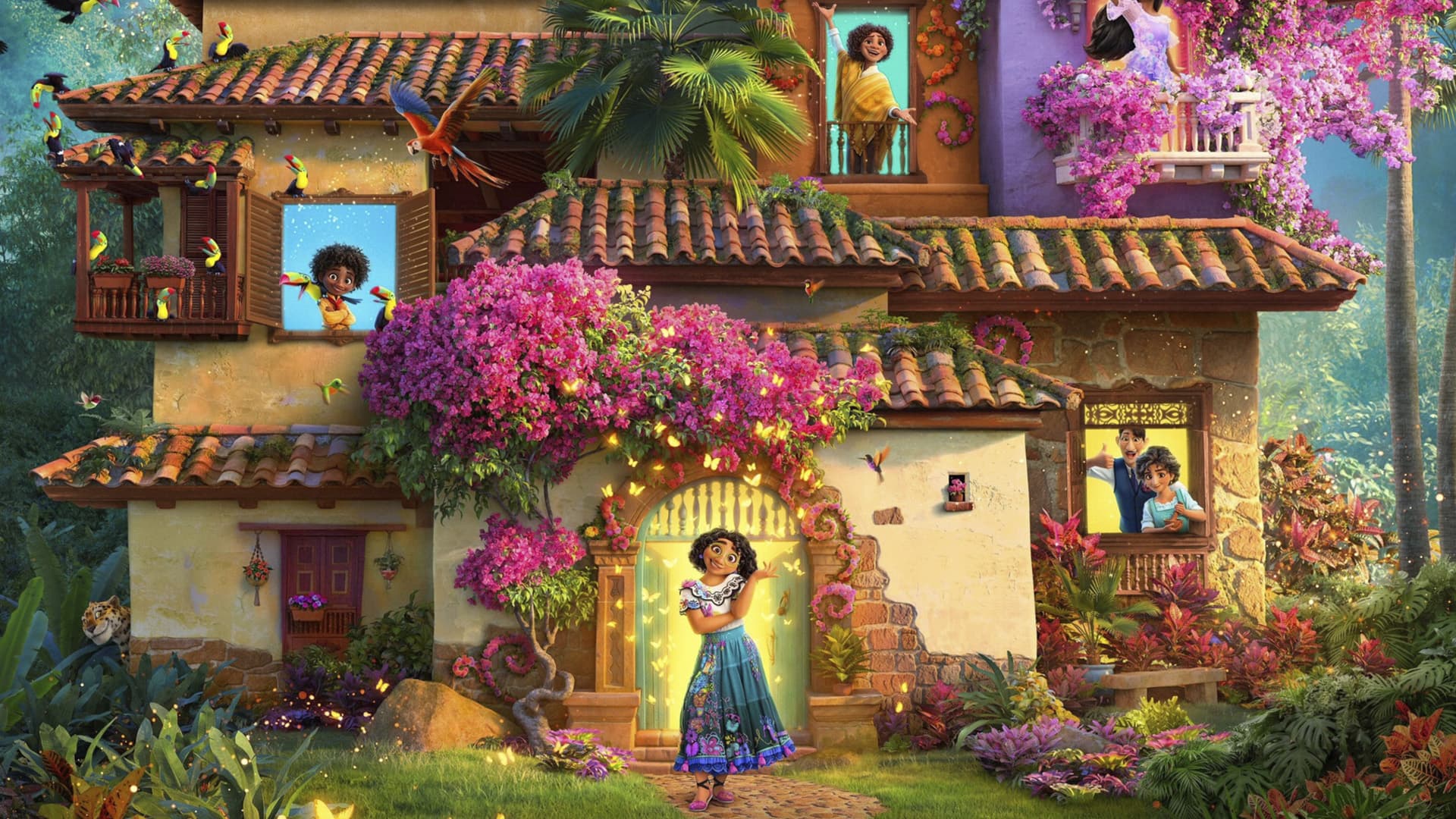
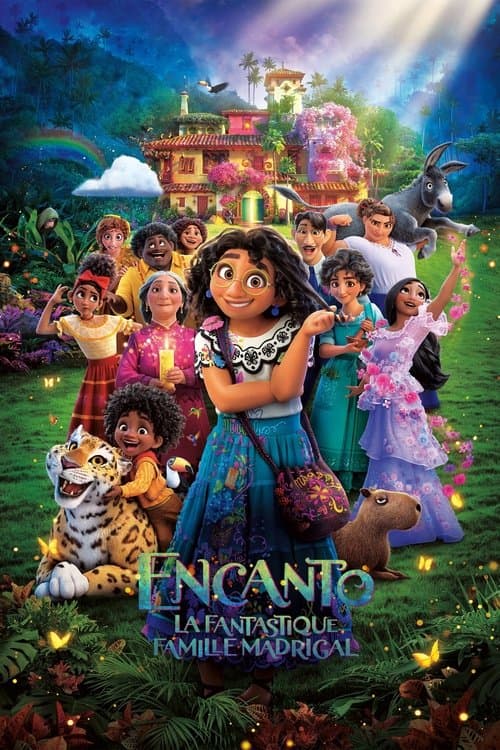
Encanto is a Disney animated film with a warm and colourful atmosphere, yet traversed by emotional tensions that run deeper than first appears. The plot follows Mirabel, the only member of her family not to have received a magical gift, as she attempts to save the enchanted house that protects her loved ones. The film is primarily aimed at children from 6 to 7 years old, but its reflection on family trauma and intergenerational expectations speaks equally to teenagers and adults.
Parental and Family Portrayals
Family dynamics lie at the heart of the film and its richest ground for discussion. The grandmother, Abuela, embodies an authority that appears benevolent on the surface but is profoundly wounded, imposing a precise function on each child in service of the community. The film does not demonise her: it explains where this rigidity comes from and grants her a sincere redemption. This nuanced treatment is a real strength, but it deserves to be accompanied by reflection: a child may take from it that excessive authority is always excusable as long as it has a painful origin. The maternal figure is loving but effaced, and several adult characters are shown as unable to name their suffering, which is precisely what the narrative seeks to unravel.
Underlying Values
The film builds its central message around a rejection of performance as a condition of personal worth: Mirabel has no gift, and it is precisely she who saves her family. This is a deliberate counterpoint to meritocratic logic, and it is well executed. However, the film also strongly values family belonging and group cohesion, to the point that the resolution comes through reconciliation rather than individual emancipation. This is not a flaw in itself, but it is worth asking a child or teenager whether one must always forgive and stay, or whether certain situations justify leaving. The question of personal sacrifice in the name of family collectivity is raised without being truly settled.
Social Themes
The film opens with a scene of forced displacement: the Madrigal family flees armed violence and finds refuge in an isolated valley. This context of traumatic migration is treated with restraint but forms the foundation of all of Abuela's psychology and, by extension, the pressure she exerts on her descendants. The link between migratory trauma, the need for control, and intergenerational transmission is drawn with real narrative coherence. For a child, this context may go unnoticed; for a teenager, it is a concrete entry point for discussing what families carry without speaking of it.
Violence
Violence is limited and non-graphic. The grandfather's death occurs off-screen, in a context of flight and armed persecution, and is evoked rather than shown. Sequences show the magical house cracking and threatening to collapse, with genuine visual tension. These moments may be striking for younger children, but they fit within a logic of classical narrative peril, without indulgence.
Strengths
Encanto is one of the rare mainstream animated films to treat intergenerational psychology seriously without reducing it to a good-versus-evil conflict. Each secondary character carries a specific wound linked to family pressure, and the film takes time to make them legible without slowing the pace. Lin-Manuel Miranda's songs are uneven in memorability, but some, notably the one devoted to the character of Bruno, achieve a narrative and emotional effectiveness rare in the genre. The representation of Colombian culture, architecture, costumes and music is careful and not folklorised. The film succeeds in making complex psychological mechanisms accessible to a young audience, such as silence as a mode of survival or the pressure for excellence as a form of poorly expressed love, making it a concrete tool for family conversation.
Age recommendation and discussion points
The film is suitable from age 6 for accompanied viewing, and fully accessible independently from age 8 onwards. Two angles of discussion are particularly worth exploring: asking the child whether Mirabel was right to want to prove her worth to her family, and what this says about the way we judge people by what they do rather than who they are; and exploring with a teenager why Abuela acts as she does, and whether understanding someone is enough to forgive them.
Synopsis
The tale of an extraordinary family, the Madrigals, who live hidden in the mountains of Colombia, in a magical house, in a vibrant town, in a wondrous, charmed place called an Encanto. The magic of the Encanto has blessed every child in the family—every child except one, Mirabel. But when she discovers that the magic surrounding the Encanto is in danger, Mirabel decides that she, the only ordinary Madrigal, might just be her exceptional family's last hope.
About this title
- Format
- Feature film
- Year
- 2021
- Runtime
- 1h 42m
- Countries
- United States of America
- Original language
- EN
- Studios
- Walt Disney Animation Studios
Content barometer
- Violence1/5Mild
- Fear2/5A few scenes
- Sexuality0/5None
- Language0/5None
- Narrative complexity2/5Moderate
- Adult themes0/5None
Values conveyed
- Acceptance of difference
- Forgiveness
- family
- support
- self acceptance
- resilience