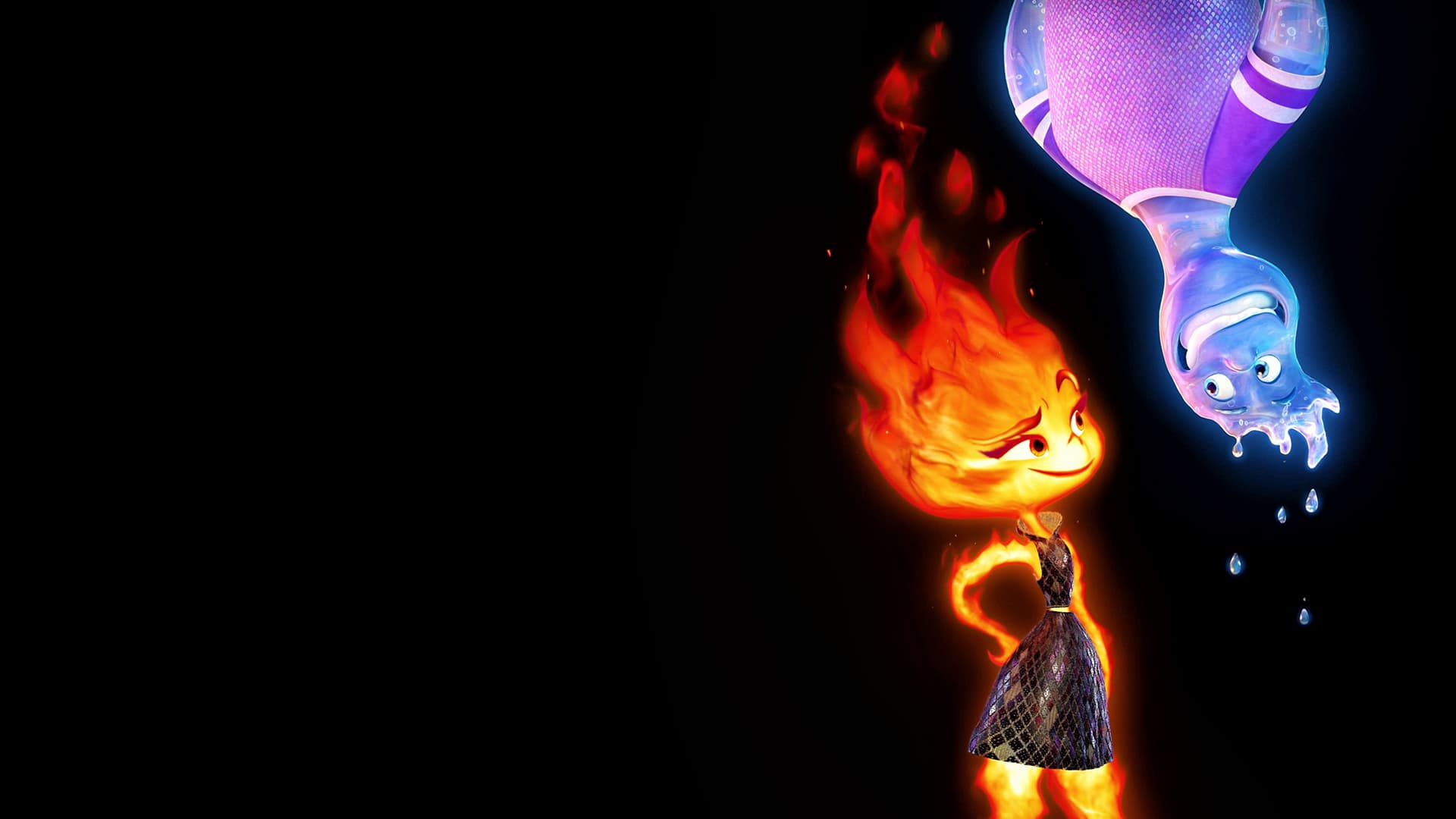

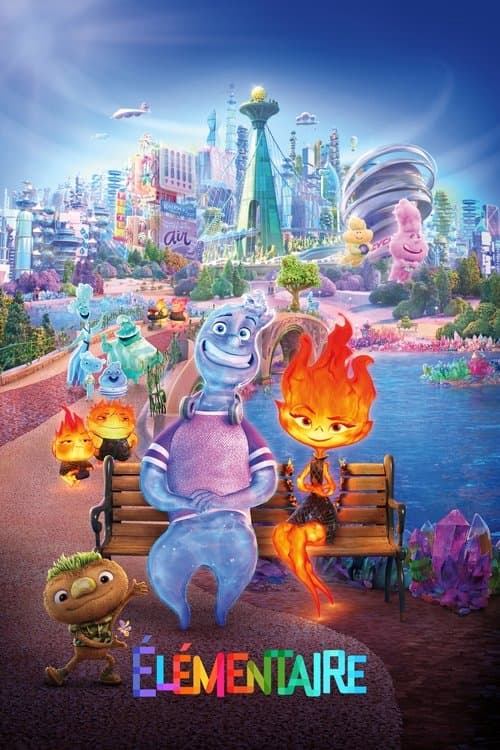
Elemental
Does this age rating seem accurate to you?
Detailed parental analysis
Elemental is a Pixar animated film with a warm and emotionally dense atmosphere, navigating between romantic comedy and family drama. The plot follows a young fire woman raised in an immigrant community living apart from the rest of the city, whose encounter with a young water man will overturn her view of herself and the future her parents have mapped out for her. On the surface, the film is aimed at children from 7 or 8 years old, but its true emotional and thematic depth speaks primarily to pre-teens, teenagers and adults, particularly those with personal experience of immigration or intergenerational family expectations.
Social Themes
Migration is the central subject of the film, treated with a rare sincerity in family animation. The arrival of Ember's parents in a hostile city, their settlement in a de facto segregated neighbourhood, the absurd administrative barriers they encounter, and the weight this places on their daughter constitute the true engine of the narrative. The film does not hide the harshness of this journey: the opening scene shows a maritime crossing and arrival in a society that does not truly want newcomers, and several sequences illustrate an ordinary rejection made banal by institutions. The elemental metaphor raises a legitimate debate: the restrictions imposed on fire characters are partly justified by real danger, which slightly weakens the activist thrust of the argument. But for parent-child conversation, this ambiguity is precisely useful: it allows one to question the boundary between collective caution and structural discrimination.
Parental and Family Portrayals
Ember's parents, and particularly her father, are at the heart of the film's emotional weight. The father is a loving, self-sacrificing character, deeply endearing, but who has passed on to his daughter a considerable burden: that of succeeding in order to justify what he has given up for her. This is not mistreatment, but a form of engulfing love that suffocates without knowing it. The film handles this mechanism with real finesse, showing how the child internalises parental sacrifices to the point of renouncing her own desires. The resolution is generous towards the parents without absolving them of all responsibility, which makes it a rare parental portrait in animation: neither heroic nor toxic, simply human and complex.
Underlying Values
The film constructs a clear tension between two systems of values: family transmission and continuity on one hand, individual autonomy and the right to choose one's own path on the other. The resolution leans towards autonomy without denying filial gratitude, which is honest but may deserve discussion with children: the film suggests one can reconcile everything, whereas reality often imposes real sacrifices. Work and effort are presented as central virtues, embodied by the immigrant parents, without ever tipping into naive meritocratic discourse. Romantic love is treated as an identity revealer rather than an end in itself, which is a more solid narrative stance than the genre average.
Violence
There is no violence in the classical sense in this film. However, two sequences of a catastrophic nature merit mention for parents of young children: a destructive storm that devastates dwellings and involves loss of life off screen, and several flooding scenes where fire characters risk evaporation, that is, a form of death. These moments are treated with genuine tension, without gore indulgence, but with sufficient emotional intensity to worry a child under 6 or 7 years old. The fear generated is contextual and narrative, not gratuitous.
Strengths
Elemental is one of Pixar's most personally rooted films in recent years: the director has openly fed the narrative with his own experience as a child of Korean immigrants, and this sincerity is felt in every sequence involving Ember's family. The artistic direction is inventive, with a city design that visually conveys spatial segregation without needing to explain it. The film achieves something rather difficult: moving adults on themes of intergenerational sacrifice and immigrant identity, whilst maintaining sufficient clarity for younger children. The romance works because it is built on mutual curiosity and complementarity rather than pure attraction. Finally, the film takes the risk of not offering an entirely clean resolution on themes of discrimination, which makes it more honest than comfortable.
Age recommendation and discussion points
The film is accessible from 7 years old for accompanied viewing, but its full emotional and thematic resonance sits rather from 9 or 10 years old, and it will speak even more directly to teenagers. After viewing, two questions are worth asking: in what way do parental sacrifices give the right to direct the lives of their children, and to what extent, and is there a difference between protecting a group and discriminating against it, and how do you recognise it.
Synopsis
In a city where fire, water, land and air residents live together, a fiery young woman and a go-with-the-flow guy will discover something elemental: how much they have in common.
About this title
- Format
- Feature film
- Year
- 2023
- Runtime
- 1h 42m
- Countries
- United States of America
- Original language
- EN
- Studios
- Pixar
Content barometer
- Violence1/5Mild
- Fear2/5A few scenes
- Sexuality0/5None
- Language0/5None
- Narrative complexity2/5Moderate
- Adult themes0/5None
Values conveyed
- Acceptance of difference
- Perseverance
- Autonomy
- self-acceptance
- respect for differences
- family love
- courage
- cultural identity
- friendship
- personal growth