Dunder
Does this age rating seem accurate to you?
Detailed parental analysis
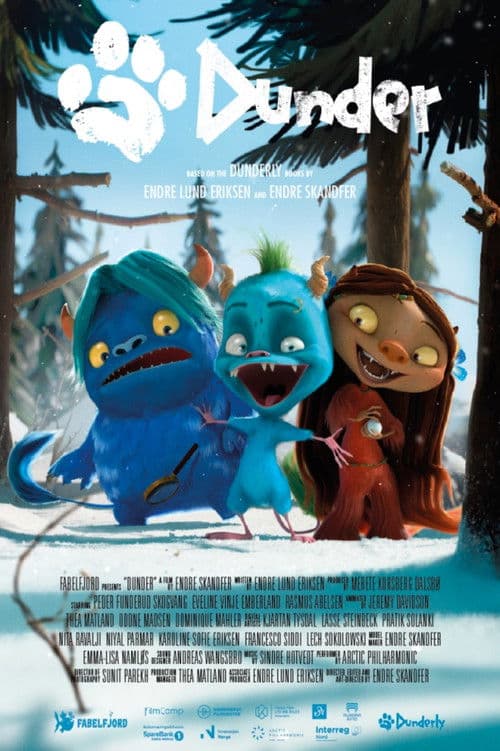
Dunder is a silent animated short film lasting ten minutes, with an atmosphere that shifts between playful and tense, following three monstrous creatures whose friendship is tested by jealousy and rivalry. Without a single line of dialogue, the film shows how a conflict between two characters can escalate before reaching a resolution grounded in empathy. It is aimed primarily at young children, with accessibility from three or four years old for the braver ones.
Underlying Values
The film builds its narrative around two complementary ideas: aggression stems from suffering, and helping someone who has hurt you remains the right thing to do. The jealous character commits a clearly cruel action, then becomes aware of it without being forced to do so. This moral movement, shown without dialogue and therefore entirely through performance and direction, is one of the film's strongest pedagogical assets. The contrast between two styles of relationship, one combative and the other contemplative, invites reflection on what it truly means to play together. Revenge is presented as a dead end, without being delivered in a heavy-handed moral tone.
Violence
Violence remains within the register of physical comedy and childhood rivalry: snowball fights, shoving, and a scene in which one character blocks the entrance to a cave to trap a rival inside. This latter sequence, accompanied by tense music in a dark setting, is the film's most intense moment and may startle very young children. A character also falls into a hole and finds himself in danger. These moments are narratively justified and lead to a positive resolution, but they deserve to be anticipated for children who are particularly sensitive to oppressive atmospheres.
Discrimination
The film explicitly values tolerance towards characters with a monstrous appearance, inviting the viewer not to judge by looks. At the same time, the most aggressive character wears a piercing above his eyebrow, a visual detail that associates a body marking with hostile behaviour. This stereotypical shorthand is sufficiently clear to merit a brief remark after viewing, particularly with older children capable of noticing it.
Strengths
Without a single word of dialogue, Dunder succeeds in telling a story that is emotionally legible for a very young audience, which testifies to genuine mastery of visual storytelling. The pacing management effectively alternates between light sequences and moments of tension, without ever losing the thread of emotion. The film has been awarded at several international animation festivals, recognition that reflects an artistic coherence and a fineness of writing that are rare for such a short format. Its ability to address jealousy, reconciliation and empathy without resorting to words makes it a particularly flexible tool for discussion with young children.
Age recommendation and discussion points
The film is suitable from three or four years old, with parental accompaniment advised for the youngest when facing the tense sequences in the cave. Two angles of discussion are worth exploring after viewing: why did Bulder want to take revenge, and what made him change his mind? And also: does a character's appearance really tell us how they will behave?
Synopsis
Bulder's snowball fight with his best friend Modika was interrupted when Lex steals her attention away with some quiet playtime. Frustrated, Bulder attempts to win her back, resulting in a mischievous plan that he may well come to regret.
About this title
- Format
- Short film
- Year
- 2016
- Runtime
- 9m
- Countries
- Norway
- Original language
- NB
- Studios
- Fabelfjord
Content barometer
- Violence1/5Mild
- Fear2/5A few scenes
- Sexuality0/5None
- Language0/5None
- Narrative complexity0/5Simple
- Adult themes0/5None
Watch-outs
- Gender stereotypes
Values conveyed
- Friendship
- Acceptance of difference
- Compassion
- Forgiveness
- overcoming jealousy
- taking responsibility
- mischief