Ducobu 4 President
Ducobu 4 President
Your feedback improves this guide
Your feedback highlights guides that need a second look and keeps the rating trustworthy.
Does this age rating seem accurate to you?
Sign in to vote
Watch-outs
What this film brings
Content barometer
Violence
1/5
Mild
Fear
0/5
None
Sexuality
0/5
None
Language
1/5
Mild
Narrative complexity
1/5
Accessible
Adult themes
0/5
None
Expert review
This live action school comedy is clearly aimed at children, with a silly, colorful, fast moving tone built around a student election campaign. The main sensitive elements involve cheating, lying, rivalry between classmates, and a few comic humiliations or authority conflicts, with no realistic violence and no lasting threat. The intensity stays low throughout, with frequent slapstick humor, exaggerated situations, and only mild tension that is resolved quickly, making it gentler than many family adventures with stronger peril or suspense. For parents, the most helpful guidance is to remind children that the story makes fun of bad behavior, then talk afterward about honesty, fair play, and how exciting promises can sometimes hide irresponsible choices.
Synopsis
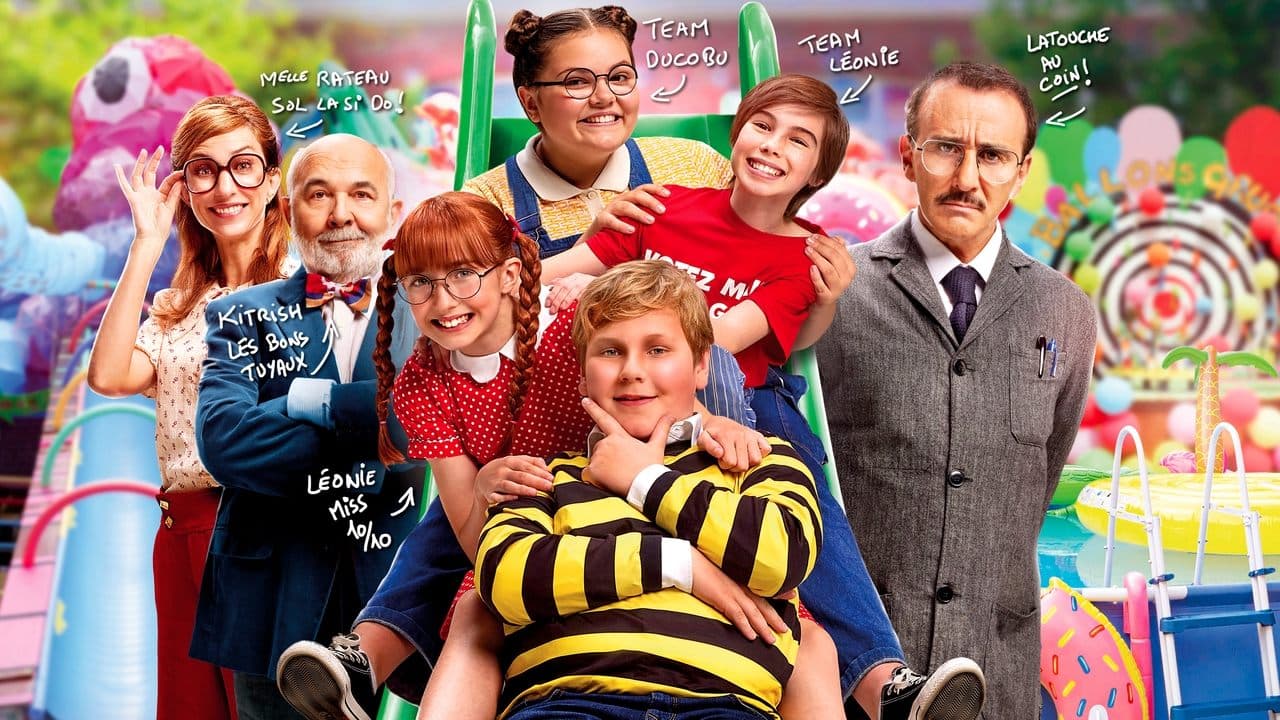
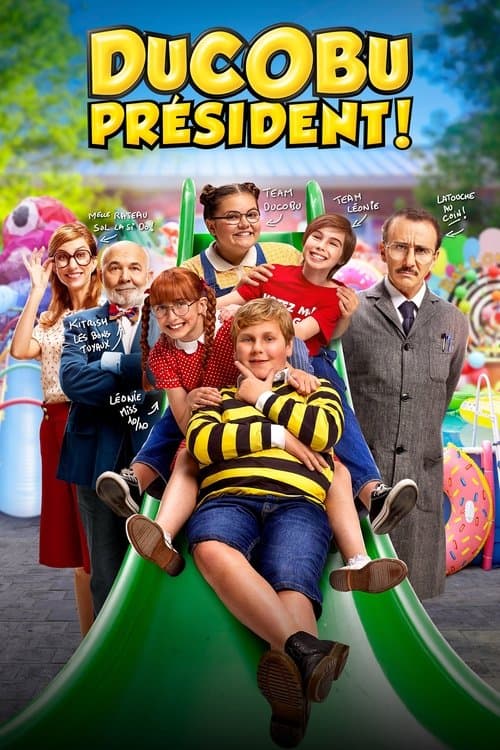
Ducobu is elected president of the school, much to Léonie and Latouche's despair!
Difficult scenes
The election campaign highlights Ducobu's cheating, as he uses tricks and gadgets to win over the other students. Younger children may find this behavior funny before fully understanding that it is meant as a bad example, especially because the film presents it in a playful comic style. After the election, the school turns into a permanent playground, creating a comic clash between students who want fun and adults trying to restore order. The conflict stays light, but it does show authority figures being mocked, which may lead children to ask questions about rules and respecting the school setting. The contest between Léonie and Ducobu relies on ongoing rivalry, with teasing, frustration, and strong competition. Nothing is cruel or realistic, but children who are sensitive to unfairness may react to scenes where serious effort seems less rewarded than dishonest shortcuts.
Where to watch
No verified platform for the US market yet. We keep this section updated as availability changes.
About this title
- Format
- Feature film
- Year
- 2022
- Runtime
- 1h 30m
- Countries
- Belgium, France
- Original language
- FR
- Directed by
- Élie Semoun
- Main cast
- Élie Semoun, Ary Abittan, Émilie Caen, Frédérique Bel, Loïc Legendre, Gabin Tomasino, Adèle Barazzuol, Jeanne Michel, Marguerite Schumacker, François Levantal
- Studios
- Les Films du Premier, Les Films du 24, uMedia, TF1 Films Production
Content barometer
Violence
1/5
Mild
Fear
0/5
None
Sexuality
0/5
None
Language
1/5
Mild
Narrative complexity
1/5
Accessible
Adult themes
0/5
None
Expert review
This live action school comedy is clearly aimed at children, with a silly, colorful, fast moving tone built around a student election campaign. The main sensitive elements involve cheating, lying, rivalry between classmates, and a few comic humiliations or authority conflicts, with no realistic violence and no lasting threat. The intensity stays low throughout, with frequent slapstick humor, exaggerated situations, and only mild tension that is resolved quickly, making it gentler than many family adventures with stronger peril or suspense. For parents, the most helpful guidance is to remind children that the story makes fun of bad behavior, then talk afterward about honesty, fair play, and how exciting promises can sometimes hide irresponsible choices.
Synopsis
Ducobu is elected president of the school, much to Léonie and Latouche's despair!
Difficult scenes
The election campaign highlights Ducobu's cheating, as he uses tricks and gadgets to win over the other students. Younger children may find this behavior funny before fully understanding that it is meant as a bad example, especially because the film presents it in a playful comic style. After the election, the school turns into a permanent playground, creating a comic clash between students who want fun and adults trying to restore order. The conflict stays light, but it does show authority figures being mocked, which may lead children to ask questions about rules and respecting the school setting. The contest between Léonie and Ducobu relies on ongoing rivalry, with teasing, frustration, and strong competition. Nothing is cruel or realistic, but children who are sensitive to unfairness may react to scenes where serious effort seems less rewarded than dishonest shortcuts.