
Ducobu 4 President
Does this age rating seem accurate to you?
Detailed parental analysis
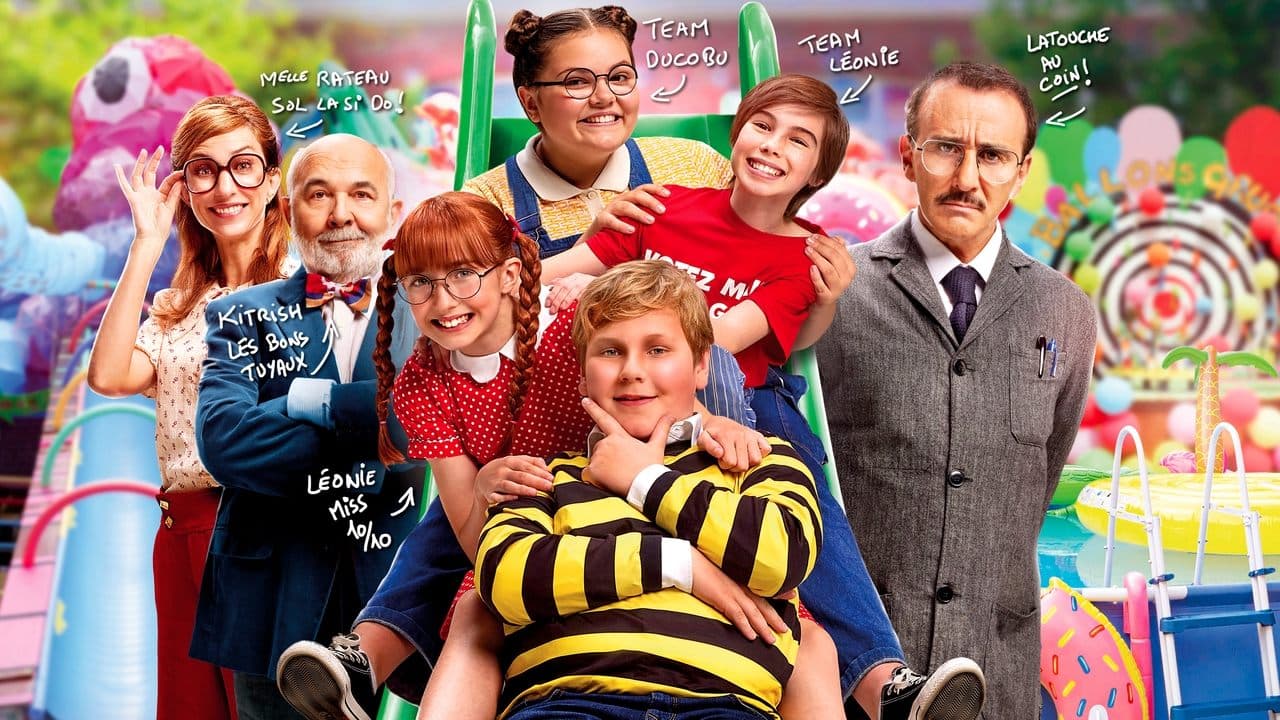
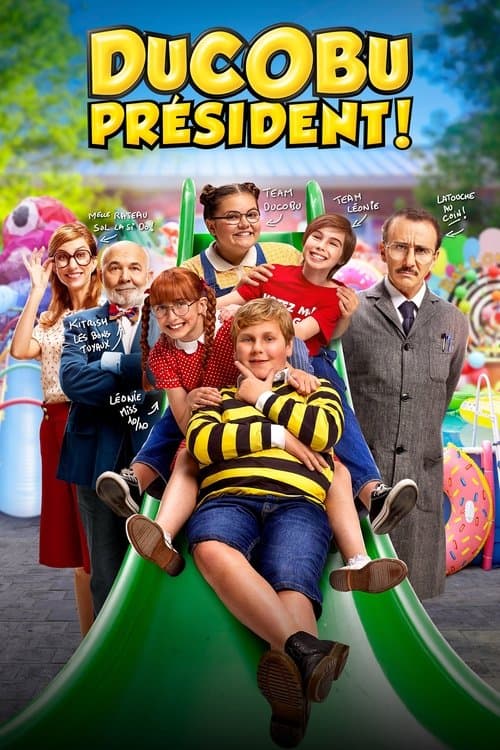
Ducobu Président! is a light and colourful family comedy, an adaptation of the Belgian comic strip featuring the famous mischievous dunce. This time, Ducobu launches an election campaign within his school, pitting his good-natured demagoguery against the rigour of his rival Laurette. The film is primarily aimed at children aged 7 to 10, with a school prank atmosphere that willingly borrows from the codes of political satire.
Social Themes
Politics is the central subject of the film, and the way it handles it deserves attention. The narrative presents democratic life as a space of manipulation, false promises and dirty tricks, without ever truly proposing a positive alternative or civic model. Fake news and demagoguery are used as comic devices, which risks embedding in young viewers the idea that politics boils down to deception. The film does not take the necessary step back to signal that these behaviours are problematic: they are simply funny, and sometimes rewarded by the narrative.
Discrimination
The film contains two unequal representations that deserve to be flagged. A German character is caricatured with a stereotyped accent and traits that evoke historically loaded clichés, without the film taking critical distance. Furthermore, an overweight girl is snubbed and mocked by the hero, whilst an overweight boy is treated as a positive and endearing character: the physical treatment is clearly gendered, without the film noticing or questioning it.
Underlying Values
Ducobu is a hero who succeeds through cunning, circumventing rules and refusing academic effort, and the film presents him as likeable without ever challenging this model. Contesting school authority is a recurring comic device, but it sometimes slides towards a more radical message of destruction or derision of the institution. Ducobu's intelligence is that of resourcefulness and manipulation, valued as qualities without visible moral counterweight.
Violence
Violence remains within the register of physical comedy, but several scenes step outside the bounds of simple farce: a child is put in a bin, another is pulled by the ear by an adult, and a slap is given to a character in a context presented as comic. These elements are treated lightly, which can normalise bullying behaviours or light physical violence between children or from adults. A nightmare scene is moreover flagged as particularly loud and liable to frighten younger viewers.
Strengths
The film works as a brisk school comedy, with a main character whose energy and irreverence have made the comic strip a success for decades. For children already familiar with the Ducobu universe, the film offers genuine emotional continuity. The political satire, even if clumsy in its conclusions, has the merit of introducing notions such as elections, campaigns or electoral promises within an accessible framework, which can serve as a starting point for a conversation about how democracy works.
Age recommendation and discussion points
The film is accessible from age 8 onwards, but it calls for active discussion after viewing rather than passive watching. Two concrete angles to explore with the child: why does Ducobu win by lying, and is that really a good way to do politics? And why does the film mock a girl and a boy who look physically similar in different ways?
Synopsis
Ducobu is elected president of the school, much to Léonie and Latouche's despair!
About this title
- Format
- Feature film
- Year
- 2022
- Runtime
- 1h 30m
- Countries
- Belgium, France
- Original language
- FR
- Directed by
- Élie Semoun
- Main cast
- Élie Semoun, Ary Abittan, Émilie Caen, Frédérique Bel, Loïc Legendre, Gabin Tomasino, Adèle Barazzuol, Jeanne Michel, Marguerite Schumacker, François Levantal
- Studios
- Les Films du Premier, Les Films du 24, uMedia, TF1 Films Production
Content barometer
- Violence2/5Moderate
- Fear2/5A few scenes
- Sexuality0/5None
- Language1/5Mild
- Narrative complexity1/5Accessible
- Adult themes0/5None
Watch-outs
- Bullying
- Gender stereotypes
- Ethnic or racial stereotypes
- Mockery
Values conveyed
- friendship
- honesty
- perseverance
- teamwork