
How to Train Your Dragon
How to Train Your Dragon
Your feedback improves this guide
Your feedback highlights guides that need a second look and keeps the rating trustworthy.
Does this age rating seem accurate to you?
Sign in to vote
Watch-outs
What this film brings
Content barometer
Violence
3/5
Notable
Fear
2/5
A few scenes
Sexuality
1/5
Allusions
Language
1/5
Mild
Narrative complexity
1/5
Accessible
Adult themes
0/5
None
Expert review
This animated adventure blends humor, action, and wonder in a Viking and dragon setting, with an appealing young hero who learns to question the values of his community. The main sensitive material involves dragon attacks, training combat, repeated danger, some non graphic injuries, and a strained father son relationship shaped by misunderstanding and dismissive comments. The overall intensity is moderate for a family fantasy, yet several sequences can be scary for younger children, especially aerial chases, dragon arena scenes, and the threat posed by a very large creature, even though the visual style remains clearly fantastical and reassuring overall. There is almost no sexual content, very little problematic language, and no meaningful substance use. Parents may want to prepare children for the fact that dragons look frightening at first, then talk afterward about fear, empathy toward an injured animal, and the way the hero gradually finds his own voice against adult expectations.
Synopsis
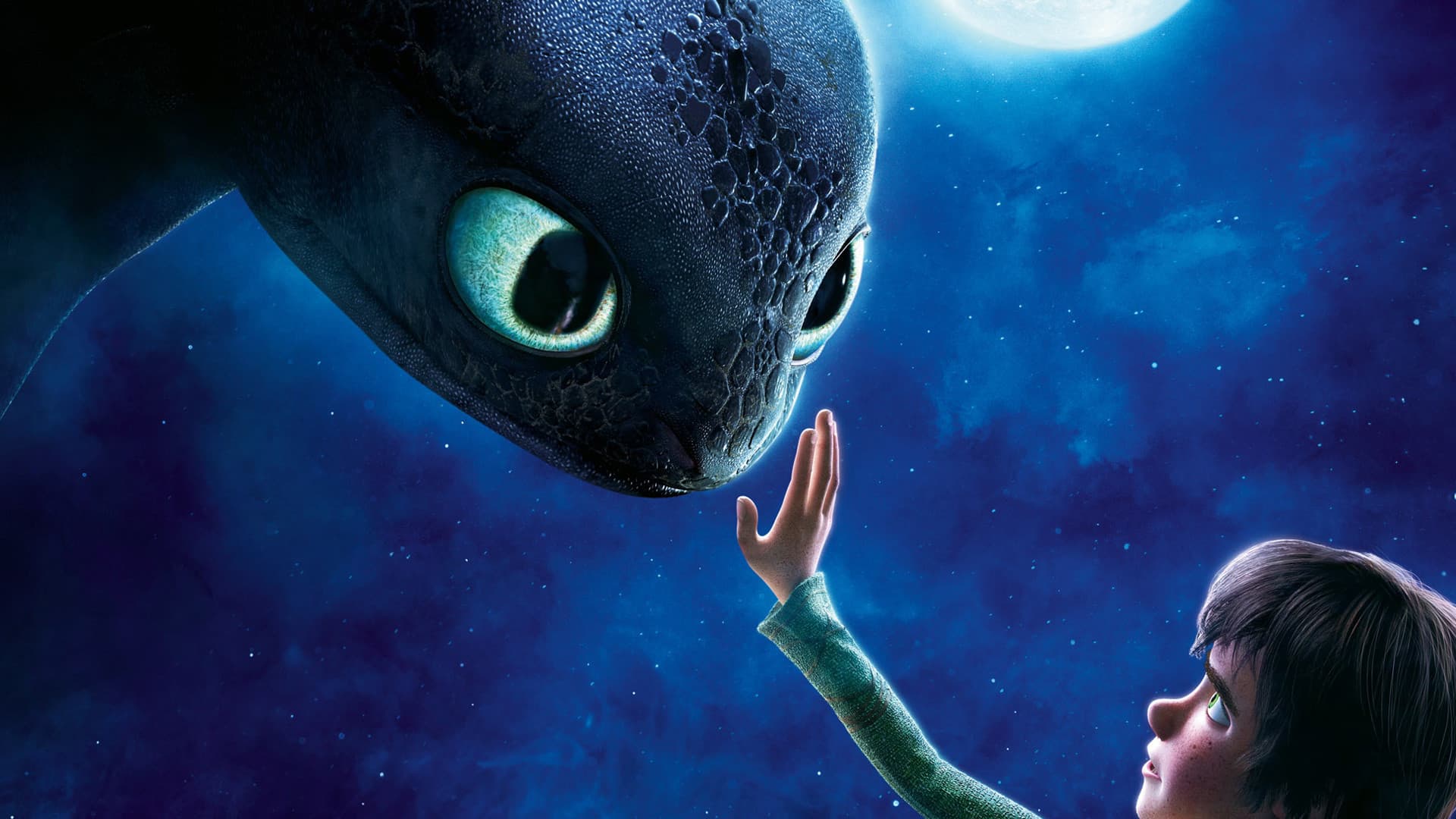
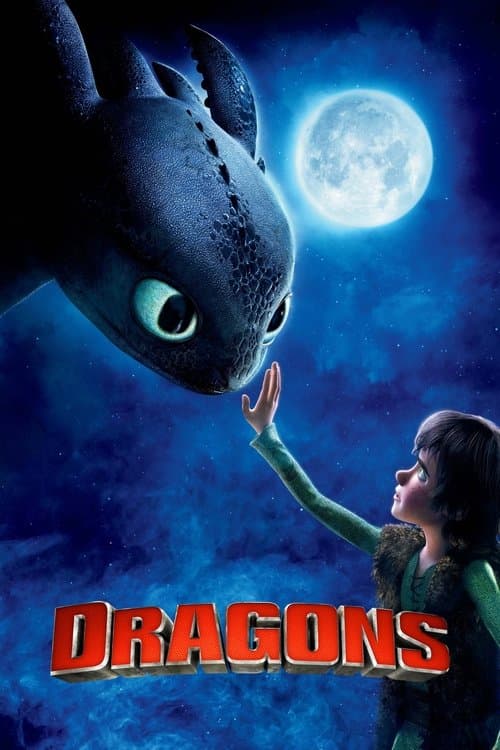
As the son of a Viking leader on the cusp of manhood, shy Hiccup Horrendous Haddock III faces a rite of passage: he must kill a dragon to prove his warrior mettle. But after downing a feared dragon, he realizes that he no longer wants to destroy it, and instead befriends the beast – which he names Toothless – much to the chagrin of his warrior father.
Difficult scenes
The opening features dragon attacks on the village, with fire, explosions, panicked townspeople, and a fairly sustained sense of chaos. Even though the animation keeps things stylized and adventurous, these scenes may unsettle children who are sensitive to loud action, group danger, or aggressive creatures appearing at night. Hiccup finds the dragon he brought down, badly injured, and the scene initially centers on mutual fear between a human and an animal that is trapped, vulnerable, and still potentially dangerous. This moment can affect very empathetic children, because the injury, the inability to escape, and the choice between killing or sparing the creature all carry real emotional weight. The training arena sequences show several teenagers facing dragons at close range in situations built around combat and control. The tone is often playful, yet there are charges, near bites, shouting, and a clear sense of physical risk that may feel intense for younger viewers. The relationship between Hiccup and his father includes several exchanges where the boy is treated as incapable, dismissed, or deeply misunderstood by the adult who should support him. This is not physical abuse, but the repeated belittling and pressure to become a dragon killer can land strongly with children who are sensitive to parental rejection. Later on, the film introduces a gigantic threat and action scenes that are more intense than the rest of the story. There is no gore, but the scale of the visuals, the flames, the falls, and the fear of losing an important character can create a real spike in anxiety for younger children.
Where to watch
No verified platform for the US market yet. We keep this section updated as availability changes.
Availability checked on Apr 01, 2026
About this title
- Format
- Feature film
- Year
- 2010
- Runtime
- 1h 26m
- Countries
- United States of America
- Original language
- EN
- Studios
- DreamWorks Animation
Content barometer
Violence
3/5
Notable
Fear
2/5
A few scenes
Sexuality
1/5
Allusions
Language
1/5
Mild
Narrative complexity
1/5
Accessible
Adult themes
0/5
None
Expert review
This animated adventure blends humor, action, and wonder in a Viking and dragon setting, with an appealing young hero who learns to question the values of his community. The main sensitive material involves dragon attacks, training combat, repeated danger, some non graphic injuries, and a strained father son relationship shaped by misunderstanding and dismissive comments. The overall intensity is moderate for a family fantasy, yet several sequences can be scary for younger children, especially aerial chases, dragon arena scenes, and the threat posed by a very large creature, even though the visual style remains clearly fantastical and reassuring overall. There is almost no sexual content, very little problematic language, and no meaningful substance use. Parents may want to prepare children for the fact that dragons look frightening at first, then talk afterward about fear, empathy toward an injured animal, and the way the hero gradually finds his own voice against adult expectations.
Synopsis
As the son of a Viking leader on the cusp of manhood, shy Hiccup Horrendous Haddock III faces a rite of passage: he must kill a dragon to prove his warrior mettle. But after downing a feared dragon, he realizes that he no longer wants to destroy it, and instead befriends the beast – which he names Toothless – much to the chagrin of his warrior father.
Difficult scenes
The opening features dragon attacks on the village, with fire, explosions, panicked townspeople, and a fairly sustained sense of chaos. Even though the animation keeps things stylized and adventurous, these scenes may unsettle children who are sensitive to loud action, group danger, or aggressive creatures appearing at night. Hiccup finds the dragon he brought down, badly injured, and the scene initially centers on mutual fear between a human and an animal that is trapped, vulnerable, and still potentially dangerous. This moment can affect very empathetic children, because the injury, the inability to escape, and the choice between killing or sparing the creature all carry real emotional weight. The training arena sequences show several teenagers facing dragons at close range in situations built around combat and control. The tone is often playful, yet there are charges, near bites, shouting, and a clear sense of physical risk that may feel intense for younger viewers. The relationship between Hiccup and his father includes several exchanges where the boy is treated as incapable, dismissed, or deeply misunderstood by the adult who should support him. This is not physical abuse, but the repeated belittling and pressure to become a dragon killer can land strongly with children who are sensitive to parental rejection. Later on, the film introduces a gigantic threat and action scenes that are more intense than the rest of the story. There is no gore, but the scale of the visuals, the flames, the falls, and the fear of losing an important character can create a real spike in anxiety for younger children.