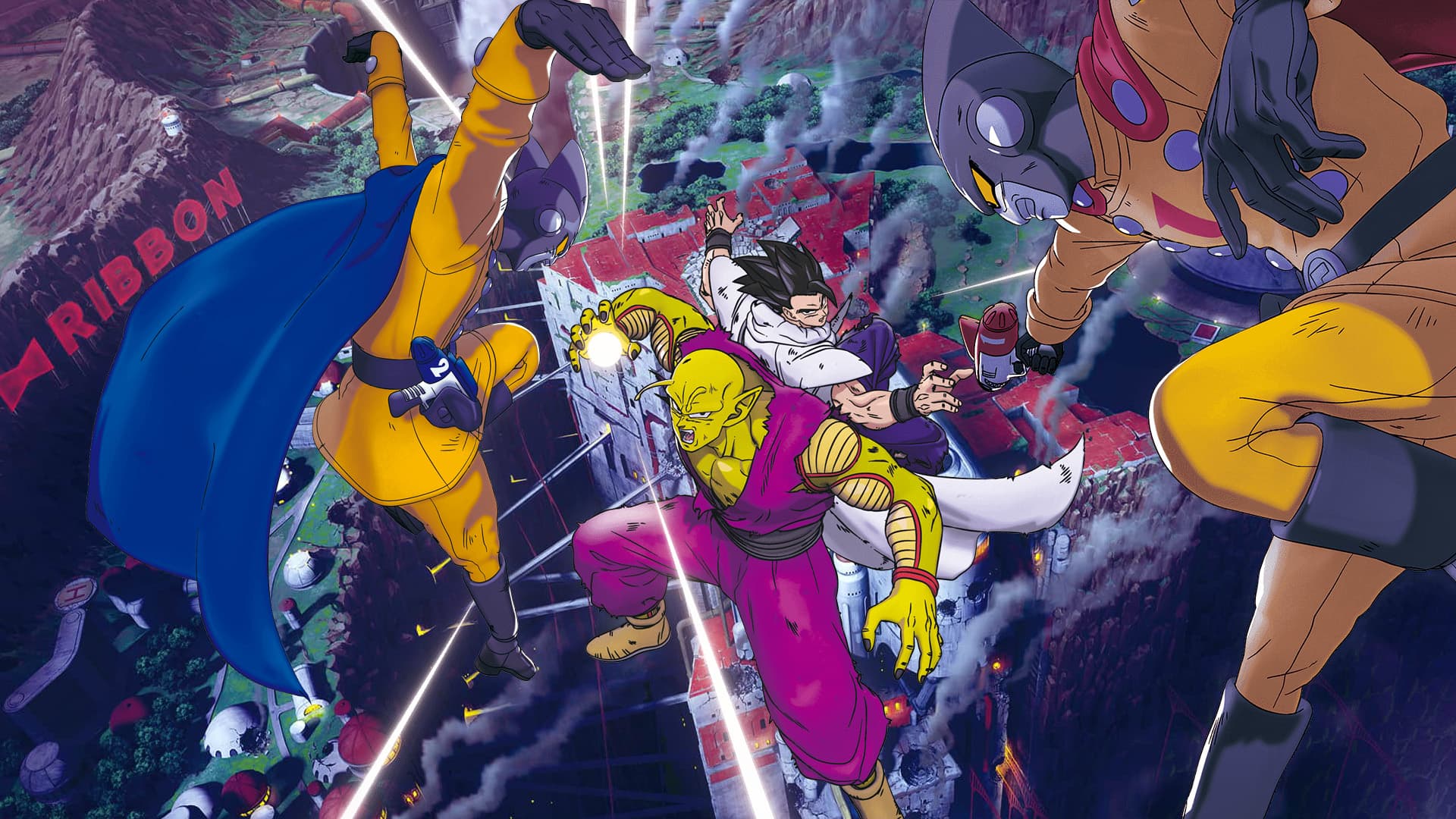

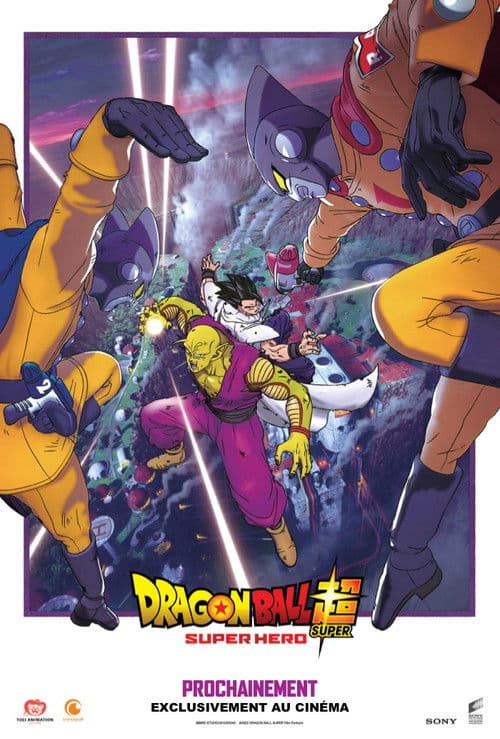
Dragon Ball Super: Super Hero
ドラゴンボール超 スーパーヒーロー
Does this age rating seem accurate to you?
Detailed parental analysis
Dragon Ball Super: Super Hero is an energetic and colourful action-animated film rooted in one of the world's most popular manga and animation franchises. The plot follows a group of heroes who must confront the return of a criminal organisation seeking revenge by developing artificially created super-powerful creatures. Despite its accessible visual codes, the film is primarily aimed at franchise fans and pre-adolescents, rather than young children.
Violence
Violence is the main driving force of the narrative and takes up a very substantial portion of the film. Battles, violent exchanges of blows, characters hurled against rocks or buildings, bursts of energy and massive destruction of scenery follow one another at a sustained pace. What warrants parents' attention is that a 3-year-old girl is deliberately subjected to energy blasts and thrown against obstacles as part of a training sequence: this treatment of a very young child as a target of violence, even in a comic and fantastical context, may give pause for thought. The violence remains stylised and cartoonish, without gore, and fits within the logic of the genre, but it is omnipresent and never truly questioned by the narrative.
Underlying Values
The film rests on a logic of absolute physical performance: conflicts are settled by combat, and brute force is systematically valued above reflection or diplomacy. A character can obtain whatever he desires through a magical wish without effort, which short-circuits any notion of merit or work. Friendship and loyalty between characters are well present and constitute a positive counterpoint, but they are expressed almost exclusively within the context of struggle. This is a useful angle for discussion to open with a child: is solving all problems with your fists really a solution?
Discrimination
Female characters occupy a clearly secondary place in the action: despite the existence of a young girl destined for a great career as a fighter, adult women remain largely sidelined from combat. More explicitly, a central female character uses a magical wish to improve her physical appearance, notably to enlarge her buttocks and erase her wrinkles, and this scene is treated in a comic register without any critical distance. The clothing of female characters is revealing and the framing regularly emphasises their bodies. These elements, taken together, form a message about the appearance and worth of women that merits discussion with young viewers.
Sex and Nudity
There is no explicit sexual content, but female characters wear form-fitting outfits and are filmed with close-ups on their bodies. A male character exposes his buttocks on several occasions, first accidentally during a battle and then deliberately to provoke an opponent, in an openly comic tone. These elements remain within the burlesque humour register characteristic of the franchise but constitute a recurring presence worth flagging for parents.
Substances
An antagonist character smokes cigars on several occasions and deliberately blows his smoke in the faces of other characters. The consumption is presented as a character trait of the character, without commentary or narrative consequence. It is a limited but visually marked presence.
Language
The original English-language version contains a series of mild insults and recurring colloquial phrases: idiot, cretin, nerd, squirt, and other variations in the same register. Nothing particularly shocking for a pre-adolescent, but the frequency is notable and can normalise a certain level of coarseness in exchanges between characters.
Parental and Family Portrayals
The film features a particularly stressful scene for young viewers: a child is abducted from his nursery school, forced to appear distressed in a hostage-taking video, and made to witness a brutal attack on his parent. This sequence falls within a register of genuine tension, quite far removed from the usually fantastical tone of the franchise. Whilst some parents absorbed in their own development are portrayed with lightness, it is this violence against a child in the presence of a parent that constitutes the most disturbing element in this respect.
Strengths
For long-time fans, the film offers a faithful and affectionate update of a universe that has accompanied generations of children and adolescents, with communicative visual energy and some well-constructed action sequences. The film also works as an entry point into the franchise without prerequisites, which gives it genuine narrative accessibility. The burlesque humour and internal winks to the series will provide real satisfaction to seasoned viewers. From a narrative standpoint, however, the film remains highly functional, without particular emotional or thematic ambition beyond the genre itself.
Age recommendation and discussion points
The film is best reserved for children aged at least 10 years old, and comfortable viewing without major reservations sits more around 12 years old, particularly given the abduction scenes and the prominence given to female appearance. Two angles merit discussion after viewing: firstly, why do female characters seem to exist principally for their appearance rather than their agency, and secondly, what should we make of a narrative where every single problem is solved by force?
Synopsis
The Red Ribbon Army, an evil organization that was once destroyed by Goku in the past, has been reformed by a group of people who have created new and mightier Androids, Gamma 1 and Gamma 2, and seek vengeance against Goku and his family.
About this title
- Format
- Feature film
- Year
- 2022
- Runtime
- 2h
- Countries
- Japan
- Original language
- JA
- Studios
- Toei Animation, Shueisha, Fuji Television Network, Bandai Namco Entertainment, Toei Company, Bandai, Bandai Spirits
Content barometer
- Violence3/5Notable
- Fear2/5A few scenes
- Sexuality2/5Mild
- Language2/5Moderate
- Narrative complexity2/5Moderate
- Adult themes1/5Mild
Watch-outs
- Gender stereotypes
- Violence
- Abuse
Values conveyed
- Courage
- Friendship
- Loyalty
- family