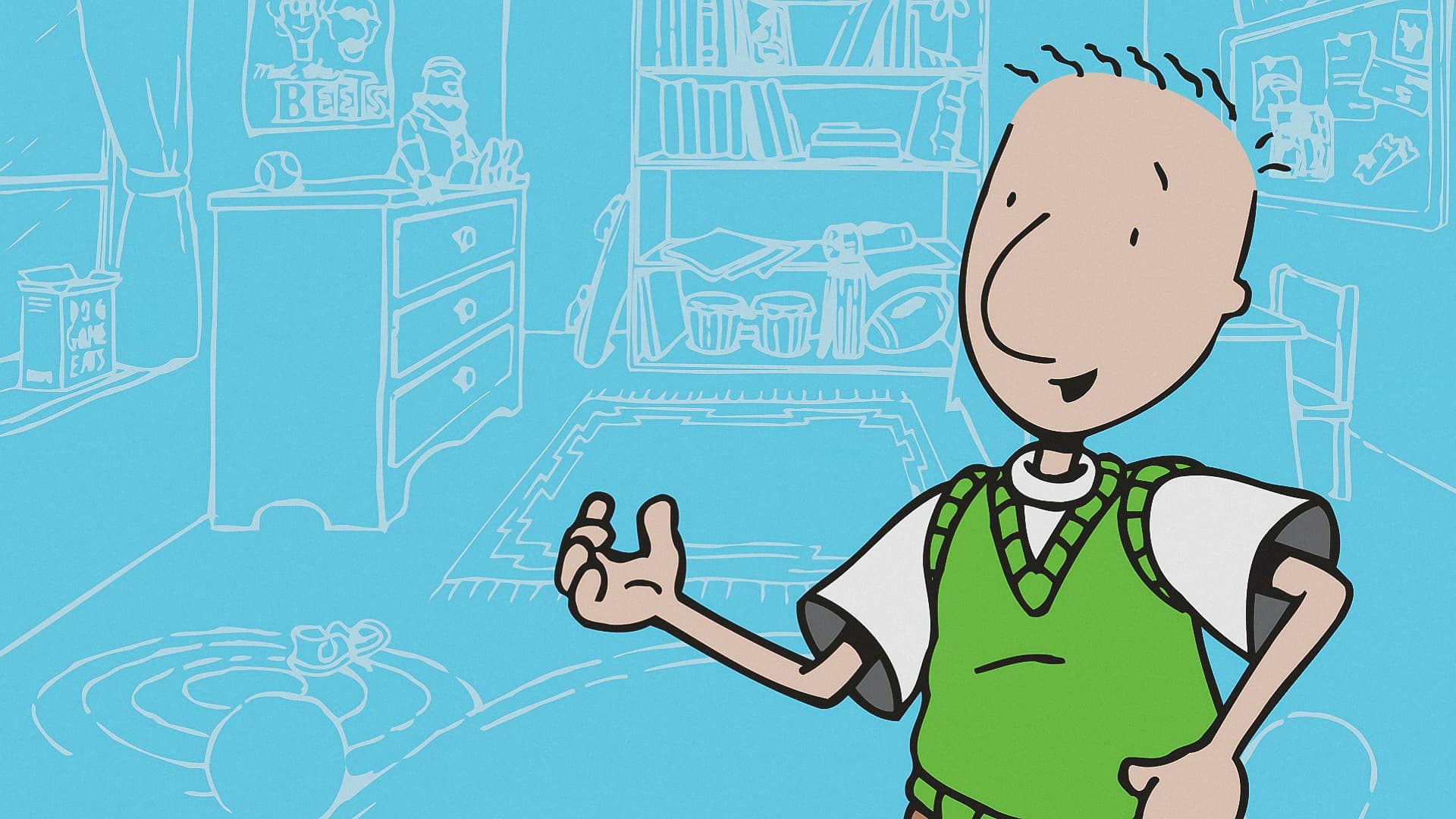


Doug
Does this age rating seem accurate to you?
Detailed parental analysis
Doug is a light and warm animated series, characterised by a soft and introspective tone that stands apart from the more spectacular productions in the genre. It follows Doug Funnie, an ordinary boy navigating the challenges of everyday school life, friendship and first feelings, recording his experiences in a personal diary. The series is clearly aimed at school-age children, aged 6 to 12, who will readily recognise themselves in its situations.
Underlying Values
The series builds its narrative around values of honesty, moral effort and loyalty in friendship. Doug does not seek to dominate or shine socially: he seeks to do the right thing, often at the cost of personal discomfort. Intimate journalkeeping is presented as a tool for self-understanding, which gives inner reflection a rare and precious place in fiction intended for children. As a counterpoint, the series maintains a fairly conformist vision of social happiness: being accepted, not standing out too much, finding one's place in the group. This latent conformism is worth highlighting in discussion, as it coexists with messages of self-assertion that are sometimes contradictory to it.
Social Themes
School bullying is a recurring theme, embodied by the character of Roger, the series' bully. His presence is not insignificant: it regularly forces Doug to choose between comfortable cowardice and integrity, making it a solid narrative and educational lever. The series does not trivialise bullying, but neither does it explore its mechanisms in depth: Roger remains a stereotypical figure rather than a character whose motivations we understand. For a child who is experiencing or has experienced a similar situation, the subject can resonate strongly and prompt conversation.
Parental and Family Portrayals
Parental figures are present but relegated to the background, in the classical manner of children's narratives that place peers and school at the centre of experience. They are neither dysfunctional nor particularly exemplary: they form a reassuring backdrop without weighing on the narrative. This choice is consistent with the series' focus on the pre-adolescent's gradual autonomy.
Strengths
Doug's primary strength is its emotional authenticity: the situations are mundane, yet they ring true for children who experience them. The series has the intelligence not to over-dramatise or offer miraculous resolutions. The use of the personal diary and imagination sequences as narrative devices gives an unusual psychological depth for the genre, and naturally introduces young viewers to the idea that putting words to one's emotions is a courageous and worthwhile act. The series' calm pace, far removed from the hyperactivity of many competing productions, makes it content conducive to attentive viewing rather than passive consumption.
Age recommendation and discussion points
The series is suitable from age 6 without reservation, with peak relevance between ages 8 and 11, when the social issues it describes are experienced in daily life. After viewing, two angles are worth discussing: asking the child if they too have experienced a situation where they had to choose between doing what is easy and doing what is right, and exploring with them what the idea of keeping a diary means, that is to say, allowing oneself the right to feel and name what one is going through.
Synopsis
Doug Funnie experiences common predicaments while attending school in his new hometown of Bluffington, Virginia.
Where to watch
Availability checked on Apr 26, 2026
About this title
- Format
- TV series
- Year
- 1991
- Countries
- France, United States of America
- Original language
- EN
- Directed by
- Jim Jinkins
- Main cast
- Thomas McHugh, Constance Shulman, Doug Preis, Alice Playten, Fred Newman, Becca Lish, Chris Phillips, Eddie Korbich
- Studios
- Ellipsanime Productions, Jumbo Pictures, Games Animation, Ellipse Programme, Disney Television Animation
Content barometer
- Violence1/5Mild
- Fear1/5Mild
- Sexuality0/5None
- Language0/5None
- Narrative complexity1/5Accessible
- Adult themes0/5None
Watch-outs
- Bullying
- Mockery
Values conveyed
- Friendship
- Acceptance of difference
- Perseverance
- Loyalty
- Autonomy
- empathy
- self esteem
- family