
Doctor Dolittle
Does this age rating seem accurate to you?
Detailed parental analysis
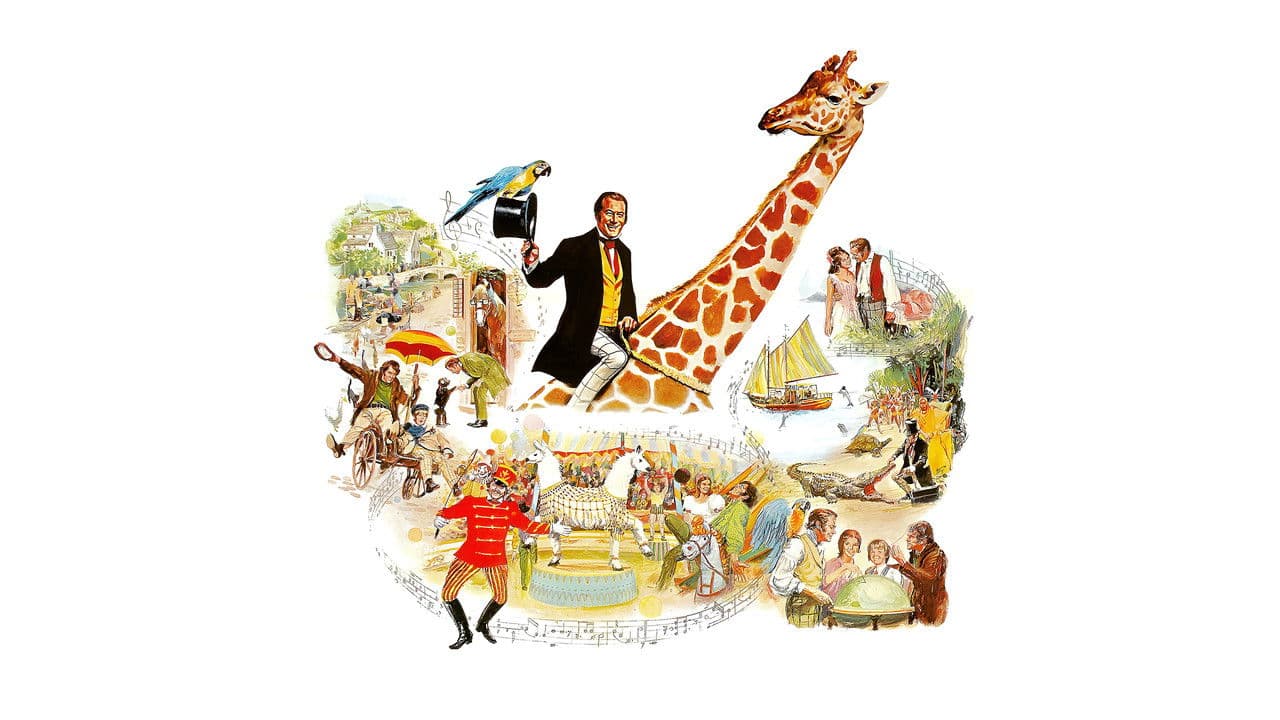
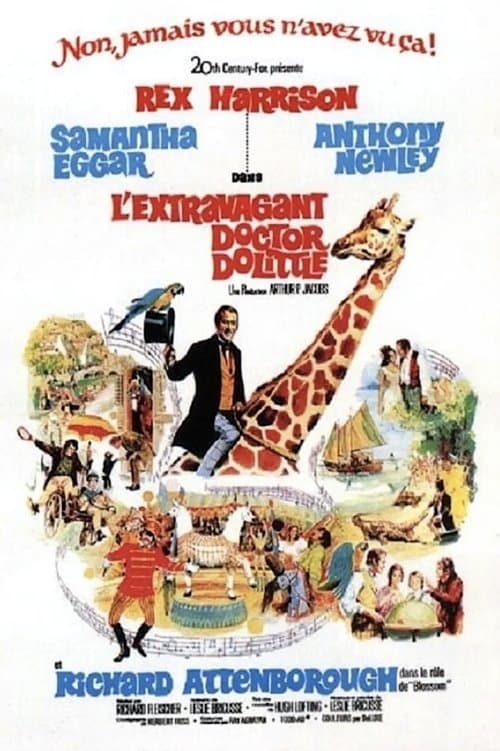
Doctor Dolittle is a colourful and exuberant 1967 family musical comedy, carried along by a gallery of animals and catchy songs. The plot follows an eccentric doctor capable of talking to animals, who embarks on a series of adventures to find a legendary creature. The film is aimed primarily at young children and families, although its two-and-a-half-hour length makes it a demanding experience for the youngest viewers.
Discrimination
The film bears the marks of its era quite visibly. The character of Long Arrow is presented as a 'red Indian' sending an illiterate message, an outdated caricature that is never questioned by the narrative. The Irish character Matthew Mugg is repeatedly associated with drinking, a stereotype likewise left unproblematised. The only prominent female character, Emma Fairfax, is treated with a condescension that the film presents as benevolence. These representations are not central to the plot, but they are present enough to warrant a conversation with a curious or sensitive child.
Underlying Values
The film consistently upholds an ethic of animal protection: Dolittle refuses to eat meat because animals are his friends, and the narrative implicitly criticises the wearing of fur. This vegetarian and anti-exploitation stance is coherent and sincere, even though it is embodied by a character who displays a frank preference for animals over humans. The film thus suggests that animals are morally superior to men, which is an interesting philosophical angle to explore with a child, without the film itself subjecting it to critical examination.
Substances
Alcohol is present in a recurring and normalised way. Matthew Mugg drinks whisky from the bottle throughout the film, and a judge is shown drunk and singing bawdy songs during a courtroom scene. These elements are neither dramatised nor presented as problematic by the narrative, making them an implicit endorsement rather than a cautionary note.
Social Themes
Animal protection and vegetarianism are treated as structuring moral convictions of the main character, giving the film a discreet but real activist dimension. Dolittle's trial, in which he is accused of being a nuisance because of his animals, raises implicitly the question of the right to be different and the relationship between the individual and social norms, without the film going very far in this reflection.
Strengths
The film offers genuine visual generosity, with a profusion of live animals that fascinates young children and gives the spectacle a concrete and warm texture. The songs, including the famous 'Talk to the Animals', are well-crafted and memorable. The character of Dolittle, in his assumed eccentricity and his refusal of social conventions, offers an endearing model of non-conformism. For a child curious about animals, the film can also open a door to real questions about animal communication and veterinary care.
Age recommendation and discussion points
The film is suitable from age 7 onwards for supervised viewing, with attention paid to outdated stereotypes and the normalisation of alcohol. Two angles of discussion are worth pursuing after viewing: why does Dolittle prefer animals to humans, and what does this say about the way we treat those who are different from us? And also: how does the film represent foreign or female characters, and does that seem fair to us today?
Synopsis
A veterinarian who can communicate with animals travels abroad to search for a giant sea snail.
Where to watch
Availability checked on Apr 28, 2026
About this title
- Format
- Feature film
- Year
- 1967
- Runtime
- 2h 31m
- Countries
- United States of America
- Original language
- EN
- Directed by
- Richard Fleischer
- Main cast
- Rex Harrison, Samantha Eggar, Anthony Newley, Richard Attenborough, Peter Bull, Muriel Landers, William Dix, Geoffrey Holder, Portia Nelson, Norma Varden
- Studios
- APJAC Productions, 20th Century Fox
Content barometer
- Violence0/5None
- Fear1/5Mild
- Sexuality0/5None
- Language1/5Mild
- Narrative complexity2/5Moderate
- Adult themes2/5Present
Watch-outs
- Alcohol
- Ethnic or racial stereotypes
- Gender stereotypes
Values conveyed
- Acceptance of difference
- Compassion
- Autonomy
- friendship
- empathy
- curiosity
- teamwork