Dinosaur
Does this age rating seem accurate to you?
Detailed parental analysis
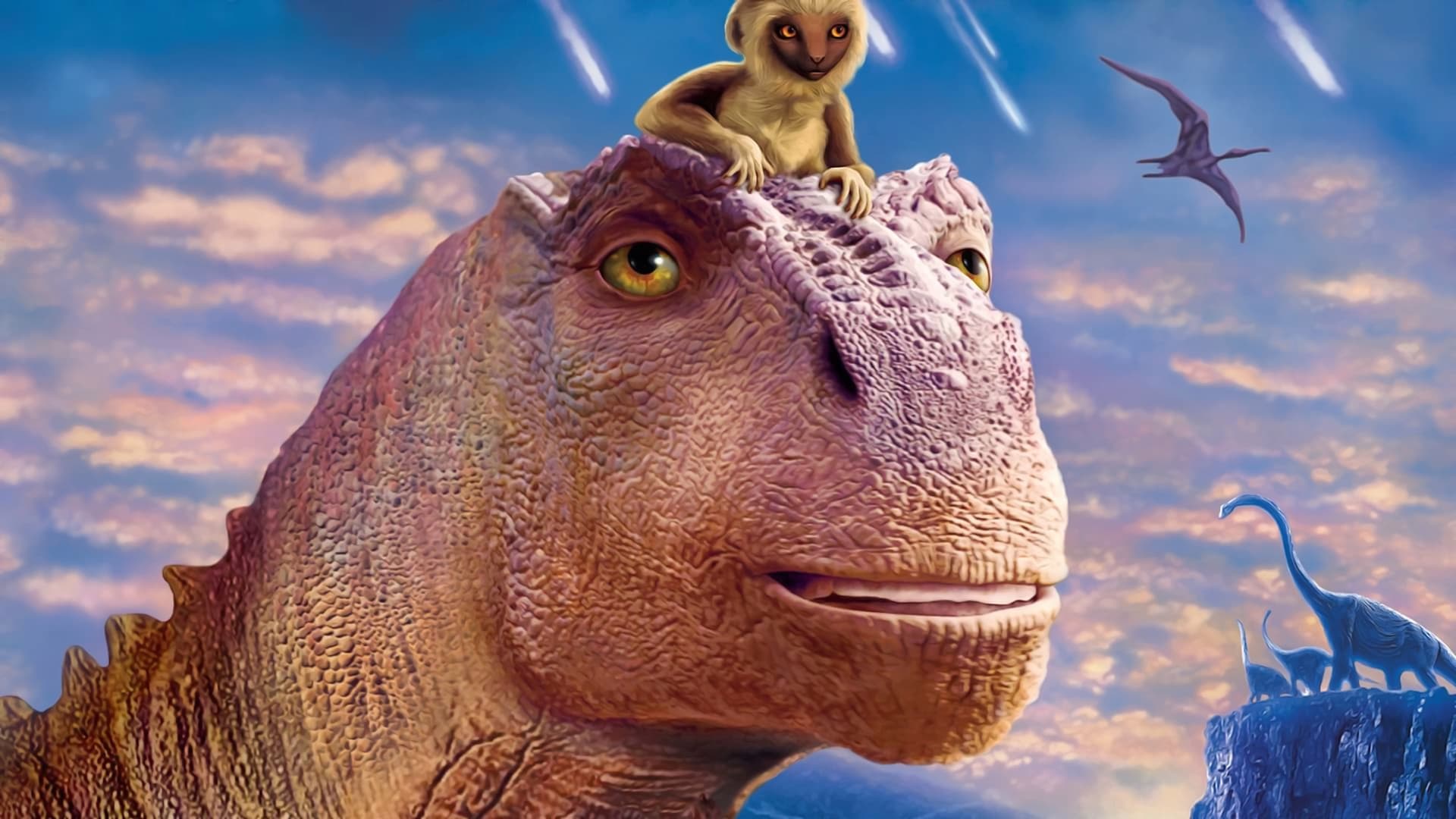
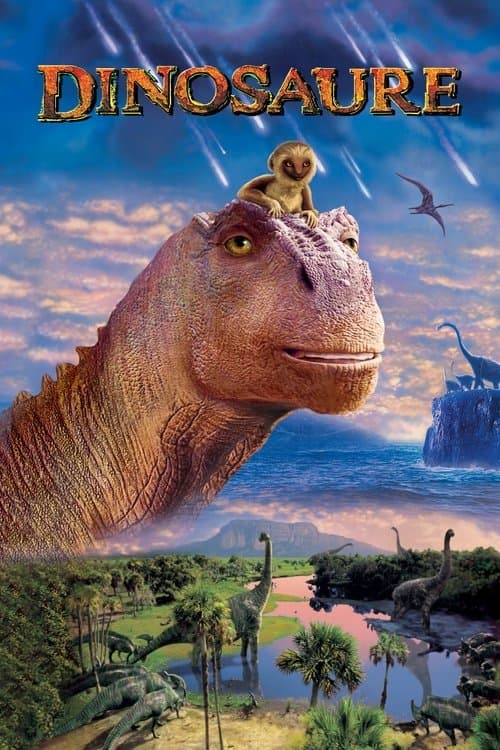
Dinosaur is a Disney adventure film with a contrasting atmosphere, oscillating between visual wonder and sequences of a genuine intensity that often surprises parents accustomed to a lighter register. The plot follows an iguanodon raised among lemurs who must lead a herd of survivors towards a haven of peace after a devastating natural catastrophe. The film officially aims at a broad family audience, but its tone and violent scenes make it a choice better suited to children aged 8-9 and above than to very young viewers.
Violence
Violence is the most salient element of the film for a parent. The Carnotaurs attack the herd repeatedly with marked intensity: eggs are crushed on screen, a scout is torn apart at a distance, and the character of Bruton appears covered in bloody wounds after an ambush. One sequence shows Velociraptors finishing off a dinosaur carcass, whose skeleton is subsequently visible in an explicit manner. The whole is carried by an anxiety-inducing score and dark settings that amplify tension well beyond what the Disney label intuitively prepares one to expect. This violence has a clear narrative function, it justifies the urgency of the journey and renders the threat tangible, but it is present repeatedly and sufficiently realistic to provoke genuine fear in the more sensitive or younger children.
Underlying Values
The film structures its entire moral argument around an opposition between two worldviews embodied by two antagonistic characters. Kron defends a logic of elimination: the weak slow down the group, they must be abandoned so that the species survives. Aladar, by contrast, refuses to sacrifice the slowest, the oldest, the least resilient, and progressively convinces the herd that solidarity is a strength and not a handicap. This scheme is simple but coherent and never caricatured through to the end: Kron remains convinced of his logic until his death, which avoids easy repentance. The film asserts without ambiguity that collective survival is better than individual performance, and that authority exercised through fear is a fragile authority.
Parental and Family Portrayals
The family structure in the film is reconstituted and not biological. Aladar is adopted at birth by a family of lemurs who raise him with affection and kindness. This blended family is represented positively, with a loving maternal figure and a protective but clumsy and sincere older brother. The loss of biological parents, evoked in the opening through the destruction of the nest, remains a wound in the background without ever being treated explicitly. The substitute parental figures are stable and warm, which anchors the narrative in a tonally reassuring register despite the exterior violence.
Social Themes
The film reads readily as a fable about forced migration: a group of refugees flees a catastrophe, crosses hostile territories and seeks a place of welcome, confronted with the question of who deserves to reach their destination. This reading is not imposed insistently but it is structurally present and can nourish a rich discussion with a child from a certain age onwards. The ecological question also surfaces in the background, the catastrophe that triggers the narrative being a rain of meteorites that destroys the known environment of the characters.
Strengths
The film offers an ambitious visual direction, with natural environments of rare plastic richness for its period, which give the narrative an organic texture and a sensation of physical weight uncommon in family animation. The pacing is tight, without slack moments, and the emotional stakes remain legible for a child even in the most tense scenes. The central conflict between two ethics of survival is treated with unusual honesty: no sentimental facility comes to absolve the camp of brutality, and the consequences are real. For a child able to conceptualise the notion of authority and solidarity, the film offers concrete and emotionally engaged material.
Age recommendation and discussion points
The film is not recommended before age 7 due to repeated violence and the intensity of predation scenes, and can be watched with confidence from age 9 onwards. Two angles of discussion merit being opened after the film: ask the child whether Kron is entirely wrong, that is, whether there exist situations where abandoning someone can seem logical, and why the film answers no, then explore together the question of what to do with members of a group who advance more slowly than the others, at school as elsewhere.
Synopsis
An orphaned dinosaur raised by lemurs joins an arduous trek to a sancturary after a meteorite shower destroys his family home.
About this title
- Format
- Feature film
- Year
- 2000
- Runtime
- 1h 22m
- Countries
- United States of America
- Original language
- EN
- Directed by
- Ralph Zondag, Eric Leighton
- Main cast
- D. B. Sweeney, Alfre Woodard, Ossie Davis, Max Casella, Hayden Panettiere, Samuel E. Wright, Julianna Margulies, Peter Siragusa, Joan Plowright, Della Reese
- Studios
- Walt Disney Feature Animation, The Secret Lab, Walt Disney Pictures
Content barometer
- Violence3/5Notable
- Fear4/5Intense
- Sexuality0/5None
- Language0/5None
- Narrative complexity2/5Moderate
- Adult themes0/5None
Watch-outs
Values conveyed
- Courage
- Acceptance of difference
- Perseverance
- friendship
- teamwork
- compassion