
Dilili in Paris
Dilili in Paris
Your feedback improves this guide
Your feedback highlights guides that need a second look and keeps the rating trustworthy.
Does this age rating seem accurate to you?
Sign in to vote
Watch-outs
What this film brings
Content barometer
Violence
2/5
Moderate
Fear
2/5
A few scenes
Sexuality
0/5
None
Language
0/5
None
Narrative complexity
1/5
Accessible
Adult themes
0/5
None
Expert review
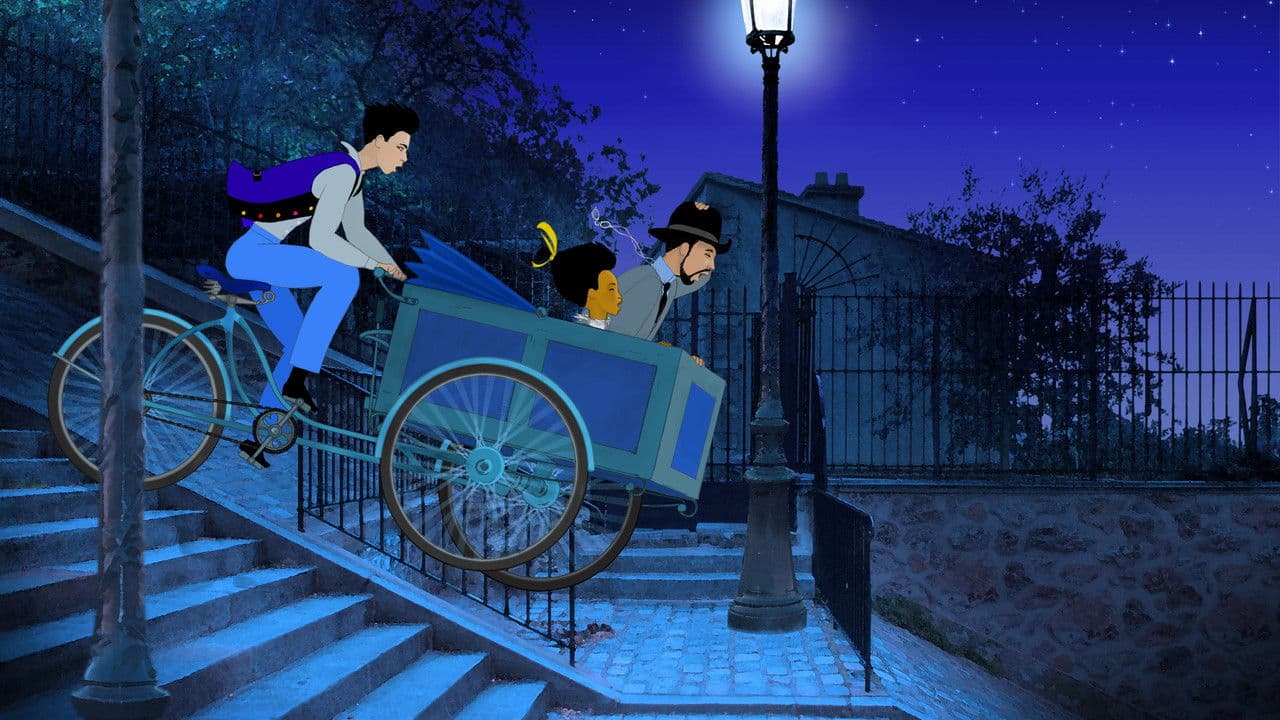
Dilili in Paris is a family animated film with elegant visuals and a strong sense of cultural discovery, set within an adventurous mystery in Belle Époque Paris. The main sensitive material comes from a plot about young girls being kidnapped, an attempted abduction involving the heroine, repeated encounters with threatening adults, and a dog attack that injures a character. The presentation stays stylized and not graphic, yet these dangers are central to the story and return often enough to unsettle very young viewers despite the film's luminous look and generally reassuring tone. The story also includes themes of male domination and misogyny, not in a sexualized way, but in a form that may still require some explanation for children. For most children, it works better from about age 7, and parental support can help frame the suspense, reassure after danger scenes, and explain the historical and social context.
Synopsis
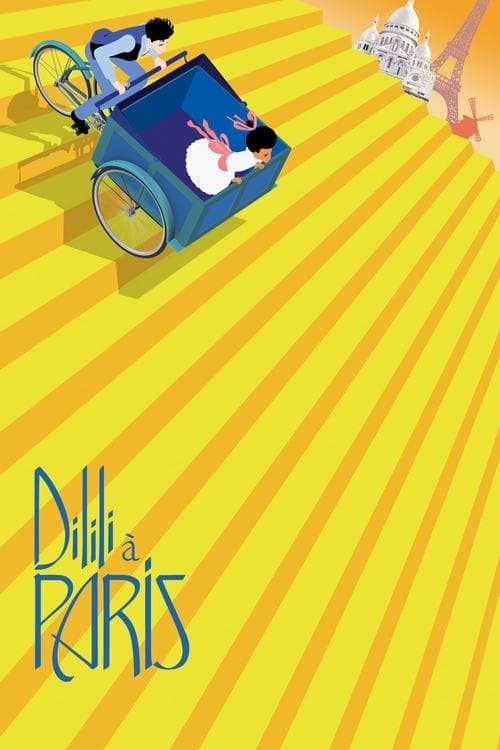
With the help of her delivery-boy friend, Dilili, a young Kanak, investigates a spate of mysterious kidnappings of young girls that is plaguing Belle Epoque Paris. In the course of her investigation she encounters a series of extraordinary characters, each of whom provides her with clues that will help her in her quest.
Difficult scenes
The investigation begins with repeated reports of young girls disappearing, mentioned several times in newspapers and conversations. Even though the film does not depict these acts graphically, the idea of children being abducted can be very upsetting for young viewers, especially because this threat drives the whole adventure. Dilili herself becomes the target of an attempted abduction in a public garden. The scene places a child in direct danger, creating a strong feeling of vulnerability, even if the action remains brief and not explicitly violent. During the investigation, Orel and Dilili move through darker and more hostile places, where they are followed, unwelcome, or confronted by unsettling adults. This mystery tension is fairly frequent in the film and may affect children who are sensitive to pursuit scenes and villains operating from the shadows. A rabid mastiff attacks Orel and bites him, which leads to a medical emergency because of the risk of disease. The bite is not shown graphically, but the idea of rabies, the panic of the scene, and concern for the character's health may worry some children.
Where to watch
No verified platform for the US market yet. We keep this section updated as availability changes.
About this title
- Format
- Feature film
- Year
- 2018
- Runtime
- 1h 35m
- Countries
- Germany, Belgium, France
- Original language
- FR
- Directed by
- Michel Ocelot
- Main cast
- Elisabeth Duda, Liliane Rovère, Prunelle Charles-Ambron, Thissa d'Avila Bensalah, Enzo Ratsito, Natalie Dessay, Isabelle Guiard, Swan Mirabeau, Léa Powe, Karim M'Ribah
- Studios
- Nord-Ouest Films, Studio O, ARTE France Cinéma, Wild Bunch, Artémis Productions, Senator Film, Mac Guff Ligne, Mars Films
Content barometer
Violence
2/5
Moderate
Fear
2/5
A few scenes
Sexuality
0/5
None
Language
0/5
None
Narrative complexity
1/5
Accessible
Adult themes
0/5
None
Expert review
Dilili in Paris is a family animated film with elegant visuals and a strong sense of cultural discovery, set within an adventurous mystery in Belle Époque Paris. The main sensitive material comes from a plot about young girls being kidnapped, an attempted abduction involving the heroine, repeated encounters with threatening adults, and a dog attack that injures a character. The presentation stays stylized and not graphic, yet these dangers are central to the story and return often enough to unsettle very young viewers despite the film's luminous look and generally reassuring tone. The story also includes themes of male domination and misogyny, not in a sexualized way, but in a form that may still require some explanation for children. For most children, it works better from about age 7, and parental support can help frame the suspense, reassure after danger scenes, and explain the historical and social context.
Synopsis
With the help of her delivery-boy friend, Dilili, a young Kanak, investigates a spate of mysterious kidnappings of young girls that is plaguing Belle Epoque Paris. In the course of her investigation she encounters a series of extraordinary characters, each of whom provides her with clues that will help her in her quest.
Difficult scenes
The investigation begins with repeated reports of young girls disappearing, mentioned several times in newspapers and conversations. Even though the film does not depict these acts graphically, the idea of children being abducted can be very upsetting for young viewers, especially because this threat drives the whole adventure. Dilili herself becomes the target of an attempted abduction in a public garden. The scene places a child in direct danger, creating a strong feeling of vulnerability, even if the action remains brief and not explicitly violent. During the investigation, Orel and Dilili move through darker and more hostile places, where they are followed, unwelcome, or confronted by unsettling adults. This mystery tension is fairly frequent in the film and may affect children who are sensitive to pursuit scenes and villains operating from the shadows. A rabid mastiff attacks Orel and bites him, which leads to a medical emergency because of the risk of disease. The bite is not shown graphically, but the idea of rabies, the panic of the scene, and concern for the character's health may worry some children.