Despicable Me
Does this age rating seem accurate to you?
Detailed parental analysis
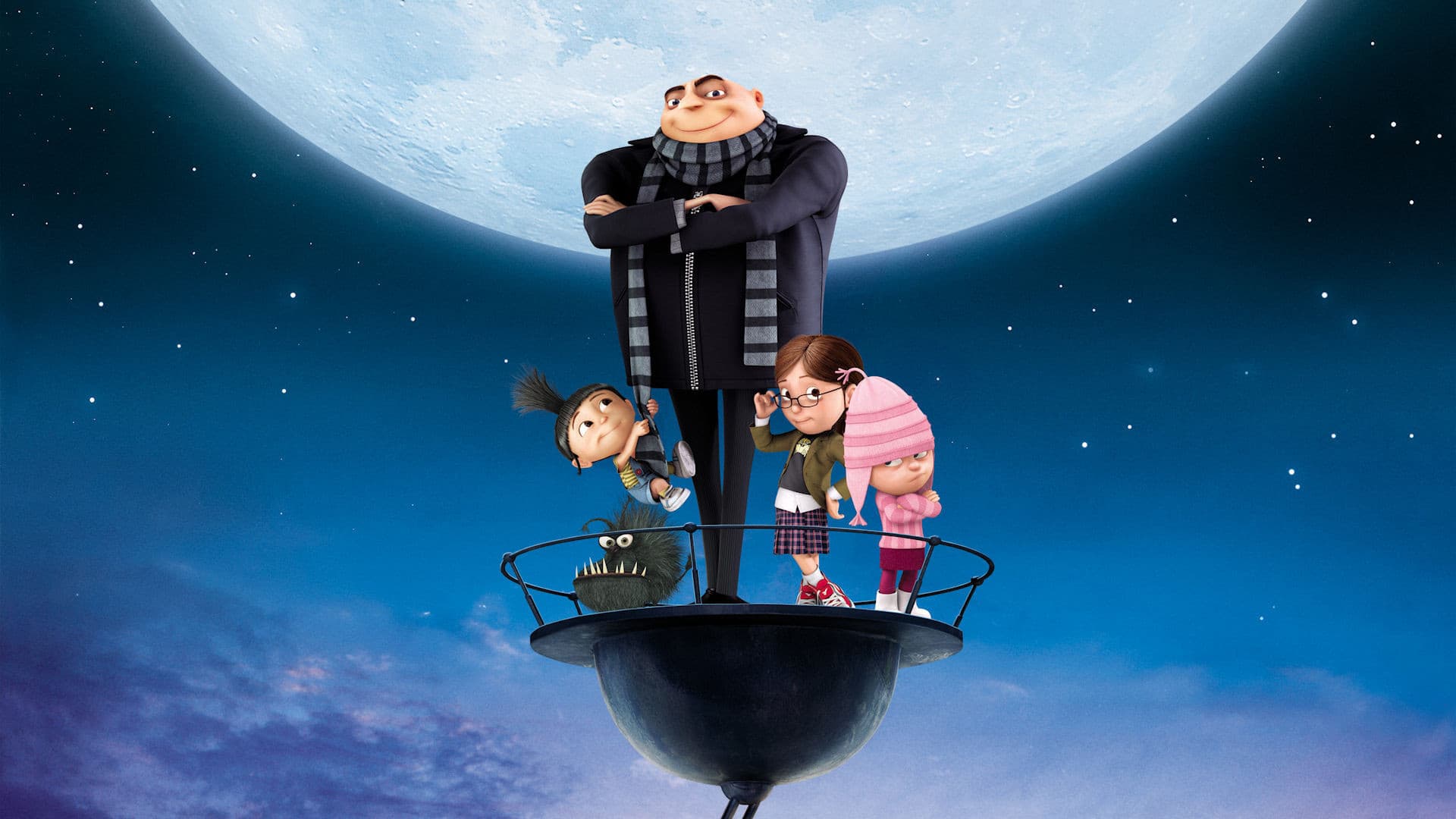
Despicable Me is a family animated comedy with a mischievous and deliberately absurd tone, sustained by pervasive slapstick humour. The plot follows Gru, a failed supervillain who adopts three young girls in order to exploit them in a criminal scheme, before unexpected emotional bonds overturn his priorities. The film is primarily aimed at school-age children, with a layer of self-aware humour intended for accompanying parents.
Parental and Family Portrayals
Family dynamics are the true engine of the narrative and the richest subject to explore with a child. The orphanage where the three girls live is run by a punitive director who locks children in a 'shame box', an explicitly abusive representation of the responsible adult figure. Gru adopts the girls for cynical purposes and briefly returns them when they are no longer useful to him, a scene played simultaneously for drama and humour, creating an ambiguous signal: the rejection of vulnerable children is normalised as a comedic device before being morally repaired. Gru's redemption is authentic and well-constructed, and the film concludes with a sincere, attentive and affectionate paternal model. However, the path to get there exposes younger viewers to profoundly failing parental and institutional figures that deserve to be named.
Underlying Values
The central message is solid: love transforms, and family bonds forged by choice are as valid as those of blood. The film asserts that fatherhood is learned and that gentleness is a strength. These values are conveyed with sincerity and emotional effectiveness. By contrast, the narrative initially rests on a problematic premise: the instrumentalisation of children for personal ends is presented as an acceptable starting point for a comedy. The ultimate redemption does not entirely erase the lightness with which the film treats adoption as a tool. This is a useful angle for discussion with a child: why do we laugh at something that, in reality, would be serious?
Violence
Violence is exclusively cartoonish and without real consequences: lasers, explosions, outlandish gadgets, Minions repeatedly striking one another with hammers in recurring gags. The intensity remains low and the tone is consistently comic. One isolated scene shows a girl apparently pierced by knives in a magic trick box, immediately defused as a joke (fruit juice), but which may startle a very young child. Nothing traumatic for a school-age child, but the accumulation of gags based on physical pain to characters warrants flagging to parents of very young children.
Discrimination
The film repeatedly associates overweight with malice or ridicule: two antagonistic characters are portrayed as obese and their corpulence is integrated into their negative characterisation, and an overweight child is used in a humiliating physical gag. These choices are dated and reproduce a body-shaming stereotype without any narrative distance. Representation is moreover very homogeneous: white male characters in the foreground, with the only vocal minority character relegated to caricature. These elements do not form the heart of the film, but they are sufficiently recurrent to warrant flagging and discussion.
Language
The verbal register is broadly childish, with a few mild insults in English ('stupid', 'poop') that remain within genre norms. Nothing notable for a school-age child.
Strengths
The film constructs its central emotional arc with efficiency: Gru's transformation is credible because it is gradual, and the three girls are engaging characters, distinctly individualised, who are not reduced to narrative accessories. The humour works on multiple levels simultaneously, with sustained visual energy that holds the attention of young children. Thematically, the film addresses the question of what makes a family with genuine sincerity, and shows a man learning to let affection in without shame. This is rare and well-executed in mainstream animated cinema.
Age recommendation and discussion points
The film is suitable from age 7 onwards, with parental accompaniment for the youngest in this range who might be sensitive to orphanage scenes or the rejection of the girls. Two angles of discussion are worth pursuing after viewing: why do the orphanage and rejection of children raise laughs in an animated film when such things would be serious in real life, and what does this say about the way films use suffering as a comedic device? And, more positively: what makes a family a real family, even if it does not look like what we expected?
Synopsis
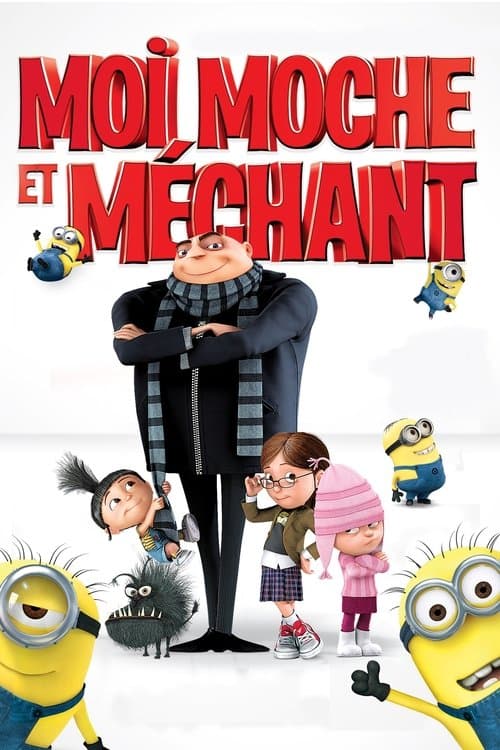
Gru is a supervillain determined to prove he’s the greatest by stealing the Moon. To pull off his plan, he adopts three orphaned girls—Margo, Edith, and Agnes—intending to use them as part of his scheme. However, as Gru bonds with the girls, his cold, villainous exterior begins to melt.
About this title
- Format
- Feature film
- Year
- 2010
- Runtime
- 1h 35m
- Countries
- United States of America
- Original language
- EN
- Studios
- Illumination, Universal Pictures
Content barometer
- Violence2/5Moderate
- Fear2/5A few scenes
- Sexuality0/5None
- Language1/5Mild
- Narrative complexity1/5Accessible
- Adult themes0/5None
Watch-outs
- Abuse
- Gender stereotypes
Values conveyed
- Acceptance of difference
- Compassion
- family
- adoption
- kindness
- redemption