
Delusions of Grandeur
Does this age rating seem accurate to you?
Detailed parental analysis
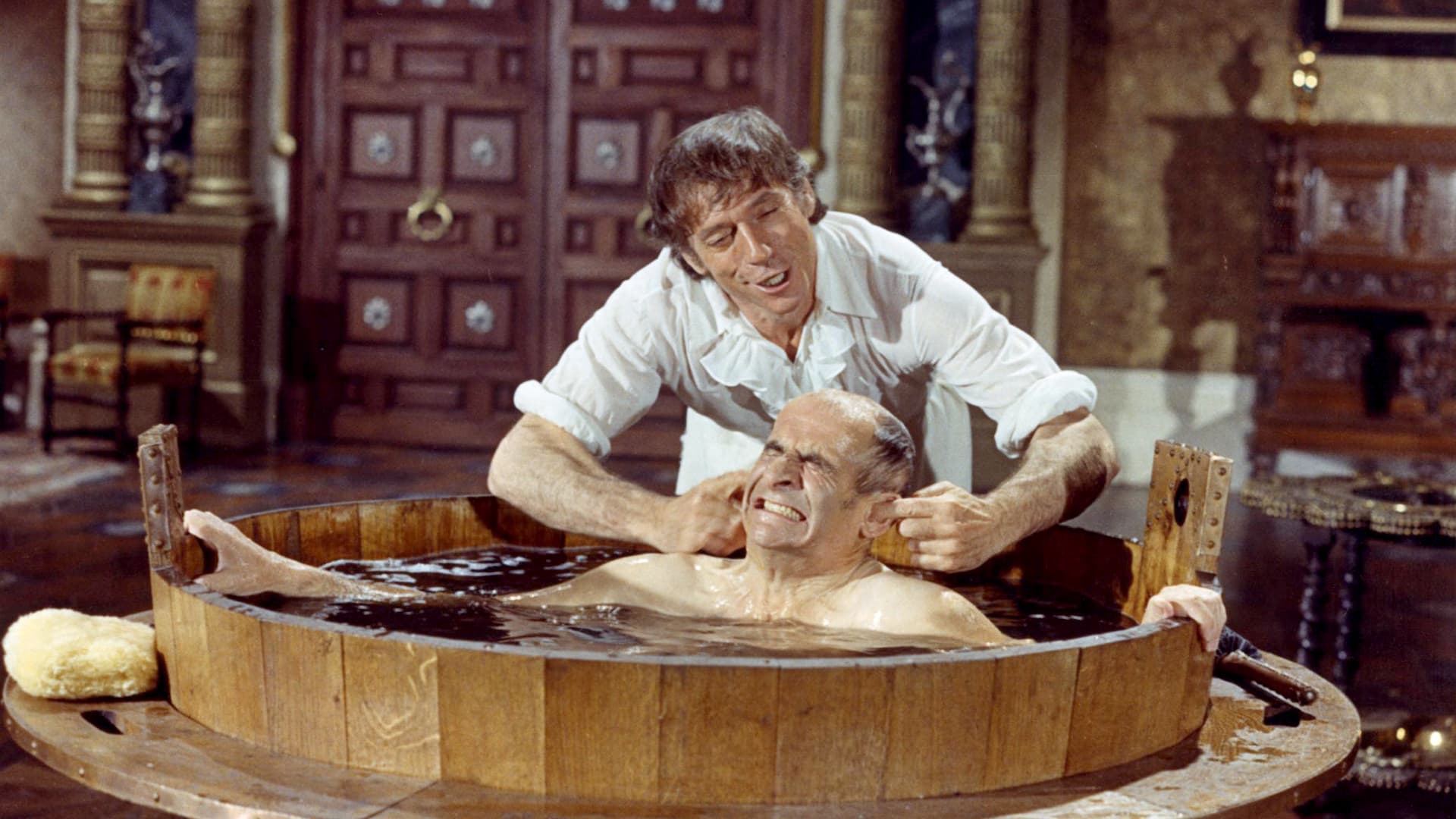
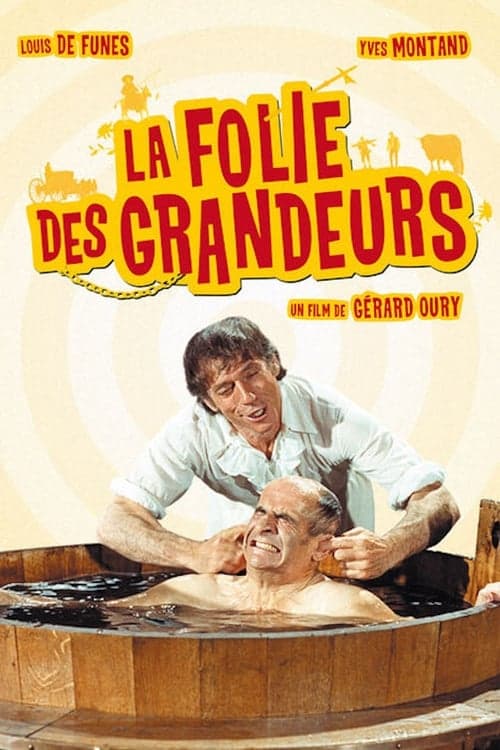
La Folie des grandeurs is a burlesque and satirical comedy with a cheerful and uninhibited tone, driven by finely crafted dialogue and often absurd situational humour. The plot follows a greedy and corrupt seventeenth-century Spanish minister who finds himself reduced to the status of a valet after abusing his power, whilst his cunning servant pulls the strings to reverse the situation to his own advantage. The film targets a broad family audience, but its humour and political subtexts speak more to adults and teenagers than to young children.
Underlying Values
Political satire is the driving force of the film and its most structuring message. The narrative unambiguously denounces the greed of the powerful, the institutionalised extortion of the poorest and the hypocrisy of elites who cloak themselves in dignity whilst plundering the people. The famous line about the poor being made to be very poor and the rich very rich is delivered with an assumed cynicism that makes it an obvious target of satire, not a model to follow. The film values the intelligence of popular cunning in the face of the arrogance of power, which makes it an interesting subject for discussion about inequality and the legitimacy of authority. This message is accessible from adolescence onwards and can open a frank conversation about social justice.
Discrimination
The film invokes a vision of seventeenth-century Spain entirely constructed from clichés: flamenco, tap dancing, shoddy Spanish exclamations, heightened sensuality. This representation is deliberately caricatural and forms part of the film's assumed burlesque register, but it is never questioned as such. A child or teenager may absorb it as a realistic image if the conversation does not take place. The sending of a character as a slave to the Barbary States is treated in comic mode, which deserves to be noted: the historical reality of slavery is here a comedy device, without any contextualisation.
Sex and Nudity
A burlesque striptease scene, which has become iconic, features an elderly duenna character in a deliberately grotesque and comic register rather than an erotic one. The humour rests on the gap between the character's supposed desire and her appearance, which amounts to a form of outdated body mockery. There is no explicit nudity, but the scene may surprise younger children. The flamenco is presented with pronounced sensuality, in keeping with the genre's clichés.
Violence
Violence remains light and in keeping with the codes of swashbuckling comedy: threats with pistols, kidnapping treated in farcical mode, a few scuffles. Nothing graphic or anxiety-inducing for a child of 8 years and above. Violence is never presented as a serious model and remains in service of the comic device.
Strengths
The film is an accomplished example of popular French comedy from the 1970s, with particularly careful dialogue writing and a sense of comic timing that has endured across the decades. Political satire is conducted here with a lightness that does not weaken its impact: denouncing corruption and class inequality whilst making people laugh is a difficult exercise, successfully accomplished here with elegance. For a teenager, the film constitutes an accessible introduction to satirical comedy and to the tradition of the cunning valet inherited from Molière and commedia dell'arte. Its dimension as cultural heritage is genuine.
Age recommendation and discussion points
The film is accessible from age 10 for relaxed viewing, although children of 8 years can watch it without major difficulty. Two angles of discussion merit being opened after viewing: first, what the satire really says about inequality and power, by distinguishing the cynical lines of the characters from the film's own message; secondly, why clichés about Spain and the comic treatment of slavery are funny, and what this reveals about the representations of the period.
Synopsis
Don Sallust is the minister of the King of Spain. Being disingenuous, hypocritical, greedy and collecting the taxes for himself, he is hated by the people he oppresses. Accused by The Queen, a beautiful princess Bavarian, of having an illegitimate child to one of her maids of honor, he was stripped of his duties and ordered to retire to a monastery.
Where to watch
Availability checked on Apr 28, 2026
About this title
- Format
- Feature film
- Year
- 1971
- Runtime
- 1h 49m
- Countries
- France, Spain, Italy, Germany
- Original language
- FR
- Directed by
- Gérard Oury
- Main cast
- Louis de Funès, Yves Montand, Alice Sapritch, Karin Schubert, Alberto de Mendoza, Jaime de Mora y Aragón, Eduardo Fajardo, Antonio Pica, Joaquín Solís, Venantino Venantini
- Studios
- Gaumont, Mars Film, Coral Films, Orion Filmproduktion
Content barometer
- Violence1/5Mild
- Fear1/5Mild
- Sexuality2/5Mild
- Language1/5Mild
- Narrative complexity3/5Complex
- Adult themes0/5None
Watch-outs
- Ethnic or racial stereotypes
- Gender stereotypes
Values conveyed
- courage
- generosity
- social justice
- loyalty