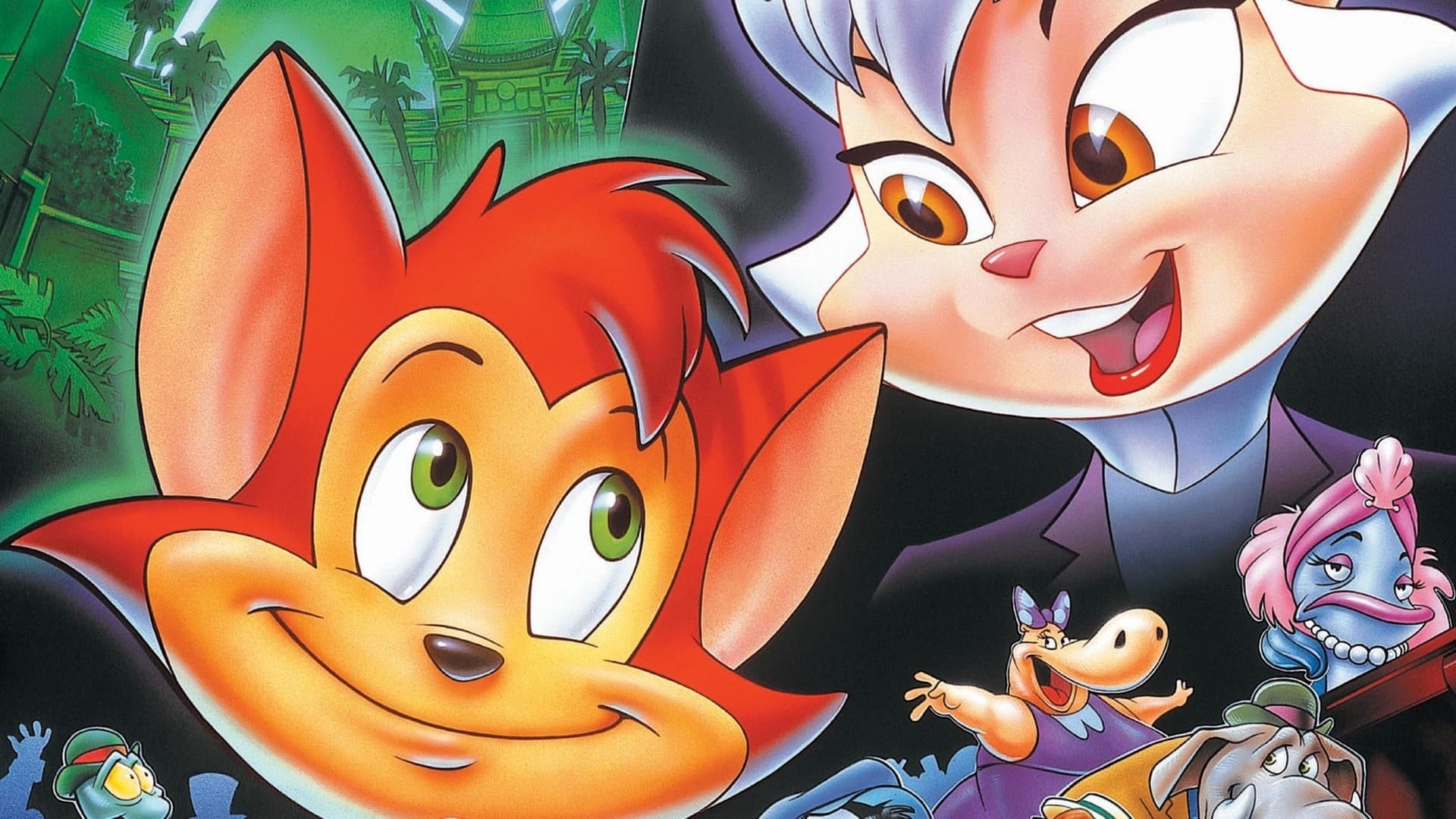

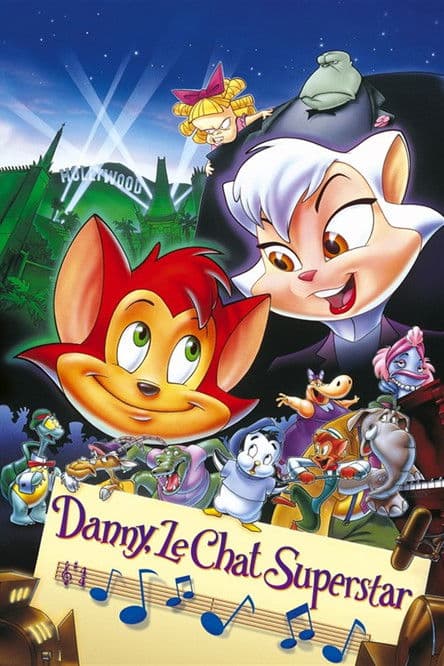
Cats Don't Dance
Cats Don't Dance
Your feedback improves this guide
Your feedback highlights guides that need a second look and keeps the rating trustworthy.
Does this age rating seem accurate to you?
Sign in to vote
Watch-outs
What this film brings
Content barometer
Violence
2/5
Moderate
Fear
2/5
A few scenes
Sexuality
0/5
None
Language
1/5
Mild
Narrative complexity
1/5
Accessible
Adult themes
0/5
None
Expert review
This animated family musical takes place in a playful 1939 Hollywood setting, with a bright, lively mood built around songs, comedy, and appealing animal characters. The main sensitive elements involve a very manipulative child villain, intimidation from her large butler, repeated acts of sabotage, and a few scenes where characters are placed in danger within a cartoon style framework. The intensity stays moderate, with no graphic injury and no sustained darkness, but Darla's cruelty and the repeated humiliation of the heroes may unsettle very young viewers, especially when innocent characters are blamed or discouraged. The film also includes some dated gender stereotypes in the way a few roles are framed, which parents may want to mention in simple terms. For younger or more sensitive children, it can help to watch together, reassure them about the exaggerated animated tone, and talk about perseverance, unfairness, and teamwork.
Synopsis
An ambitious singing and dancing cat in 1939 Hollywood overcomes several obstacles to fulfill his dream of becoming a movie star.
Difficult scenes
Darla Dimple appears to be a sweet child star at first, then quickly reveals herself to be cruel and calculating. She pressures Danny and uses her huge butler Max to physically intimidate him, which may bother children who are sensitive to threatening authority figures or clear power imbalances. One important sequence shows the animal performers being encouraged to believe in their dream, before a sabotage turns that hopeful moment into a public humiliation. Young viewers may find this upsetting because the characters are blamed unfairly and see their hard work ruined for a time. Several scenes use fairly intense cartoon peril, including chases, falls, threats, and frantic studio chaos. Nothing is realistic or graphic, but the fast pacing and emotional volume could still unsettle very young children or viewers who are sensitive to tension. The story repeatedly shows animals being treated as less important than humans in the entertainment world. This theme remains child accessible, but it may prompt questions about exclusion, mockery, and how repeated discouragement can affect confidence.
Where to watch
No verified platform for the US market yet. We keep this section updated as availability changes.
About this title
- Format
- Feature film
- Year
- 1997
- Runtime
- 1h 15m
- Countries
- United States of America
- Original language
- EN
- Directed by
- Mark Dindal
- Main cast
- Scott Bakula, Jasmine Guy, Natalie Cole, Ashley Peldon, Lindsay Ridgeway, Frank Welker, Don Knotts, George Kennedy, John Rhys-Davies, Kathy Najimy
- Studios
- Turner Feature Animation, David Kirschner Productions
Content barometer
Violence
2/5
Moderate
Fear
2/5
A few scenes
Sexuality
0/5
None
Language
1/5
Mild
Narrative complexity
1/5
Accessible
Adult themes
0/5
None
Expert review
This animated family musical takes place in a playful 1939 Hollywood setting, with a bright, lively mood built around songs, comedy, and appealing animal characters. The main sensitive elements involve a very manipulative child villain, intimidation from her large butler, repeated acts of sabotage, and a few scenes where characters are placed in danger within a cartoon style framework. The intensity stays moderate, with no graphic injury and no sustained darkness, but Darla's cruelty and the repeated humiliation of the heroes may unsettle very young viewers, especially when innocent characters are blamed or discouraged. The film also includes some dated gender stereotypes in the way a few roles are framed, which parents may want to mention in simple terms. For younger or more sensitive children, it can help to watch together, reassure them about the exaggerated animated tone, and talk about perseverance, unfairness, and teamwork.
Synopsis
An ambitious singing and dancing cat in 1939 Hollywood overcomes several obstacles to fulfill his dream of becoming a movie star.
Difficult scenes
Darla Dimple appears to be a sweet child star at first, then quickly reveals herself to be cruel and calculating. She pressures Danny and uses her huge butler Max to physically intimidate him, which may bother children who are sensitive to threatening authority figures or clear power imbalances. One important sequence shows the animal performers being encouraged to believe in their dream, before a sabotage turns that hopeful moment into a public humiliation. Young viewers may find this upsetting because the characters are blamed unfairly and see their hard work ruined for a time. Several scenes use fairly intense cartoon peril, including chases, falls, threats, and frantic studio chaos. Nothing is realistic or graphic, but the fast pacing and emotional volume could still unsettle very young children or viewers who are sensitive to tension. The story repeatedly shows animals being treated as less important than humans in the entertainment world. This theme remains child accessible, but it may prompt questions about exclusion, mockery, and how repeated discouragement can affect confidence.