
Crater
Does this age rating seem accurate to you?
Detailed parental analysis
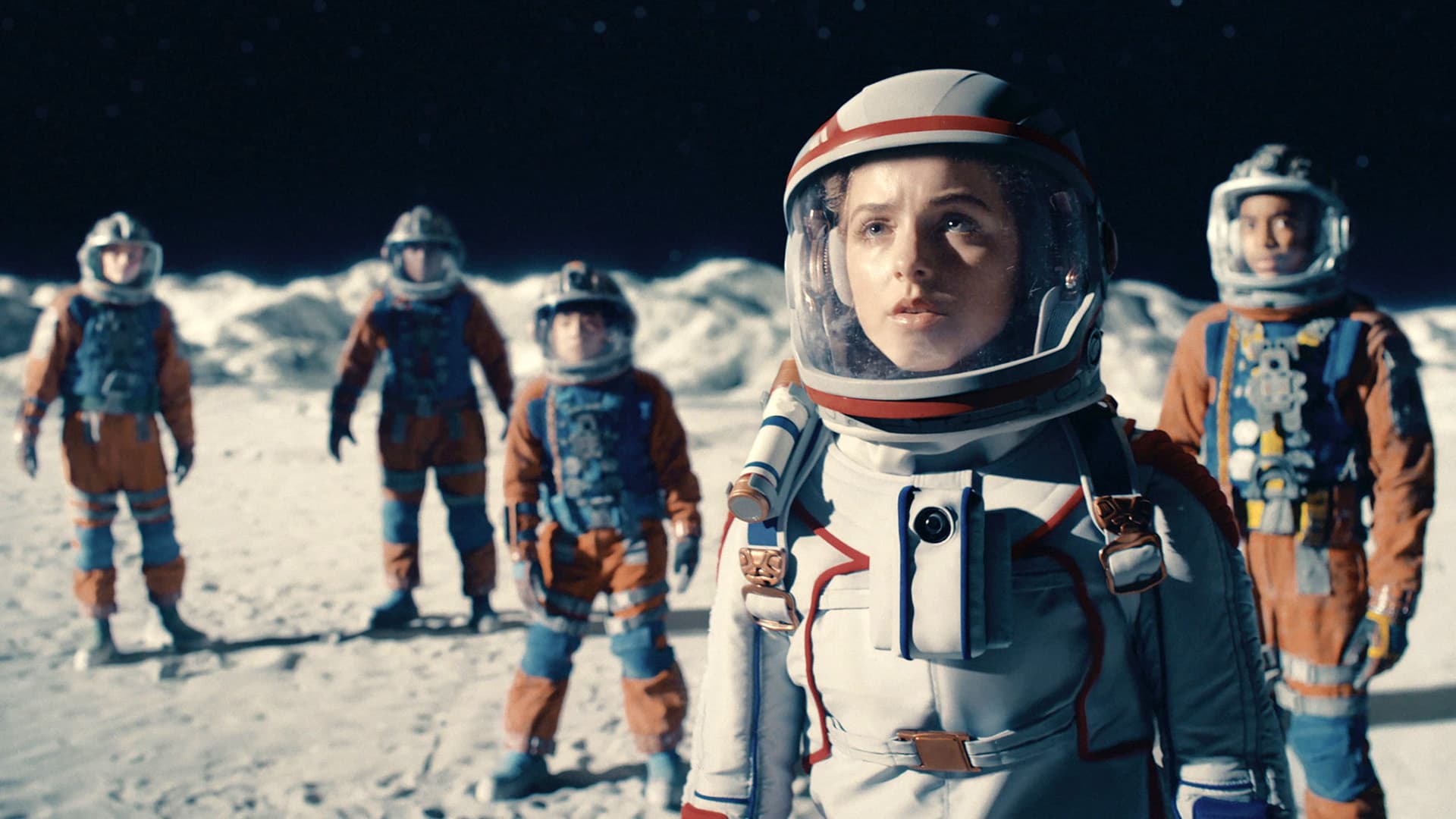
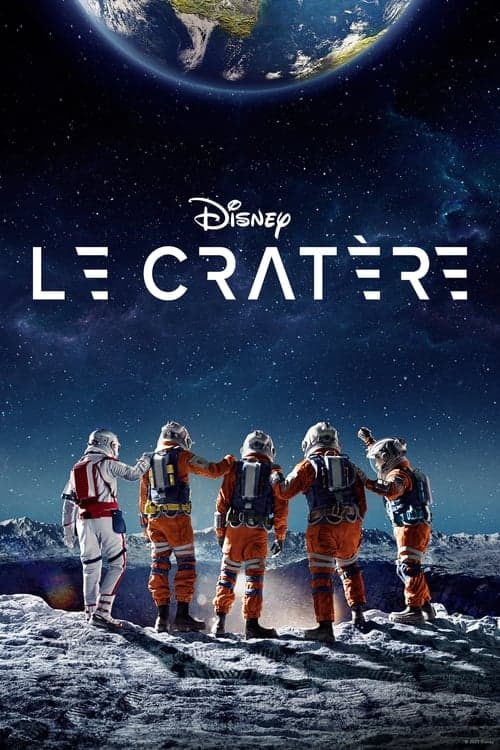
Crater is a science adventure film tinged with melancholy, carried by a lunar atmosphere and an emotional tone more serious than it might appear at first glance. The plot follows a teenager raised on a mining colony on the Moon who, upon his father's death, decides to fulfil his final wish by exploring a mysterious crater with his friends, before being transferred to a distant planet. The film is aimed at pre-adolescents and teenagers, without being designed for young children.
Parental and Family Portrayals
The paternal figure is at the heart of the narrative and its portrayal merits particular attention. The protagonist's father has orchestrated his own death by taking deliberate risks in the mines to obtain a bonus that will allow his son to escape hereditary work contracts. This sacrifice is presented as an ultimate act of love, but it amounts to planned suicide and addresses children directly without being explicitly named. This narrative choice is bold and deserves to be anticipated by the parent: many children aged 10 or 11 do not yet have the tools to disentangle the notion of voluntary sacrifice from intended death, and the conversation that follows the film will be useful, even necessary. The film addresses parental grief with sober sincerity, without self-pity, which constitutes one of its principal emotional qualities.
Underlying Values
The most structuring value of the film is individual freedom in the face of a mining contract system that binds families across generations with no way out. This device functions as a legible critique of forced labour and systemic exploitation, accessible to a young audience without ever becoming didactic. Loyal friendship constitutes the second moral pillar of the narrative: the group acts collectively to honour a promise despite being forbidden, which gives disobedience an assumed narrative legitimacy. It will be useful to discuss with the child the difference between disobeying for a just reason and disobedience as a general principle. The film also carries a message about the value of what one already possesses, in contrast to the promise of a better world elsewhere, which opens interesting discussions about the Earth, our relationship with the environment and false utopias.
Social Themes
The critique of hereditary work contracts constitutes the political subtext of the film: the characters have no right to refuse their assignment, inherit the debts and obligations of their parents, and cannot dream of a different future without external intervention or extreme sacrifice. This picture reflects historical and contemporary realities of labour exploitation that the film renders accessible without softening them. There is also a discreet but coherent ecological dimension: the planet promised to the miners is described as a paradise, but the film suggests that the Earth, even damaged, retains an irreplaceable value. This is not a sermon, it is an idea woven into the narrative.
Violence
The film contains several sequences of intense physical tension: children find themselves in imminent danger of death in space, exposed to the void, asphyxiation, meteor strikes. These scenes are sufficiently realistic in their depiction of peril to generate genuine stress, particularly in sensitive or anxious children. Violence remains non-graphic and without violent interpersonal confrontation, but physical danger is treated seriously and without systematic downplaying. A particularly anxious child or one presenting fears related to space or death could be disturbed.
Language
The language is moderate and free of outright profanity. A few slightly informal expressions punctuate the dialogue, without excess or verbal aggression between characters. This is not a matter of concern for the majority of parents.
Strengths
The film achieves something quite rare for its target audience: addressing death, grief and systemic injustice without condescension or emotional overkill. The relationship between Caleb and his friends is written with an authenticity that avoids the clichés of the teenage group in cinema, and the mechanics of the adventure work because they are driven by genuine human motivation rather than by a fanciful MacGuffin. The lunar universe is constructed with a visual and thematic coherence that gives the film its own identity. For a pre-adolescent, this is a film that takes their intelligence seriously and leaves questions open rather than resolving everything neatly, which makes it a good basis for conversation.
Age recommendation and discussion points
The film is suitable from age 10 onwards, but the theme of paternal sacrifice akin to planned suicide merits being anticipated by the parent before viewing, regardless of the child's age. Two angles of discussion to explore after the film: why the father made this choice and whether other possible paths existed, on one hand; and on the other, what it means to inherit a contract or situation that one did not choose, and how one can free oneself from it.
Synopsis
After the death of his father, a boy growing up on a lunar mining colony takes a trip to explore a legendary crater, along with his four best friends, prior to being permanently relocated to another planet.
About this title
- Format
- Feature film
- Year
- 2023
- Runtime
- 1h 45m
- Countries
- United States of America
- Original language
- EN
- Directed by
- Kyle Patrick Alvarez
- Main cast
- Isaiah Russell-Bailey, Mckenna Grace, Billy Barratt, Orson Hong, Thomas Boyce, Kid Cudi, Selenis Leyva, Hero Hunter, Carson Minniear, Viviana Chavez
- Studios
- Walt Disney Pictures, 21 Laps Entertainment