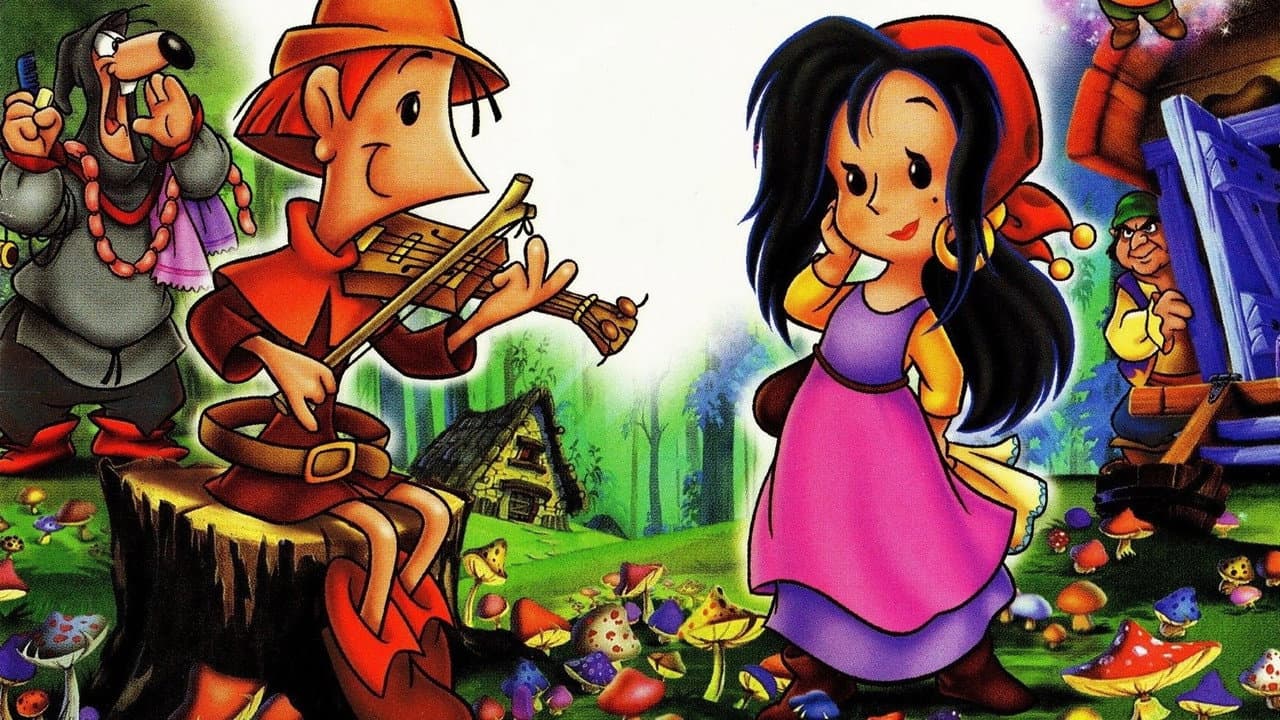
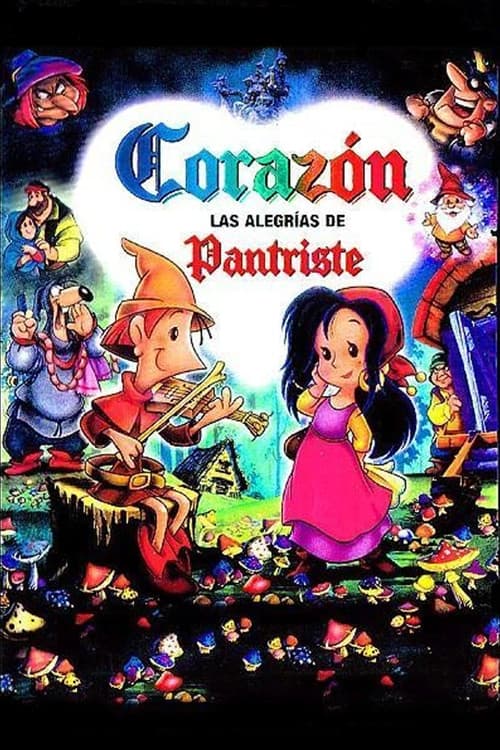
Corazón, las alegrías de Pantriste
Does this age rating seem accurate to you?
Detailed parental analysis
An Argentine animated film with a warm and musical atmosphere, tinged with a few darker passages, this feature tells the story of a young boy who aspires to become a musician in a village of woodcutters where physical strength is the only recognised value. The narrative weaves together adventure, friendship and self-discovery in a fantastical world populated by gnomes, witches and a tyrannical king. It is clearly aimed at young children, with accessible storytelling and universal themes.
Underlying Values
The film builds its narrative around two complementary and well-articulated values. On one hand, the acceptance of difference: the protagonist is unable to follow the path laid out by his father, not through laziness but through artistic vocation, and the narrative vindicates him without ambiguity. It is a positive message about the legitimacy of unconventional talents. On the other hand, resistance to oppression: the woodcutters rise up against a king who abuses his power by imposing crushing taxes, and this collective rebellion is presented as just and necessary. The two threads converge in the same idea: imposed authority, whether familial or political, deserves to be questioned when it denies the individual. This is fertile ground for a conversation with a child about the difference between obedience and submission.
Parental and Family Portrayals
The paternal figure is that of a loving but rigid man, unable to hear his son's aspirations and who exerts real pressure for him to perpetuate family tradition. This tension is the emotional engine of the narrative and is not softened. By contrast, the film introduces a dynamic of benevolent adoption: a girl mistreated by her stepfather finds refuge and protection with the protagonist's family. The mistreatment is represented explicitly enough to be understood by a child, without being visually traumatic, but it deserves to be anticipated and discussed with younger viewers.
Social Themes
The political dimension of the narrative is concrete and readable for a child: a leader who enriches himself at the expense of his population, a community that organises itself to resist. The film does not seek to complicate this picture, with the king being clearly presented as the villain of the story, but it offers a first narrative entry point into notions such as fiscal injustice, abusive power and popular solidarity.
Violence
Violence remains within the codes of the fantastical children's tale: the witch Cachavacha uses curses in service of the king, and the conflict between the woodcutters and royal power includes confrontations, but nothing graphic or traumatic. The threat is real within the narrative without ever descending into horror or gratuitous cruelty.
Strengths
The film has the merit of not reducing its purpose to simplistic moralising: it articulates several levels of narrative, from musical tale to political fable, with narrative coherence that holds throughout. The figure of the musician protagonist in a world of woodcutters is an effective and touching metaphor for the child who does not fit the family mould, a subject with which many young viewers can identify. The integration of music as a narrative and emotional vector gives the film its own identity. The character of Pandereta, the adopted girl, adds welcome emotional depth and grounds the narrative in concrete human stakes.
Age recommendation and discussion points
The film is suitable from age 6 onwards, with parental accompaniment recommended for younger viewers in the face of scenes of mistreatment and the witch figure. Two natural angles for discussion present themselves after viewing: ask the child what he thinks of the father who wants to impose his profession on his son, and whether obeying one's parents means giving up what one loves; and explore with him why the villagers decide to rebel, and what makes a rule or law unjust.
Synopsis
Pantriste is a melancholic and sensitive boy who has a gift for music. His father wants his son to be a woodcutter like him. Together with Mignon and Tambourine, Beanpole and the woodcutters, they face the spells of Neurus and Cachavacha.
About this title
- Format
- Feature film
- Year
- 2000
- Runtime
- 1h 20m
- Countries
- Argentina
- Original language
- ES
- Directed by
- Manuel García Ferré
- Main cast
- Pelusa Suero, Cecilia Stanzione, Enrique Conlazo, Melina Dorio, Néstor D'Alessandro
- Studios
- Producciones García Ferré
Content barometer
- Violence1/5Mild
- Fear2/5A few scenes
- Sexuality0/5None
- Language0/5None
- Narrative complexity1/5Accessible
- Adult themes0/5None
Watch-outs
- Abuse