
Coraline
Does this age rating seem accurate to you?
Detailed parental analysis
Coraline is a fantasy film with a dark and unsettling atmosphere, oscillating between wonder and psychological horror. A young girl discovers behind a secret passage a parallel world that appears perfect, but conceals an increasingly terrifying threat. The film is presented as an adventure for children, but its visual and emotional content is actually intended for older children or adolescents.
Violence
Violence in Coraline is psychological and horrific rather than physical, but it is no less intense. The most striking images include eyes torn out and replaced by buttons sewn into the eye sockets, a character's mouth forcibly sewn shut to impose a fixed smile, stuffed dogs displayed as trophies, and a decapitated rat's head visible on screen. The transformation of the Beldam, the main antagonist, into a thin and monstrous arachnid creature constitutes a visually harrowing climax. These elements serve a coherent narrative purpose: terror advances the story and the resolution valorises courage. That said, the intensity of these images remains powerful for a young child, and several children have reported prolonged nightmares for several months after viewing.
Parental and Family Portrayals
The film constructs its entire plot around the relationship between children and parental figures. Coraline's real parents are emotionally absent: too absorbed by their work, they do not see their daughter, do not listen to her, and neglect her without realising it. This portrait is clearly critical but not caricatural. In contrast, the false mother embodies toxic and predatory parenthood, seductive in appearance but founded on captation and possession. The film concludes by valuing the real and imperfect family over the false and dangerous ideal. This is a particularly rich angle for discussion with a child: what does it mean to be a present parent, and why is true love more precious than love too perfect to be honest?
Underlying Values
The film's central message is solid: courage consists in confronting what frightens us in order to protect those we love. Coraline grows throughout the narrative, transforming from a frustrated and passive child into a heroine who acts despite fear. The film also implicitly critiques the fascination with a perfect world and the temptation to flee reality rather than transform it. There is no simplistic moral or magical resolution: Coraline's victory is the fruit of ingenuity, perseverance and genuine risk-taking.
Discrimination
The film contains two minor but identifiable problematic representations. Insects are consistently presented as repulsive, malevolent and destined to be crushed, reflecting a symbolic hierarchy of species without critical distance. Furthermore, one sequence features a parody of the Venus de Milo with an overweight character, in visual opposition with thin silhouettes, which can be read as an implicit devaluation of corpulence. These elements do not structure the narrative but deserve to be noted, particularly for a child receptive to representations of the body.
Strengths
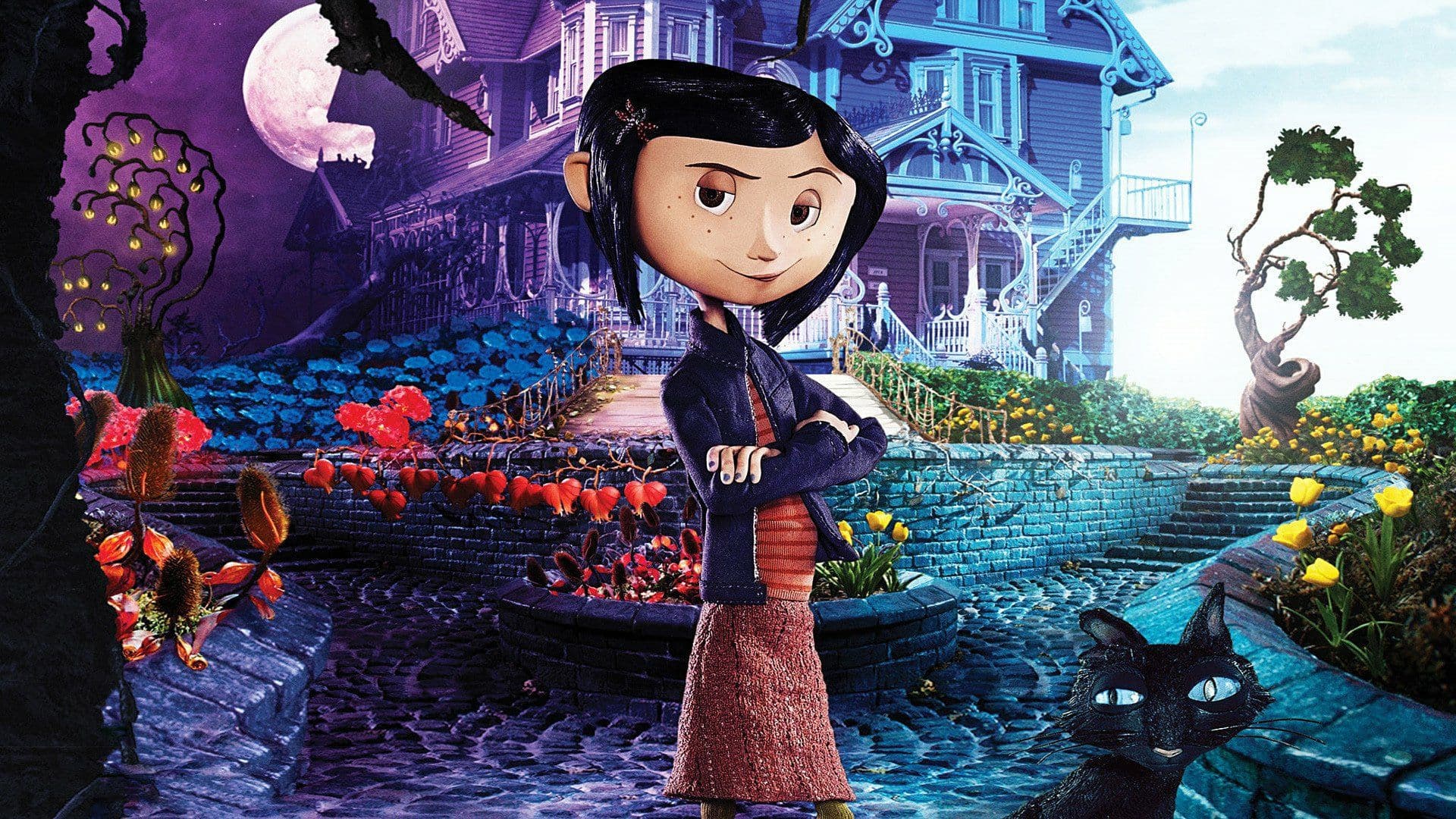
Coraline is a visually inventive work whose artistic direction constructs two radically distinct worlds with remarkable coherence and richness of detail. The real world, drab and cluttered, deliberately contrasts with the other world saturated with colour and marvels, rendering the narrative shift all the more effective. The film addresses the tedium of childhood, the need for recognition and the temptation of escape with a sincerity that transcends mere adventure narrative. The construction of the antagonist is particularly accomplished: the Beldam is at first seductive, almost loving, before revealing her predatory nature, which forces the viewer to retrospectively reassess every scene. For a child old enough to receive it, the film offers a dense and memorable emotional experience, with a heroine who must rely on herself to survive.
Age recommendation and discussion points
Coraline is not suitable for children under 9 years old, and genuinely comfortable viewing assumes rather 10 to 11 years old, depending on the child's sensitivity to images of psychological horror. After the film, two angles of discussion emerge naturally: ask the child what makes the Beldam's perfect world so dangerous despite its attractive appearance, and explore together why Coraline ends up preferring her real parents, imperfect, to an ideal but false maternal figure.
Synopsis
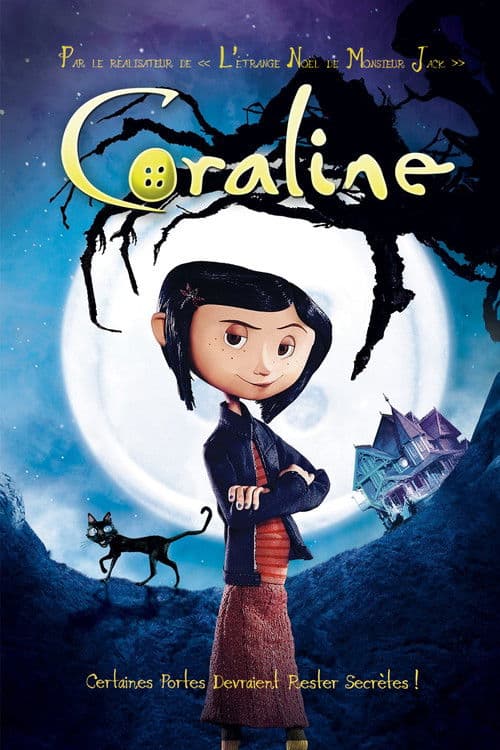
Wandering her rambling old house in her boring new town, 11-year-old Coraline discovers a hidden door to a strangely idealized version of her life. In order to stay in the fantasy, she must make a frighteningly real sacrifice.
About this title
- Format
- Feature film
- Year
- 2009
- Runtime
- 1h 40m
- Countries
- United States of America
- Original language
- EN
- Studios
- LAIKA, Pandemonium
Content barometer
- Violence3/5Notable
- Fear5/5Very intense
- Sexuality0/5None
- Language0/5None
- Narrative complexity2/5Moderate
- Adult themes0/5None
Watch-outs
- Death
- Abuse
Values conveyed
- Courage
- Perseverance
- Autonomy
- critical thinking against manipulation
- family love