

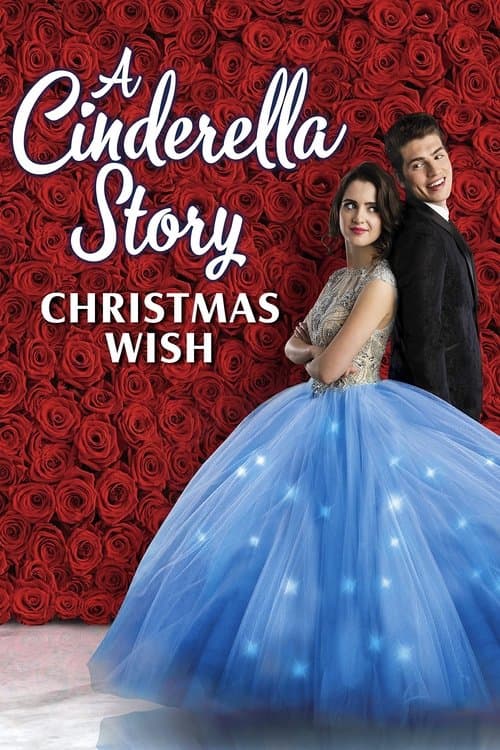
A Cinderella Story: Christmas Wish
A Cinderella Story: Christmas Wish
Your feedback improves this guide
Your feedback highlights guides that need a second look and keeps the rating trustworthy.
Does this age rating seem accurate to you?
Sign in to vote
Watch-outs
What this film brings
Content barometer
Violence
1/5
Mild
Fear
1/5
Mild
Sexuality
1/5
Allusions
Language
1/5
Mild
Narrative complexity
2/5
Moderate
Adult themes
0/5
None
Expert review
This modern Christmas retelling of Cinderella has a musical, romantic, and festive tone, and it is clearly aimed at teens and families who enjoy familiar fairy tale formulas. The main sensitive material comes from the stepmother and stepsisters' emotional cruelty, the heroine's financial exploitation, the grief connected to her father's earlier death, and several scenes of public or private humiliation. The intensity stays moderate, with no graphic violence and very little physical threat, but the unkind treatment is frequent enough to upset children who react strongly to unfair family dynamics or controlling adults. The romance is mild, the language is mostly clean, and the overall story remains reassuring even when some scenes feel sad or frustrating. For children around age 8, the film is usually manageable if they already enjoy resilience stories, though parental guidance can be helpful for talking about emotional abuse, deception, and feeling powerless around unfair adults.
Synopsis
Kat is an aspiring singer-songwriter who dreams of making it big. However, her dreams are stalled by her reality: a conniving and cruel stepfamily and a demoralizing job working as a singing elf at billionaire Terrence Wintergarden’s Santa Land.
Difficult scenes
The film begins with a fairly heavy setup for Kat, who is living after her father's death under the control of a stepmother and stepsisters who treat her badly. They use her like a servant, control her money, and even use the needs of her disabled dog as an excuse to take part of her wages, which can feel especially unfair and upsetting for younger viewers. Several scenes show Kat being belittled, controlled, and blocked from pursuing her goals, with humiliating comments about her worth and her place in the household. This mistreatment is verbal and emotional rather than physical, but it is a major part of the story and may be hard for children who are sensitive to abusive family dynamics. One especially frustrating section happens when Kat's attempt to attend an important event is deliberately sabotaged by her stepfamily. A dress is stolen from her and her invitation is destroyed on purpose, creating a strong sense of powerlessness and injustice before the story moves on. Later, an object closely tied to the memory of her father is broken during a confrontation with her stepfamily. Kat breaks down crying, and this clear scene of grief may affect children who respond strongly to bereavement, the loss of treasured keepsakes, or visible emotional distress.
Where to watch
No verified platform for the US market yet. We keep this section updated as availability changes.
About this title
- Format
- Feature film
- Year
- 2019
- Runtime
- 1h 25m
- Countries
- Canada, United States of America
- Original language
- EN
- Directed by
- Michelle Johnston
- Main cast
- Laura Marano, Gregg Sulkin, Isabella Gómez, Johannah Newmarch, Lillian Doucet-Roche, Chanelle Peloso, Barclay Hope, Garfield Wilson, Taz Van Rassel, Maddie Phillips
- Studios
- Front Street Pictures, Blue Ribbon Content, Warner Bros. Home Entertainment Group
Content barometer
Violence
1/5
Mild
Fear
1/5
Mild
Sexuality
1/5
Allusions
Language
1/5
Mild
Narrative complexity
2/5
Moderate
Adult themes
0/5
None
Expert review
This modern Christmas retelling of Cinderella has a musical, romantic, and festive tone, and it is clearly aimed at teens and families who enjoy familiar fairy tale formulas. The main sensitive material comes from the stepmother and stepsisters' emotional cruelty, the heroine's financial exploitation, the grief connected to her father's earlier death, and several scenes of public or private humiliation. The intensity stays moderate, with no graphic violence and very little physical threat, but the unkind treatment is frequent enough to upset children who react strongly to unfair family dynamics or controlling adults. The romance is mild, the language is mostly clean, and the overall story remains reassuring even when some scenes feel sad or frustrating. For children around age 8, the film is usually manageable if they already enjoy resilience stories, though parental guidance can be helpful for talking about emotional abuse, deception, and feeling powerless around unfair adults.
Synopsis
Kat is an aspiring singer-songwriter who dreams of making it big. However, her dreams are stalled by her reality: a conniving and cruel stepfamily and a demoralizing job working as a singing elf at billionaire Terrence Wintergarden’s Santa Land.
Difficult scenes
The film begins with a fairly heavy setup for Kat, who is living after her father's death under the control of a stepmother and stepsisters who treat her badly. They use her like a servant, control her money, and even use the needs of her disabled dog as an excuse to take part of her wages, which can feel especially unfair and upsetting for younger viewers. Several scenes show Kat being belittled, controlled, and blocked from pursuing her goals, with humiliating comments about her worth and her place in the household. This mistreatment is verbal and emotional rather than physical, but it is a major part of the story and may be hard for children who are sensitive to abusive family dynamics. One especially frustrating section happens when Kat's attempt to attend an important event is deliberately sabotaged by her stepfamily. A dress is stolen from her and her invitation is destroyed on purpose, creating a strong sense of powerlessness and injustice before the story moves on. Later, an object closely tied to the memory of her father is broken during a confrontation with her stepfamily. Kat breaks down crying, and this clear scene of grief may affect children who respond strongly to bereavement, the loss of treasured keepsakes, or visible emotional distress.