
Coco
Does this age rating seem accurate to you?
Detailed parental analysis
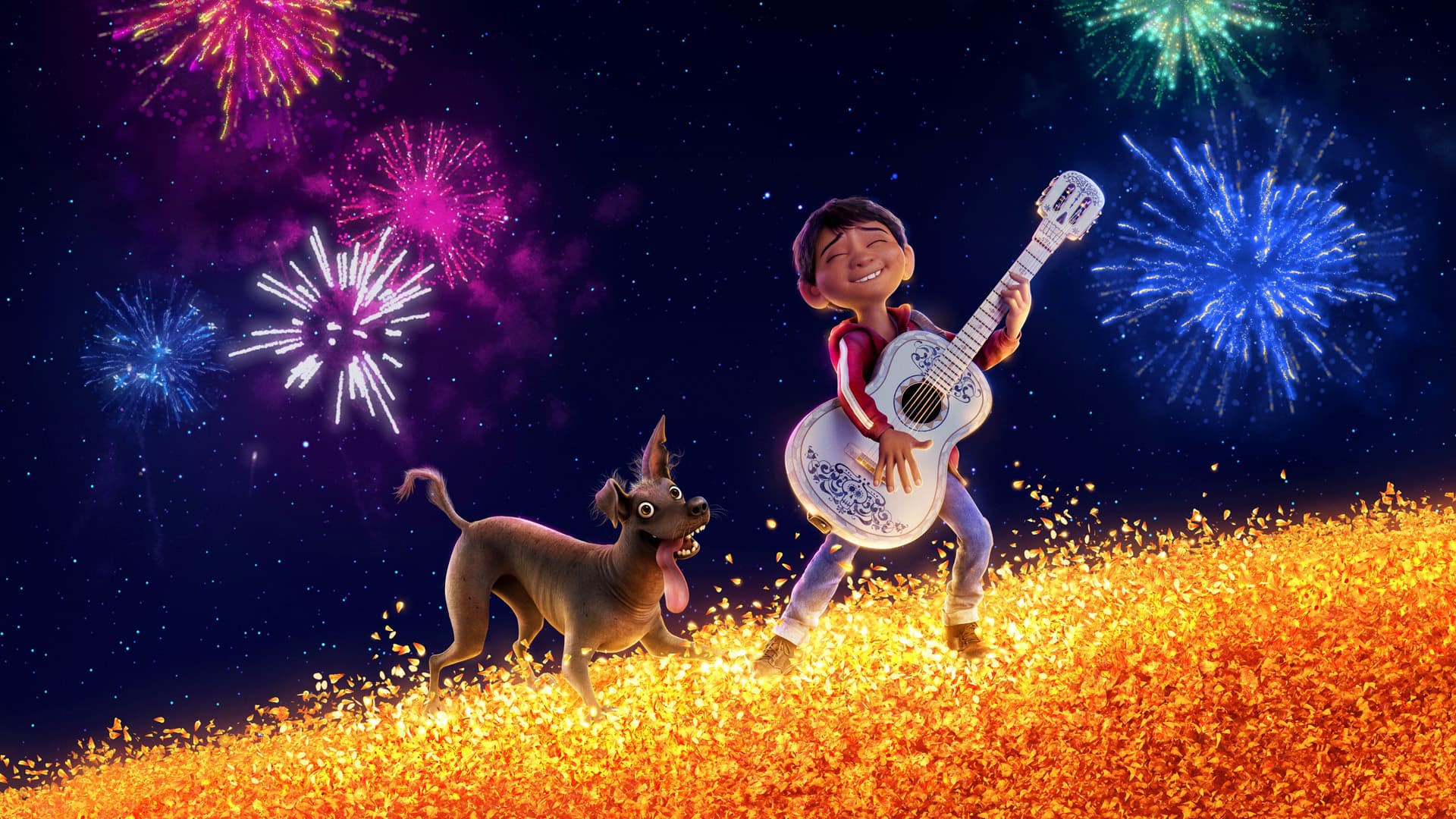
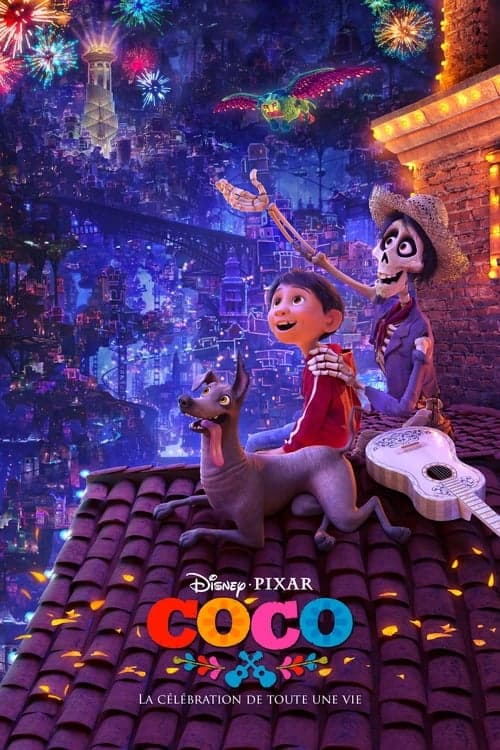
Coco is a Pixar animated film with a colourful and festive atmosphere, underpinned by a profound emotional charge about memory and death. The plot follows Miguel, a young boy passionate about music who finds himself transported into the world of the dead during the Mexican Day of the Dead festival and must find his way back before dawn. The film primarily targets children from 7-8 years old and their parents, but its emotional power makes it equally an adult experience.
Underlying Values
The film constructs its entire dramatic structure around a tension between Miguel's individual passion for music and the family prohibition that has weighed on that same music for generations. The resolution chosen does not come through triumphant rebellion but through reconciliation: Miguel gets his way without breaking family bonds, which is a structurally sound message. The film strongly values the remembrance of the dead as an act of active love, and presents forgetting as true death, a powerful and philosophically dense idea. The treatment of betrayal is unambiguous: lying and intellectual theft are condemned without nuance, and the culprit is clearly exposed. Religion is present as an undertone through the cosmology of Día de los Muertos, but treated in a cultural and poetic manner rather than a doctrinal one.
Parental and Family Portrayals
Family structure is central and complex. Family authority is initially presented as crushing: the grandmother imposes her rule with real physical severity (see the violence section), and the entire family attempts to force Miguel into a destiny he has not chosen. The film takes care to rehabilitate this authority by giving it a legitimate and painful reason, which avoids manichaeism. The figure of great-grandmother Mama Coco, suffering from severe cognitive impairment, is treated with a dignity and tenderness that is rare in animated cinema. The family in its broader sense, including deceased ancestors, is presented as a protective net rather than a prison, even though the film honestly acknowledges the tension this generates.
Violence
Violence is present but confined to specific sequences. The grandmother delivers blows with a shoe on a recurring basis in a comedic manner, but it is nonetheless a normalised physical violence against child and adult that is worth naming. The most intense scene concerns the death of an antagonistic character: a giant bell crashes down on him during a spectacular confrontation. This death is shown without blood but with strong visual impact, and it is presented as narrative justice rather than gratuitous violence. A poisoning scene, showing a character deliberately poisoning another with a drink, is brief but real in its moral implications. The whole remains within the proportions expected of a family animated film, without gore or prolonged cruelty.
Social Themes
The film immerses the viewer in the Mexican celebration of Día de los Muertos with a tangible commitment to cultural fidelity: the settings, music, rituals and costumes are rendered with precision and respect. It is a genuine opening onto a conception of death radically different from the dominant Western tradition, making it an interesting conversation starter for families. The world of the dead reproduces a hierarchical society founded on notoriety and forgetting, a discrete but readable critique of the capitalist relationship to celebrity and selective remembrance.
Substances
Alcohol is present during celebration scenes and in the act of poisoning central to the narrative, without being valorised or particularly highlighted. Its presence is discreet and does not constitute a notable cause for concern.
Strengths
Coco is one of the most accomplished animated films of recent years on both emotional and narrative grounds. It manages to render death not terrifying but melancholic and luminous at once, which is a rare screenwriting achievement. The final scene around memory and song is of remarkable emotional effectiveness, constructed with clockwork precision across several acts. Mexican cultural transmission is not mere backdrop but the true engine of the narrative. The film also succeeds in treating the cognitive illness of an elderly character with a tenderness that is never condescending. For parents, it is a solid pedagogical tool for addressing death, memory and grief with children old enough to receive it.
Age recommendation and discussion points
The film is not recommended for children under 7 years old: the world of the dead, the progressive transformation of Miguel's body into a skeleton, and the scene of permanent disappearance of a forgotten character have caused lasting disturbance in children aged 5-6. From 7-8 years old, viewing is straightforward for the vast majority of children, accompanied by a parent available to answer questions. After the film, two angles are worth discussing: asking the child what dying truly means in their understanding, and why remembering a person can be as concrete an act of love as a physical gesture.
Synopsis
Despite his family’s baffling generations-old ban on music, Miguel dreams of becoming an accomplished musician like his idol, Ernesto de la Cruz. Desperate to prove his talent, Miguel finds himself in the stunning and colorful Land of the Dead following a mysterious chain of events. Along the way, he meets charming trickster Hector, and together, they set off on an extraordinary journey to unlock the real story behind Miguel's family history.
About this title
- Format
- Feature film
- Year
- 2017
- Runtime
- 1h 50m
- Countries
- United States of America
- Original language
- EN
- Studios
- Pixar
Content barometer
- Violence2/5Moderate
- Fear3/5Notable tension
- Sexuality0/5None
- Language0/5None
- Narrative complexity2/5Moderate
- Adult themes1/5Mild
Values conveyed
- Loyalty
- Forgiveness
- family
- memory
- perseverance
- legacy