Tinker Bell and the Legend of the NeverBeast
Tinker Bell and the Legend of the NeverBeast
Your feedback improves this guide
Your feedback highlights guides that need a second look and keeps the rating trustworthy.
Does this age rating seem accurate to you?
Sign in to vote
Watch-outs
What this film brings
Content barometer
Violence
2/5
Moderate
Fear
2/5
A few scenes
Sexuality
0/5
None
Language
0/5
None
Narrative complexity
1/5
Accessible
Adult themes
0/5
None
Expert review
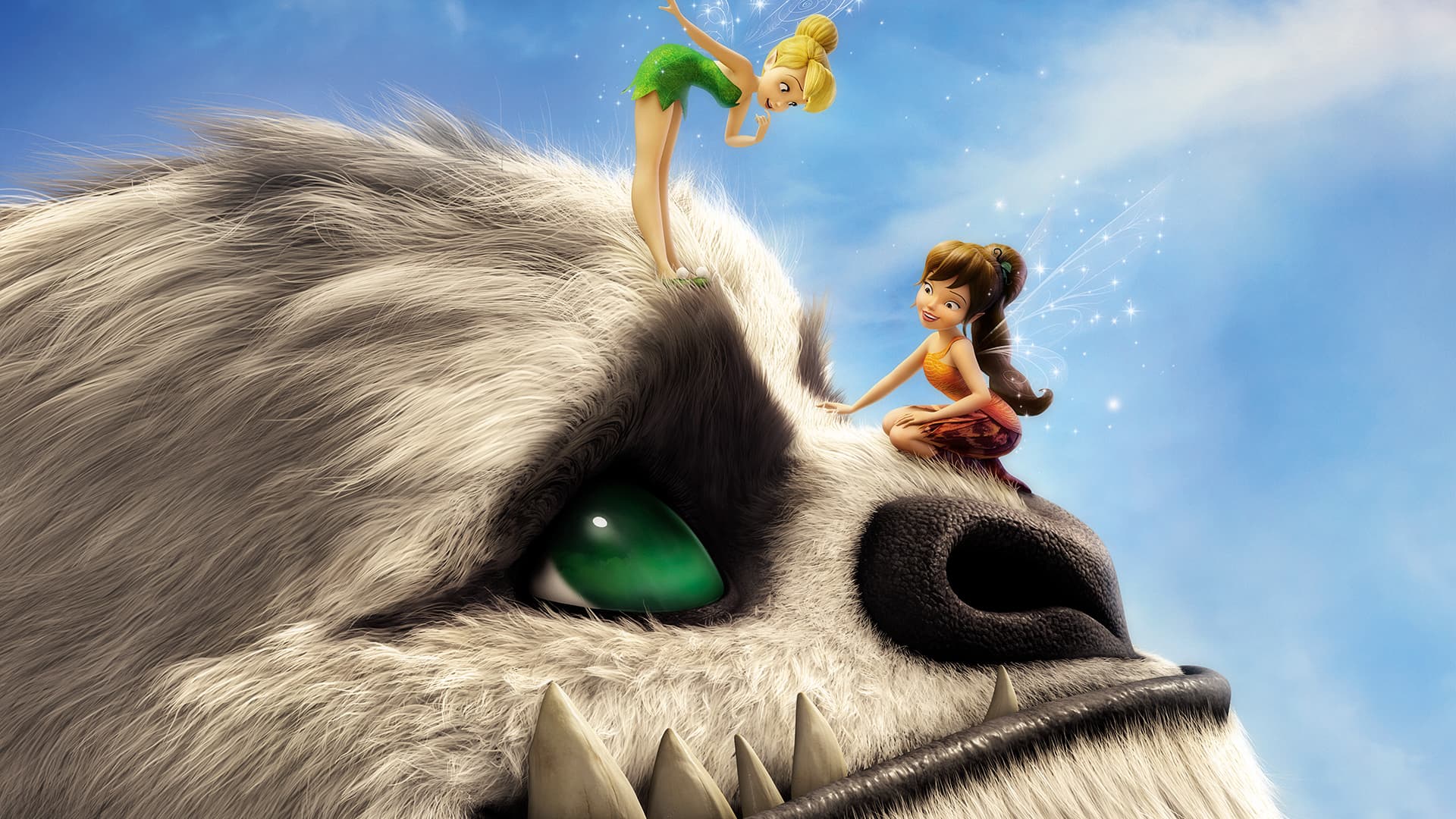
Tinker Bell and the Legend of the NeverBeast is a gentle and adventurous Disney animated film focused on the friendship between Fawn, a warm-hearted animal fairy, and Gruff, a mysterious and imposing creature who proves to be kind-hearted despite his frightening appearance. The sensitive elements mainly involve the visual fear triggered by Gruff's transformation into a monstrous beast with large horns, wings, and a tail, as well as intense storm sequences filled with lightning and a threatening atmosphere. These tense moments remain brief and are embedded in an overall warm narrative, but a scene near the end where Fawn appears to perish during the storm may genuinely move younger viewers, even though the conclusion is reassuring. Parents can use the film as an opportunity to discuss courage, not judging others by their appearance, and trusting one's own instincts, and should be available to comfort children if an emotionally charged moment surprises them.
Synopsis
An ancient myth of a massive creature sparks the curiosity of Tinker Bell and her good friend Fawn, an animal fairy who’s not afraid to break the rules to help an animal in need. But this creature is not welcome in Pixie Hollow — and the scout fairies are determined to capture the mysterious beast, who they fear will destroy their home. Fawn must convince her fairy friends to risk everything to rescue the NeverBeast.
Difficult scenes
Gruff's progressive transformation into a monstrous creature is one of the most visually striking sequences in the film. The creature, whom children have grown to love alongside Fawn, suddenly sprouts large horns, a long tail, and enormous wings as the fairies look on in horror. The music turns dark and the direction emphasizes the beast's terrifying appearance. Sensitive or very young children may be unsettled by this abrupt visual reversal, especially if they had become attached to Gruff. The storm sequences featuring swirling green clouds and intense lightning strikes on Pixie Hollow create a dark and oppressive atmosphere for a notable portion of the film. The threat is presented as real and potentially catastrophic for a world that children may know and love from the previous Tinker Bell films. Near the film's climax, Fawn plunges into the heart of the storm alongside Gruff to absorb the lightning and save Pixie Hollow. She collapses afterward and does not immediately revive, leaving other characters and the audience believing she may have died. This sequence, though followed by a happy resolution, can cause genuine emotional distress in young children, particularly those who are attached to the characters in the series. The scout fairies led by Nyx actively pursue Gruff throughout the film with the intent to capture or neutralize him. These chase scenes, involving nets, nighttime pursuits, and the use of a knockout substance called Nightshade, build repeated tension that may weigh on younger viewers.
Where to watch
No verified platform for the US market yet. We keep this section updated as availability changes.
Availability checked on Apr 01, 2026
About this title
- Format
- Feature film
- Year
- 2014
- Runtime
- 1h 16m
- Countries
- United States of America
- Original language
- EN
- Directed by
- Steve Loter
- Main cast
- Ginnifer Goodwin, Mae Whitman, Rosario Dawson, Lucy Liu, Raven-Symoné, Megan Hilty, Pamela Adlon, Danai Gurira, Chloe Bennet, Thomas Lennon
- Studios
- DisneyToon Studios
Content barometer
Violence
2/5
Moderate
Fear
2/5
A few scenes
Sexuality
0/5
None
Language
0/5
None
Narrative complexity
1/5
Accessible
Adult themes
0/5
None
Expert review
Tinker Bell and the Legend of the NeverBeast is a gentle and adventurous Disney animated film focused on the friendship between Fawn, a warm-hearted animal fairy, and Gruff, a mysterious and imposing creature who proves to be kind-hearted despite his frightening appearance. The sensitive elements mainly involve the visual fear triggered by Gruff's transformation into a monstrous beast with large horns, wings, and a tail, as well as intense storm sequences filled with lightning and a threatening atmosphere. These tense moments remain brief and are embedded in an overall warm narrative, but a scene near the end where Fawn appears to perish during the storm may genuinely move younger viewers, even though the conclusion is reassuring. Parents can use the film as an opportunity to discuss courage, not judging others by their appearance, and trusting one's own instincts, and should be available to comfort children if an emotionally charged moment surprises them.
Synopsis
An ancient myth of a massive creature sparks the curiosity of Tinker Bell and her good friend Fawn, an animal fairy who’s not afraid to break the rules to help an animal in need. But this creature is not welcome in Pixie Hollow — and the scout fairies are determined to capture the mysterious beast, who they fear will destroy their home. Fawn must convince her fairy friends to risk everything to rescue the NeverBeast.
Difficult scenes
Gruff's progressive transformation into a monstrous creature is one of the most visually striking sequences in the film. The creature, whom children have grown to love alongside Fawn, suddenly sprouts large horns, a long tail, and enormous wings as the fairies look on in horror. The music turns dark and the direction emphasizes the beast's terrifying appearance. Sensitive or very young children may be unsettled by this abrupt visual reversal, especially if they had become attached to Gruff. The storm sequences featuring swirling green clouds and intense lightning strikes on Pixie Hollow create a dark and oppressive atmosphere for a notable portion of the film. The threat is presented as real and potentially catastrophic for a world that children may know and love from the previous Tinker Bell films. Near the film's climax, Fawn plunges into the heart of the storm alongside Gruff to absorb the lightning and save Pixie Hollow. She collapses afterward and does not immediately revive, leaving other characters and the audience believing she may have died. This sequence, though followed by a happy resolution, can cause genuine emotional distress in young children, particularly those who are attached to the characters in the series. The scout fairies led by Nyx actively pursue Gruff throughout the film with the intent to capture or neutralize him. These chase scenes, involving nets, nighttime pursuits, and the use of a knockout substance called Nightshade, build repeated tension that may weigh on younger viewers.