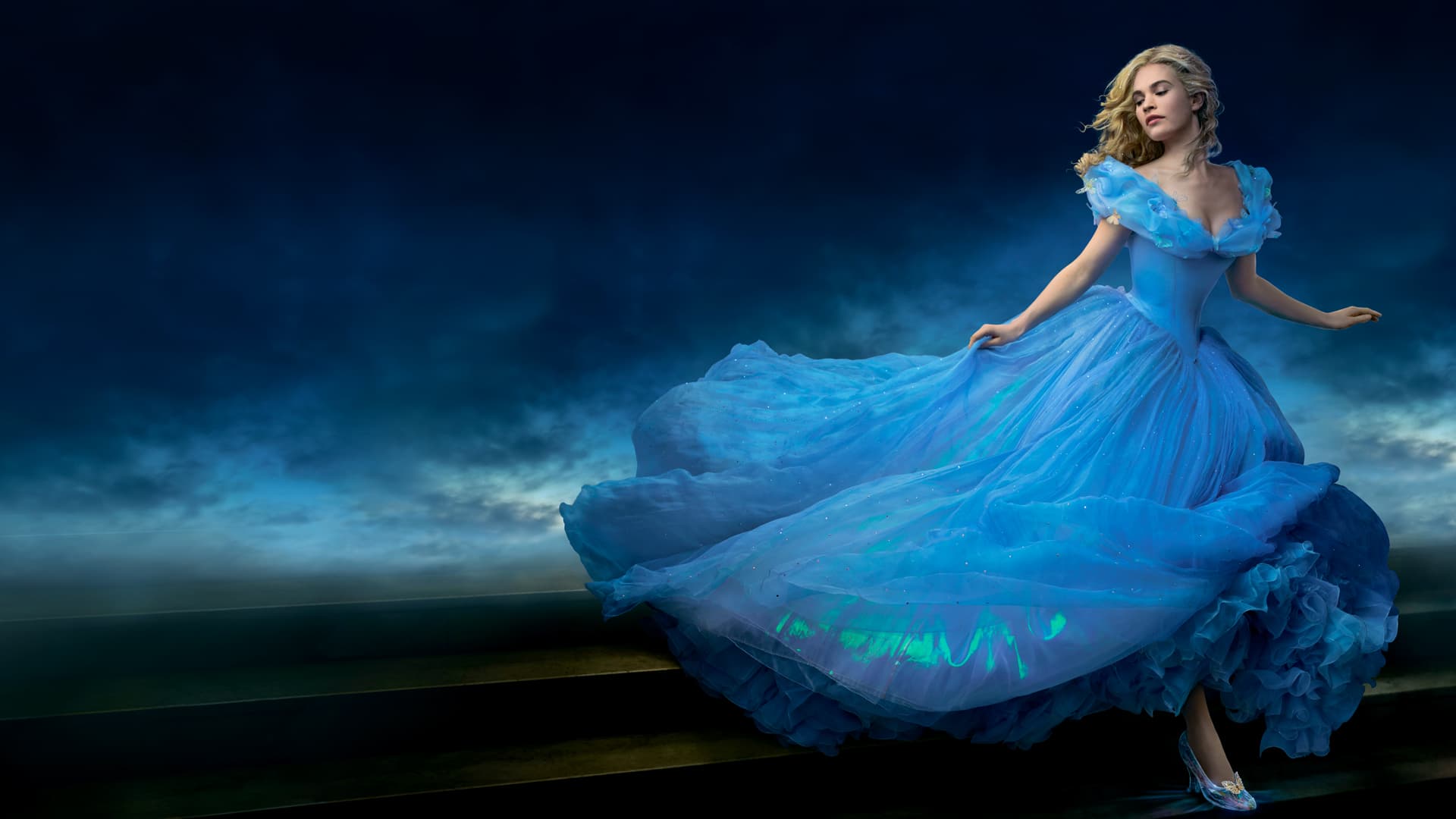

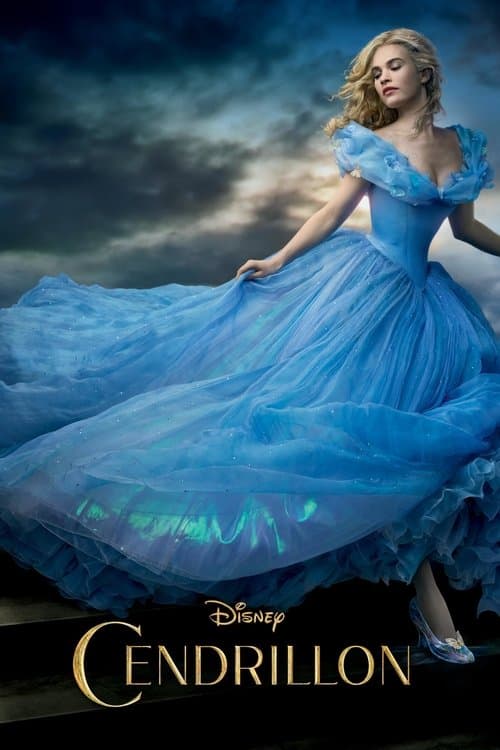
Cinderella
Does this age rating seem accurate to you?
Detailed parental analysis
Cinderella is a live-action fairy tale, visually sumptuous and steeped in a bittersweet atmosphere that blends wonder with melancholy. The story follows Ella, a young woman of unwavering kindness who, despite the humiliations inflicted upon her by her stepmother, firmly believes in magic and goodwill. The film is primarily aimed at children from six years old and pre-adolescents, but its careful craftsmanship and emotional depth make it a film that adults fully appreciate in the company of their children.
Parental and Family Portrayals
The death of both of Ella's parents forms the emotional foundation of the film and is one of its most intense components. Her mother fades away slowly from illness in a scene laden with farewells and tears. Her father, absent through his travels and then overtaken by sudden death, leaves Ella alone facing a cold and calculating stepmother. The substitute maternal figure is a cruel antagonist who exerts constant verbal, emotional and material control over Ella, humiliating her, relegating her to domestic tasks and ultimately confining her to break her future. These dysfunctional family dynamics lie at the heart of the narrative and may touch children already confronted with bereavement or difficult family situations. The film does not trivialise these maltreatments, but neither does it explore them with psychological depth: they serve as a dramatic driver rather than as subject matter for reflection.
Underlying Values
The film carries a central message explicitly formulated: to have courage and to be kind. This maxim structures Ella's behaviour throughout and culminates in a final scene in which she chooses to forgive her stepmother rather than seek revenge. Forgiveness is presented here as a strength, not as capitulation, which is a pedagogically valuable nuance. On the other hand, the narrative also rests on a logic of social conformism and reward through princely marriage: Ella's virtue is rewarded by an external social and romantic ascension, which merits discussion. Physical appearance occupies a central place, with transformation through the dress and glass slippers presented as a condition of entry to the ball and, symbolically, to recognition. Ella's silhouette in her ball gown, with a visually very slender waist, may raise questions about bodily standards, particularly amongst pre-adolescent girls.
Discrimination
The stepsisters are depicted as foolish, superficial and jealous, without nuance or psychological depth. This two-dimensional treatment amounts to caricaturing female characters in order to better valorise the heroine by contrast. The heroine herself, though courageous and loving, remains largely passive in the face of the abuse she suffers: it is the fairy godmother and the prince who act to change her situation, which reproduces a pattern in which female virtue awaits recognition and rescue from without. This narrative device is faithful to the original tale, but it is worth explicitly mentioning to a child or pre-adolescent to open conversation about female agency.
Substances
Adults consume alcohol at the ball and at a party at the stepmother's house, and gambling is also present at this same party. These elements remain in the background and are neither valorised nor commented upon by the narrative. Their presence is anecdotal from a dramatic standpoint but real, and may warrant a brief remark for younger children.
Strengths
The film offers visually remarkable direction, with an artistic treatment of sets, costumes and lighting that creates a credible and immersive fairy-tale world without tipping into artificiality. The characterisation of the main character gives Ella an emotional consistency rare for the genre: her kindness is not naïve but chosen, which confers upon her a real narrative dignity. The farewell scene with the stepmother, restrained and without melodramatic excess, is one of the most emotionally just moments in the film. For children, the film provides a natural entry point into the tradition of the European fairy tale, with an adaptation sufficiently faithful to serve as a cultural reference point. Its length and pace, more contemplative than brisk in the first half, require a certain capacity for attention but reward it with careful narrative coherence.
Age recommendation and discussion points
The film is suitable from six years old with parental accompaniment, particularly for the bereavement scenes and stepmother maltreatment that may trouble younger viewers. From eight years old, most children can watch it without particular difficulty. Two angles merit discussion after viewing: why does Ella not seek to change her situation herself, and does she need a beautiful dress for the prince to notice her? These simple questions allow you to open with the child a reflection on autonomy, personal worth independent of appearance, and the difference between forgiving someone and accepting mistreatment.
Synopsis
When her father unexpectedly passes away, young Ella finds herself at the mercy of her cruel stepmother and her daughters. Never one to give up hope, Ella's fortunes begin to change after meeting a dashing stranger in the woods.
About this title
- Format
- Feature film
- Year
- 2015
- Runtime
- 1h 45m
- Countries
- United Kingdom, United States of America
- Original language
- EN
- Directed by
- Kenneth Branagh
- Main cast
- Lily James, Cate Blanchett, Richard Madden, Stellan Skarsgård, Holliday Grainger, Sophie McShera, Derek Jacobi, Helena Bonham Carter, Nonso Anozie, Ben Chaplin
- Studios
- Walt Disney Pictures, Genre Films, Beagle Pug Films, Allison Shearmur Productions
Content barometer
- Violence1/5Mild
- Fear2/5A few scenes
- Sexuality1/5Allusions
- Language0/5None
- Narrative complexity3/5Complex
- Adult themes1/5Mild
Values conveyed
- Courage
- Compassion
- Forgiveness
- kindness
- resilience
- family love
- hope