Christopher's Christmas Mission
Does this age rating seem accurate to you?
Detailed parental analysis
A Swedish animated short film with a warm and gently melancholic atmosphere, this film tells the story of a young boy who, as Christmas approaches, decides to redistribute postal parcels from wealthy families to the most deprived. The narrative is primarily aimed at children aged 8-10 and above, but its moral weight and bittersweet humour make it a work that adults fully appreciate. Broadcast every year on Swedish television since 1975, it has become an unmissable national tradition.
Underlying Values
The heart of the film is a reflection on social justice and the sharing of wealth, embodied by a child who acts according to a Robin Hood logic: take from the rich to give to the poor. This redistribution is presented as morally just and emotionally satisfying, without the film truly questioning the legitimacy of the act itself. This is a valuable angle for discussion with a child: does generosity justify taking what does not belong to us? The film does, however, nuance its argument by also valuing honesty and the admission of wrongdoing, with the protagonist accepting the consequences of his actions rather than concealing them. Generosity towards the most deprived is presented as the true meaning of Christmas, in counterpoint to an implicitly criticised bourgeois consumerism.
Parental and Family Portrayals
The father's reaction, in which he becomes angry, calls his son an ideologue and punishes him by sending him to bed, is a moment of realistic and non-caricatural family tension. The father is not a monster: he is embarrassed and overwhelmed by his son's actions, which makes him human. The mother, meanwhile, weeps upon learning of the situation. This bourgeois family unit, destabilised by the child's idealism, offers a good entry point for discussing with a child the difference between the values one displays and those one practises.
Social Themes
The film is set in Stockholm during the Second World War, and the historical context is present in the background, notably through a few visual details of the period. Social inequalities between wealthy and poor families form the driving force of the narrative and are treated with a pedagogical clarity suited to children.
Strengths
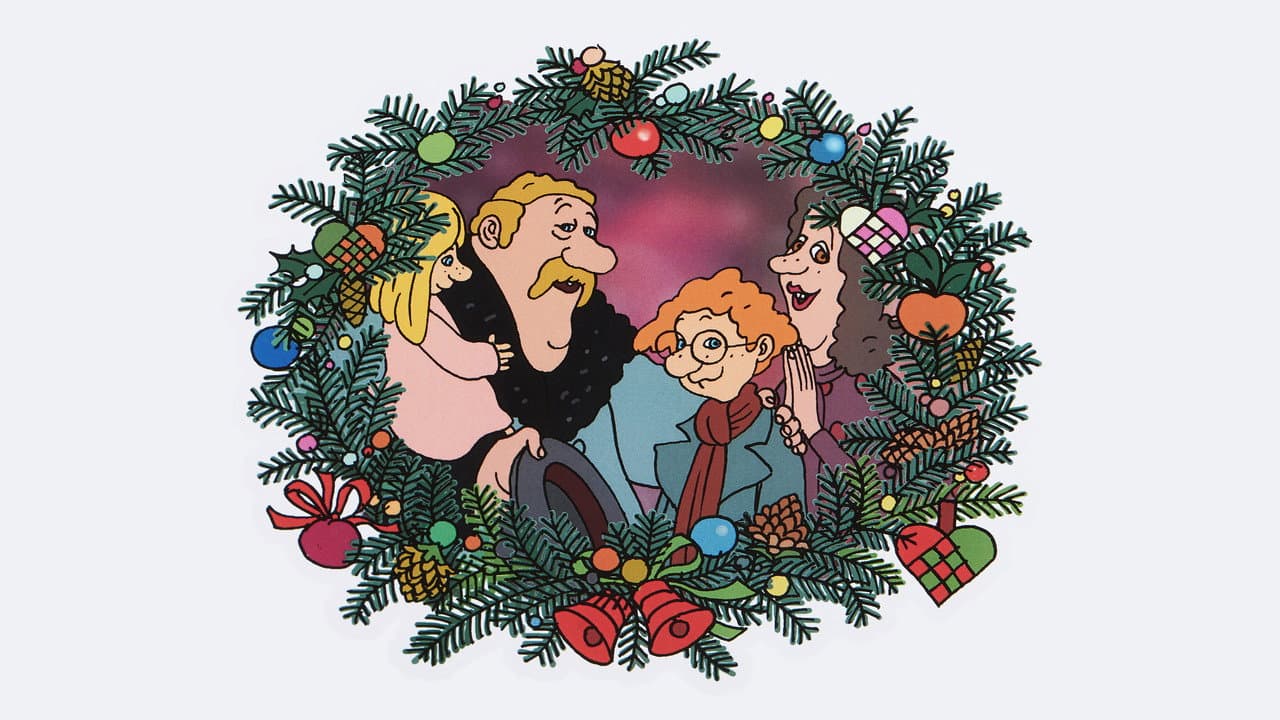
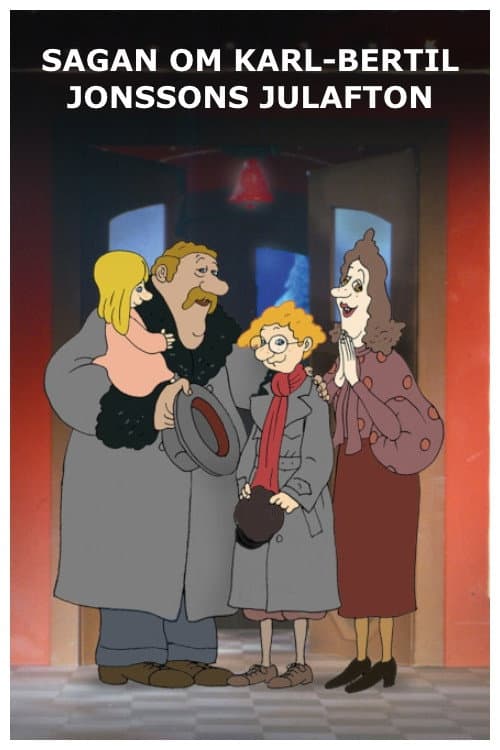
The film possesses genuine narrative finesse for a short format: it manages to address social justice, moral conscience and courage without ever being didactic or heavy-handed. The animation, in the illustrative Swedish style of the 1970s, has an authentic graphic charm that contributes to the fairy-tale atmosphere. The construction of the main character is remarkable for a film intended for young audiences: Karl-Bertil is neither a fearless hero nor a well-behaved child, but a boy who acts according to his convictions and accepts the consequences, including before his parents. This dimension of moral integrity, rare in Christmas narratives, largely explains the longevity of the work and its status as a classic passed down from generation to generation.
Age recommendation and discussion points
The film is accessible and recommended from age 7-8 onwards, without major reservations for this age group. A brief scene of female nudity, innocuous in the Scandinavian context, may surprise an unprepared child and merits being mentioned beforehand. After viewing, two questions are worth asking: does good intention suffice to make an action just, and why does the father react so badly to something that seems so generous?
Synopsis
"Christopher's Christmas Mission"- A tale about a boy who steals Christmas gifts from the wealthy to give to the poor people of Stockholm, while working in a post office on Christmas Eve.
About this title
- Format
- Short film
- Year
- 1975
- Runtime
- 23m
- Countries
- Sweden
- Original language
- SV
- Directed by
- Per Åhlin
- Main cast
- Tage Danielsson, Per Andrén, Toivo Pawlo, Marianne Stjernqvist, Åke Fridell, Catrin Westerlund
- Studios
- PennFilm Studio AB, Svenska Ord
Content barometer
- Violence0/5None
- Fear0/5None
- Sexuality1/5Allusions
- Language1/5Mild
- Narrative complexity0/5Simple
- Adult themes0/5None