
Chitty Chitty Bang Bang
Does this age rating seem accurate to you?
Detailed parental analysis
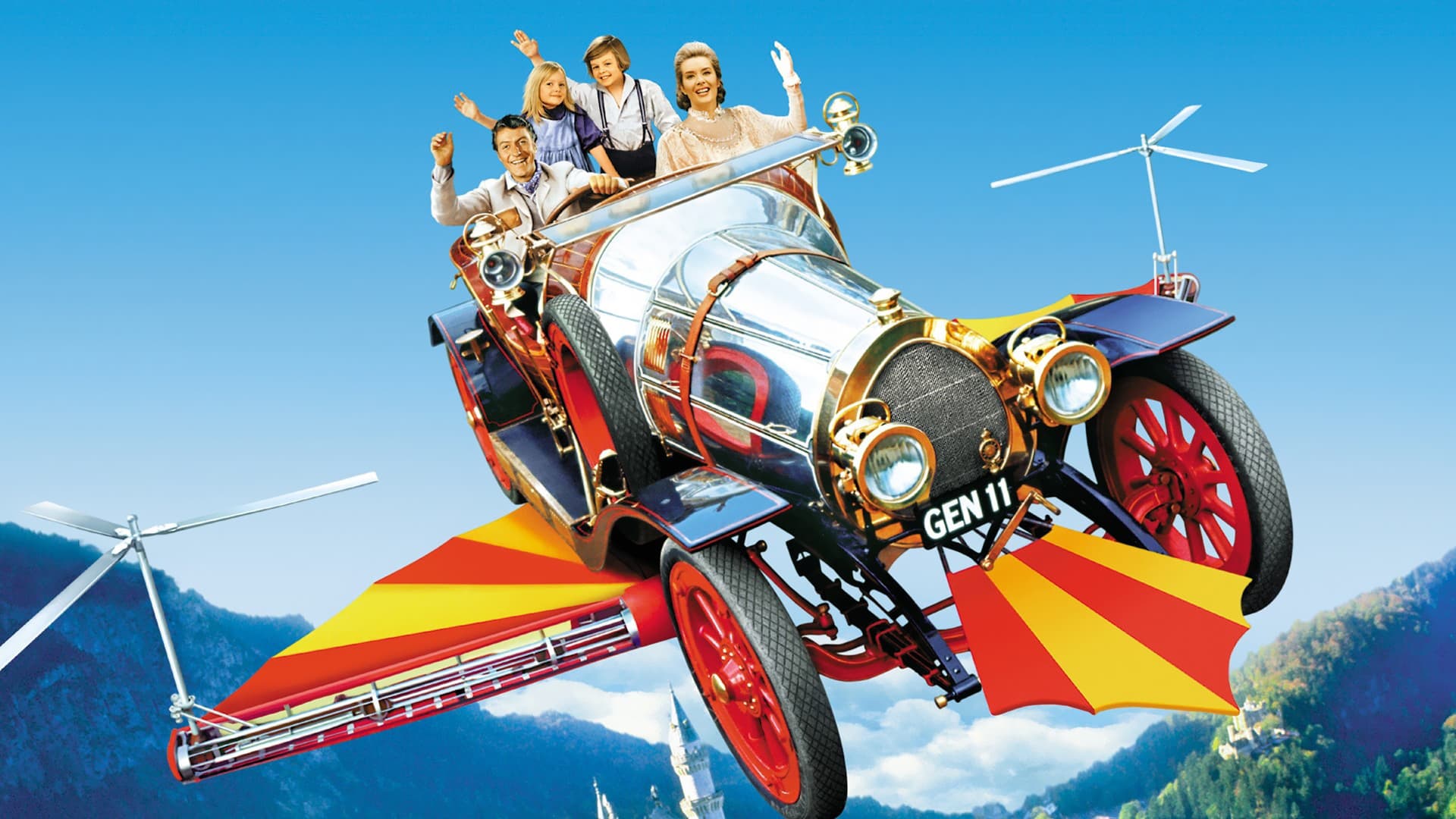
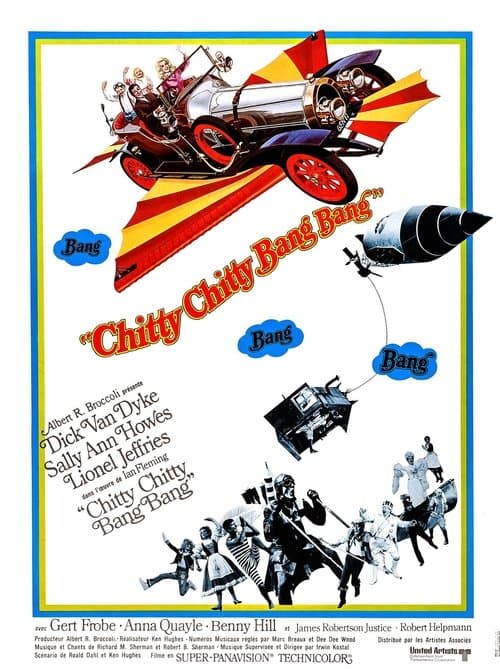
Chitty Chitty Bang Bang is a family musical comedy with an overall cheerful atmosphere, carried along by colourful aesthetics and an unabashed sense of wonder. The plot follows an eccentric inventor and his children who, aboard a magical car, find themselves drawn into a wild adventure within a kingdom where children are forbidden. The film is aimed at young children and families, but certain sequences far exceed this reassuring framework and may leave a lasting impression on the more sensitive.
Violence
The film's violence is less spectacular than psychologically heavy. The Baron makes multiple murder attempts on his own wife, with a firearm and then an impalement, treated in a comedic register but whose narrative reality remains that of a husband seeking to kill his spouse. Scientists are presented as prisoners and tortured, and the grandfather is explicitly threatened with a brutal fate should he fail in his mission. The scene of a car explosion leaves genuine doubt about the characters' survival. These sequences, even wrapped in burlesque humour, constitute moral and physical violence that children under six or seven years old cannot always decode as distanced fiction.
Discrimination
The kingdom of Vulgaria is drawn in broad strokes of Germanic stereotypes: characters presented as snobbish, narrow-minded, ageing and cartoonishly cruel. This representation belongs to the humour of its era and is never questioned by the narrative. The film offers no character from this group who escapes caricature, and cultural otherness is entirely constructed as a source of ridicule and threat. This is a concrete entry point for discussing with a child the way films from a given period could use national origin as a shorthand for designating villains.
Underlying Values
The film clearly values imagination, perseverance and family solidarity, with a father who invents, fails and tries again, and children who are active in solving problems. These values are carried with consistency and sincerity throughout the narrative. In parallel, the figure of arbitrary authority embodied by the Baron and Baroness concretely illustrates what power exercised without legitimacy or benevolence represents, which can be a useful basis for discussion.
Substances
A royal feast scene shows characters drinking and smoking, with some visibly intoxicated. The presence is fleeting and not valorised, treated as a backdrop to aristocratic extravagance rather than behaviour to imitate. It is not a central element of the film, but it is present.
Sex and Nudity
A musical scene presents a woman dancing in vintage lingerie and stockings, in a period burlesque number. The suggestiveness is light and anchored in the codes of 1960s musical comedies, with no explicitness. It is inconsequential for a child, but the context is worth noting to parents who are particularly attentive to this register.
Parental and Family Portrayals
The inventor father is a central figure, deeply loving but disorganised and whimsical, who ultimately finds his proper place through the adventure. The children are represented as curious, capable and brave. Taken together, this draws a warm, unconventional family model where affection takes priority over structure. It is one of the film's enduring emotional strengths.
Strengths
Chitty Chitty Bang Bang possesses genuine visual and musical inventiveness, with abundant sets, well-constructed choreographed numbers and narrative energy that does not flag over two hours. The characterisation of the main characters is more generous than it first appears: the father is never ridiculed despite his repeated failures, and the children have genuine agency in the plot. The film belongs to a tradition of ambitious family musical comedy that shaped several generations and which today offers interesting material for discussing the way popular cinema manufactured its narratives and representations in the 1960s.
Age recommendation and discussion points
The film is best reserved for children aged six and above, with genuine caution before seven or eight years old for sensitive or easily impressionable children, particularly due to the Child Catcher and the captivity sequences. Two angles of discussion are particularly worthwhile after viewing: why are certain characters drawn as villainous based on their origin, and what does this say about the way we represent other cultures; and how can a narrative mix humour and genuinely troubling situations, and what do we feel in the face of this ambivalence.
Synopsis
A hapless inventor finally finds success with a flying car, which a dictator from a foreign government sets out to take for himself.
Where to watch
Availability checked on Apr 26, 2026
About this title
- Format
- Feature film
- Year
- 1968
- Runtime
- 2h 26m
- Countries
- United Kingdom
- Original language
- EN
- Directed by
- Ken Hughes
- Main cast
- Dick Van Dyke, Sally Ann Howes, Lionel Jeffries, Gert Fröbe, Anna Quayle, Benny Hill, James Robertson Justice, Robert Helpmann, Barbara Windsor, Davy Kaye
- Studios
- United Artists, Dramatic Features, Warfield
Content barometer
- Violence2/5Moderate
- Fear4/5Intense
- Sexuality1/5Allusions
- Language0/5None
- Narrative complexity2/5Moderate
- Adult themes1/5Mild
Watch-outs
- Death
- Ethnic or racial stereotypes
- Abuse
Values conveyed
- Courage
- Perseverance
- Autonomy
- family
- imagination
- teamwork