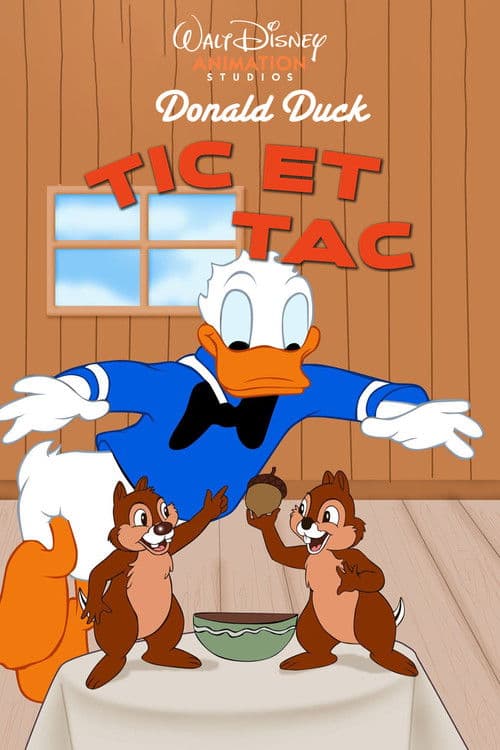
Chip an' Dale
Does this age rating seem accurate to you?
Detailed parental analysis
Chip 'n' Dale is a comic animated short film with a light and upbeat tone, typical of Disney's post-war productions. Two small striped squirrels must defend their home and winter supplies against the unintentional damage caused by Donald Duck. The film is aimed first and foremost at young children, but its well-calibrated slapstick pacing appeals to the whole family.
Violence
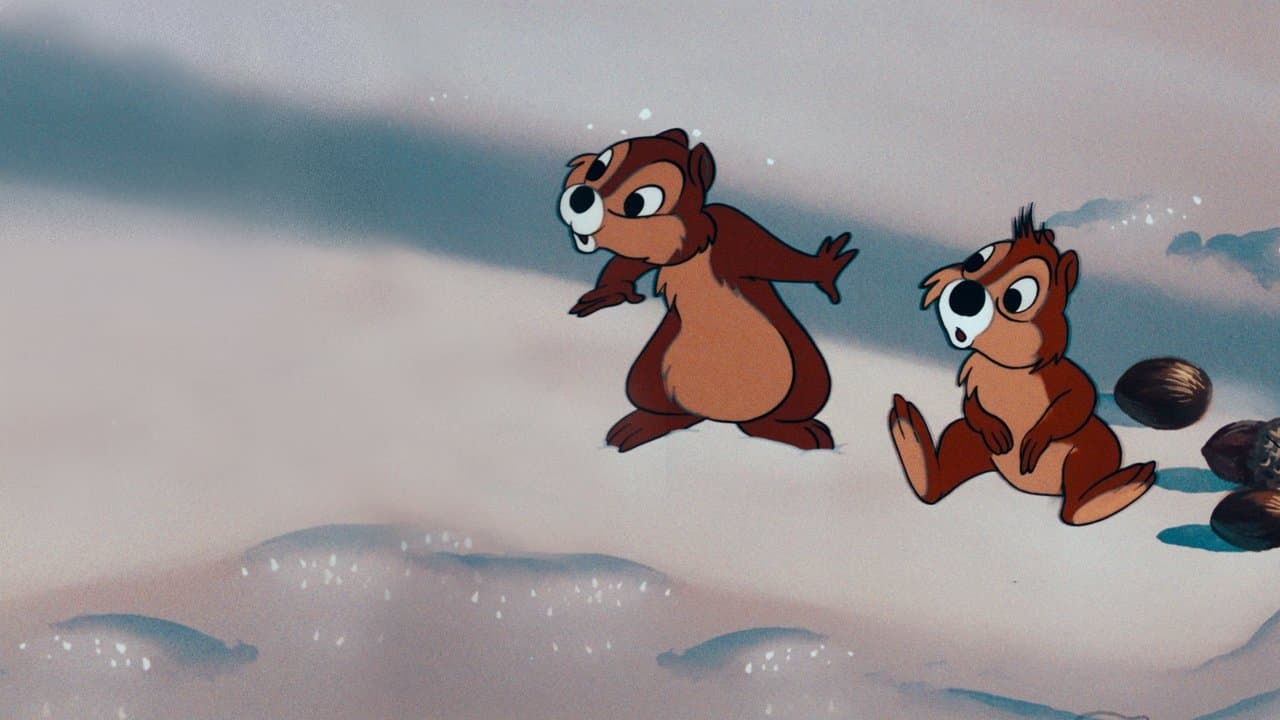
Violence is omnipresent but strictly comedic and without visible consequence: blows to the rear, characters rolled into snowballs, Donald completely buried under snow, fire threatening the chipmunks' den. Everything falls within the codified slapstick register, close to Tom and Jerry, where nobody truly suffers and where pain is immediately a source of laughter. The narrative purpose is clear: to show the small triumph over the large through cunning, which gives these sequences a playful rather than alarming scope. For a very young sensitive child, the scenes of fire and burial may generate slight tension, but the overall atmosphere remains reassuring.
Underlying Values
The narrative structures a readable power dynamic: facing an adversary who is larger and unintentionally destructive, the two chipmunks do not surrender and retaliate through collective intelligence rather than brute force. Solidarity between the two heroes and their tenacity in the face of adversity are the drivers of the narrative. Donald is not a deliberate villain, which offers an interesting nuance worth highlighting with a child: conflicts often arise from clumsiness or indifference rather than from malice.
Discrimination
Donald Duck is cast in his canonical role as an irascible and clumsy figure, systematically outmatched by smaller and more ingenious protagonists. This narrative scheme works well as a comic archetype, but reiterates without variation the idea that the adult and powerful figure is by definition incompetent and ridiculous. This is not a major problem in this context, but an attentive parent can take the opportunity to discuss with the child that clumsy adults are not necessarily adversaries.
Strengths
The short film constitutes the official birth act of Chip 'n' Dale as a duo in their own right, and this value of cultural transmission is genuine: it is a foundational object of popular Disney imagination. The comic mechanics are well oiled, the pacing swift, and the logic of cause and effect between each gag is accessible from the youngest age, making it a good exercise in narrative reading for a child. The nomination for Best Animated Short Film at the 1948 Oscars testifies to a formal balance recognised by its contemporaries.
Age recommendation and discussion points
The film is suitable from age 4 without particular reservation. Two angles of discussion are worth pursuing after viewing: ask the child whether Donald is truly mean or simply clumsy, and how the chipmunks could have resolved their problem in ways other than by retaliating.
Synopsis
Donald needs a log for his fire. Unfortunately, the one he picks is occupied by a couple of chipmunks and their stash of acorns. When he cuts it down, Chip and Dale fall out, but their acorns stay behind, so they work at putting out Donald's fire and retrieving their stash. Donald, of course, takes this as calmly and cheerfully as you would expect.
About this title
- Format
- Short film
- Year
- 1947
- Runtime
- 6m
- Countries
- United States of America
- Original language
- EN
- Directed by
- Jack Hannah
- Main cast
- Clarence Nash, Dessie Flynn, James MacDonald
- Studios
- Walt Disney Productions
Content barometer
- Violence1/5Mild
- Fear1/5Mild
- Sexuality0/5None
- Language0/5None
- Narrative complexity0/5Simple
- Adult themes0/5None
Watch-outs
- Gender stereotypes
Values conveyed
- Courage
- Perseverance
- Autonomy
- teamwork
- resourcefulness
- friendship
- protecting one's home