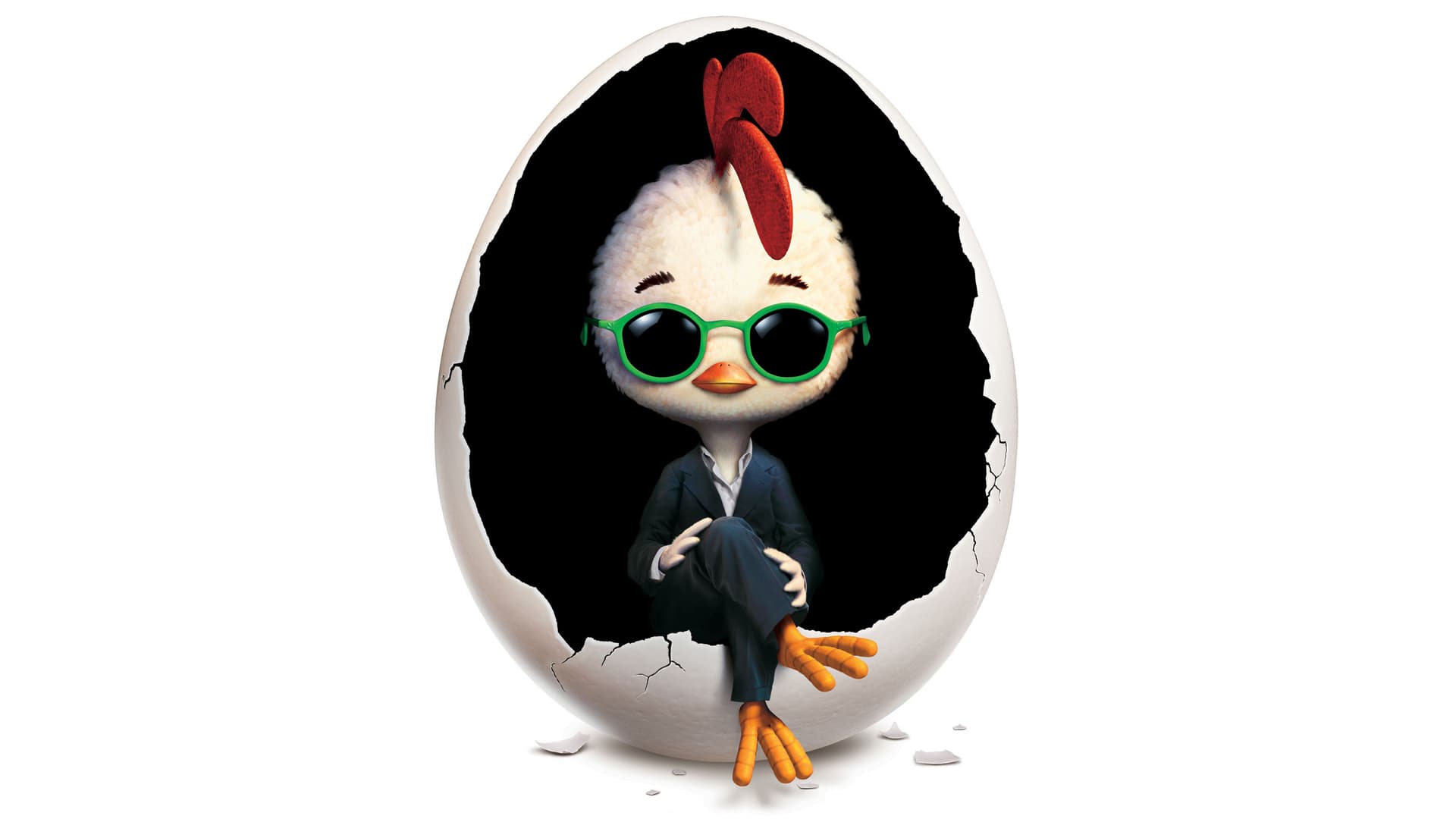

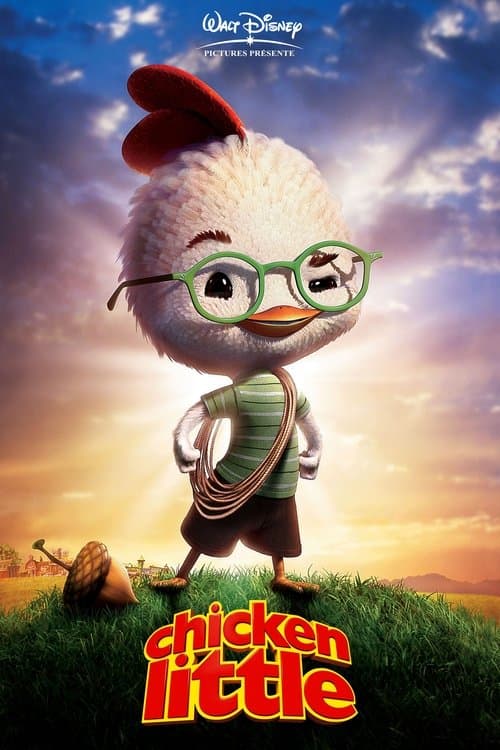
Chicken Little
Does this age rating seem accurate to you?
Detailed parental analysis
Chicken Little is a family animated comedy with a tone oscillating between burlesque and social anxiety, driven by a frantic pace and colourful aesthetics that mask a frequently harsh tonality. The plot follows a young chicken ridiculed by an entire town after a false alarm, who attempts to regain his father's trust and his peers' esteem when a genuine threat emerges. The film targets children of school age and upwards, but several of its dramatic devices are more suited to children with a certain emotional resilience already in place.
Underlying Values
The film's central message is profoundly ambiguous. In form, it claims to defend trust between parent and child and rehabilitation through truth. In practice, Chicken Little only recovers his father's and community's approval once he has proved himself right, that is, once he has performed successfully. Paternal love is never unconditional in the narrative's economy: it is contingent on the restoration of his reputation. Conformism and social validation are the narrative's real drivers, even though the film attempts, in its final minutes, a discourse of reconciliation. This is one of the most useful angles to work through with a child: does one need to be right in order to deserve being heard and loved?
Parental and Family Portrayals
Chicken Little's father is the film's most problematic character for a young viewer. Incapable of defending his son against collective harassment, he even persuades him to keep silent about what he has seen, in the name of managing the family's reputation. His final redemption, swift and underdeveloped, does not suffice to erase an hour of parental failure depicted in an almost comical manner. The film shows an affectionate father but fundamentally incapable of exercising his protective role, and this dysfunction is presented with a lightness that deserves to be named aloud before a child.
Discrimination
The harassment suffered by Chicken Little constitutes the film's main dramatic thread, and the problem is that it is never truly condemned as such. The scenes of exclusion, systematic mockery and targeting during dodgeball are played for laughs, without the perpetrators ever being corrected, sanctioned or questioned within the diegesis. Foxy Loxy embodies another tension: presented as a competitive and domineering athlete, she is transformed by the film's end into a stereotypically feminine and docile character following alien intervention. The film appears unconscious of this reversal, which makes it all the more instructive to deconstruct. Runt, a male character passionate about disco and presented as fearful and dependent on his mother, mobilises stereotyped codes without questioning them.
Violence
Violence remains within childish registers but certain scenes may disturb the youngest viewers. The extraterrestrial invasion gives rise to sequences of collective panic with fleeing crowds and colliding vehicles, and vaporising rays appear to disintegrate characters on screen. These sequences are brief but their visual intensity is genuine. A discrete jumpscare is present in a scene involving an alien baby. The whole remains far from graphic violence, but the density of chaotic scenes may provoke occasional anxiety in sensitive children.
Strengths
The film offers a few well-paced visual gags and a surface energy that works for children who are not responsive to irony. The initial idea, of a misunderstood child in an adult world that does not listen to him, had real emotional potential, and a few scenes ring true in the father-son relationship. The secondary characters of the friend group offer a sincere, though underdeveloped, representation of solidarity among outsiders. It is these limitations that make the film more useful as a discussion tool than as a lasting work: it illustrates with involuntary candour several social mechanisms, normalised harassment, the pressure of reputation, failing parenthood, which lend themselves well to conversation after viewing.
Age recommendation and discussion points
The film is suitable from age 7 onwards, but it is notably more worthwhile to watch in the presence of an adult capable of articulating what the narrative does not say. Two angles of discussion impose themselves: ask the child whether the peers who mocked Chicken Little acted well or badly, and why nobody stops them, then explore together why the father does not support his son from the start, without waiting for him to prove something.
Synopsis
When the sky really is falling and sanity has flown the coop, who will rise to save the day? Together with his hysterical band of misfit friends, Chicken Little must hatch a plan to save the planet from alien invasion and prove that the world's biggest hero is a little chicken.
About this title
- Format
- Feature film
- Year
- 2005
- Runtime
- 1h 17m
- Countries
- United States of America
- Original language
- EN
- Directed by
- Mark Dindal
- Main cast
- Zach Braff, Garry Marshall, Don Knotts, Amy Sedaris, Steve Zahn, Joan Cusack, Patrick Stewart, Fred Willard, Catherine O'Hara, Wallace Shawn
- Studios
- Walt Disney Pictures, Walt Disney Feature Animation
Content barometer
- Violence2/5Moderate
- Fear3/5Notable tension
- Sexuality0/5None
- Language0/5None
- Narrative complexity1/5Accessible
- Adult themes0/5None
Watch-outs
- Bullying
- Mockery
- Gender stereotypes
Values conveyed
- Friendship
- Acceptance of difference
- Perseverance
- courage
- father-son reconciliation
- self-confidence