Charlie and the Chocolate Factory
Does this age rating seem accurate to you?
Detailed parental analysis
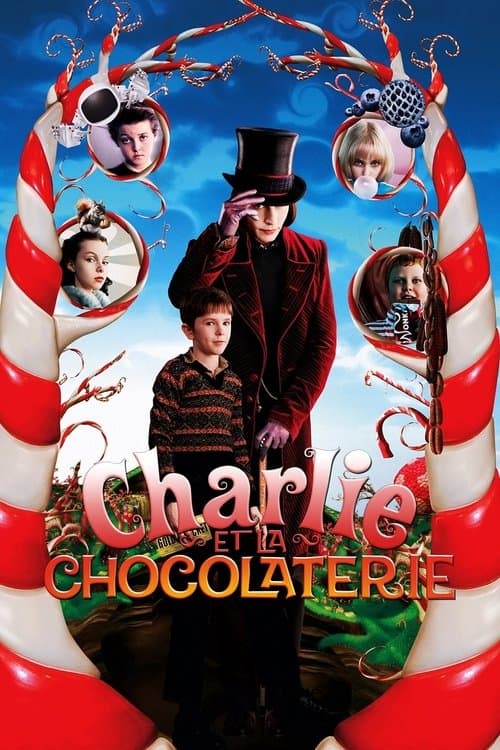
Charlie and the Chocolate Factory is a fantastical tale with a baroque and deliberately unsettling aesthetic, oscillating between wonder and unease. A poor child wins access to a mysterious chocolate factory alongside five other children with starkly contrasting personalities. The film is primarily aimed at children from 7-8 years old and families, but its darker tone than that of a classical fairy tale sets it distinctly apart from unambiguous all-audience productions.
Underlying Values
The narrative rests on an explicit and deliberate moral mechanism: each child is punished according to their dominant vice, whether gluttony, greed, vanity or violence. This scheme is narratively effective but merits discussion with a child, as the punishments are presented as deserved and amusing, without genuine compassion for the victims. The film strongly valorises simplicity and humility in the face of materialism, through the contrast between Charlie, poor and generous, and the other children, wealthy and insufferable. This opposition is readable but caricatural: wealth is systematically associated with poor upbringing, which oversimplifies a more complex subject. The message about family as a central value, by contrast, is treated with greater nuance, particularly through the arc concerning father-son reconciliation.
Parental and Family Portrayals
The parents of the spoilt children are presented as directly responsible for their children's flaws, which constitutes a clear educational message but is sometimes pushed to the point of caricature. Wonka's father is an authoritarian and cold figure whose rejection has inflicted a deep wound on his adult son: this psychological dimension is one of the film's most interesting aspects for discussion with an older child. Conversely, Charlie's parents embody a model of a loving family despite poverty, without ever lapsing into saccharine idealisation. The parental representation is thus double-edged: punitive and simplistic on one hand, touching and realistic on the other.
Violence
Violence is present in the form of spectacular punishments inflicted on the children: one is sucked into a pipe, another swells like a balloon, a third falls into a rubbish chute leading to an incinerator. These sequences are treated in a comic and exaggerated manner, in the tradition of Roald Dahl's dark fairy tales, but they may surprise or frighten sensitive children under 7 years old. A scene of dolls burning with eyes that explode is visually striking and bears no direct relation to the main plot. The violence is never gory or realistic, but it is recurrent and presented as a form of entertaining justice, which merits contextualisation.
Discrimination
The Oompa Loompas constitute the film's most questionable point regarding representation. All identical, played by a single actor multiplied digitally, dressed in outfits evoking a tribal aesthetic, they form a workforce entirely devoted to a Western employer who has 'rescued' them from their country of origin. This construction reproduces colonial patterns without questioning or flagging them, and may be an opportunity for a useful conversation with a child or adolescent about how certain films treat non-Western characters as scenery or props.
Language
The film contains a few language elements worth noting, though they are not central. One hears the English term 'retard' used as an insult, as well as expressions such as 'hell' and 'poppycock'. An allusion to marijuana is slipped into a dialogue. These elements are occasional and unlikely to leave a lasting impression on a child, but they merit noting for parents most attentive to linguistic register.
Sex and Nudity
Nudity is present in an incidental manner: chocolate statues depicting women with visible breasts appear briefly, and a mannequin in lingerie features in a scene. These elements are fleeting and non-sexualised in their treatment, but they may give pause to a young child. Nothing in the film constitutes sexual content proper.
Strengths
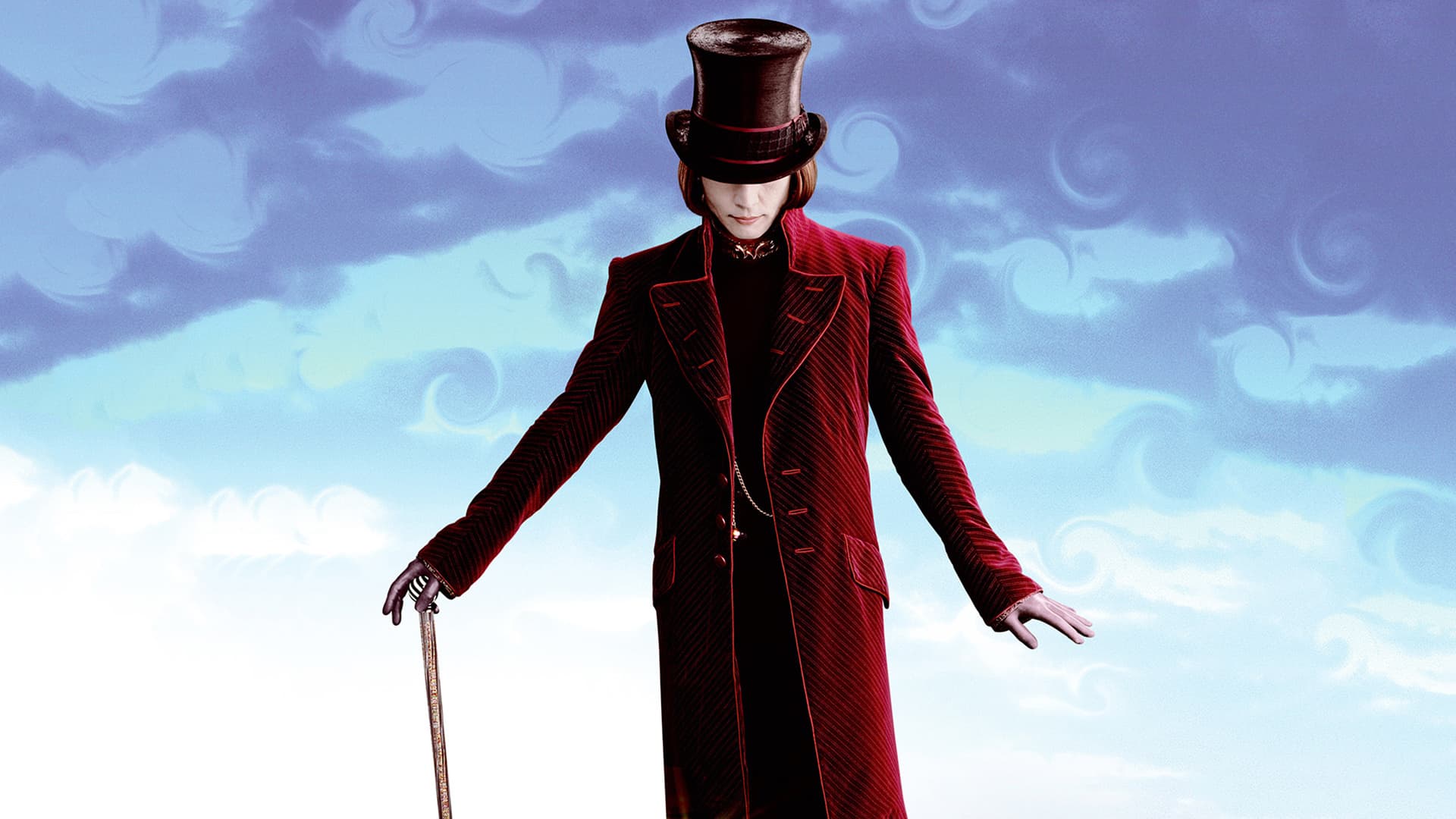
The film offers an artistic direction of genuine visual inventiveness, with a chocolate factory conceived as an entire world unto itself, coherent in its details and colours. The composition of the Oompa Loompas' musical numbers, which change style according to which child is punished, is an example of narrative construction through form rather than dialogue, and can sensitise a child to the idea that music also tells a story. The psychological dimension of Wonka's character, an adult wounded by a rigid father, introduces a reflection on transmission and reconciliation that transcends the simple moral tale. The film thus functions on two levels: spectacle for children, a more melancholic reading for the adults accompanying them.
Age recommendation and discussion points
The film is not recommended for children under 7 years old due to its dark tone, its spectacular punishment sequences and certain visually intense images. From 8 years old, it can be watched serenely by most children. Two angles of discussion are worth pursuing after viewing: why are all the wealthy children presented as insufferable, and does wealth really make one wicked? And also: are the Oompa Loompas truly happy in this factory, or were they never asked for their opinion?
Synopsis
A young boy wins a tour through the most magnificent chocolate factory in the world, led by the world's most unusual candy maker.
Where to watch
Availability checked on Apr 29, 2026
About this title
- Format
- Feature film
- Year
- 2005
- Runtime
- 1h 55m
- Countries
- United Kingdom, United States of America
- Original language
- EN
- Directed by
- Tim Burton
- Main cast
- Johnny Depp, Freddie Highmore, David Kelly, Helena Bonham Carter, Noah Taylor, Missi Pyle, James Fox, Deep Roy, Christopher Lee, Adam Godley
- Studios
- Warner Bros. Pictures, Village Roadshow Pictures, The Zanuck Company, Plan B Entertainment, Theobald Film Productions
Content barometer
- Violence2/5Moderate
- Fear3/5Notable tension
- Sexuality1/5Allusions
- Language1/5Mild
- Narrative complexity2/5Moderate
- Adult themes0/5None
Watch-outs
- Ethnic or racial stereotypes
- Violence
Values conveyed
- family
- kindness
- humility
- integrity