
Castle in the Sky
天空の城ラピュタ
Does this age rating seem accurate to you?
Detailed parental analysis
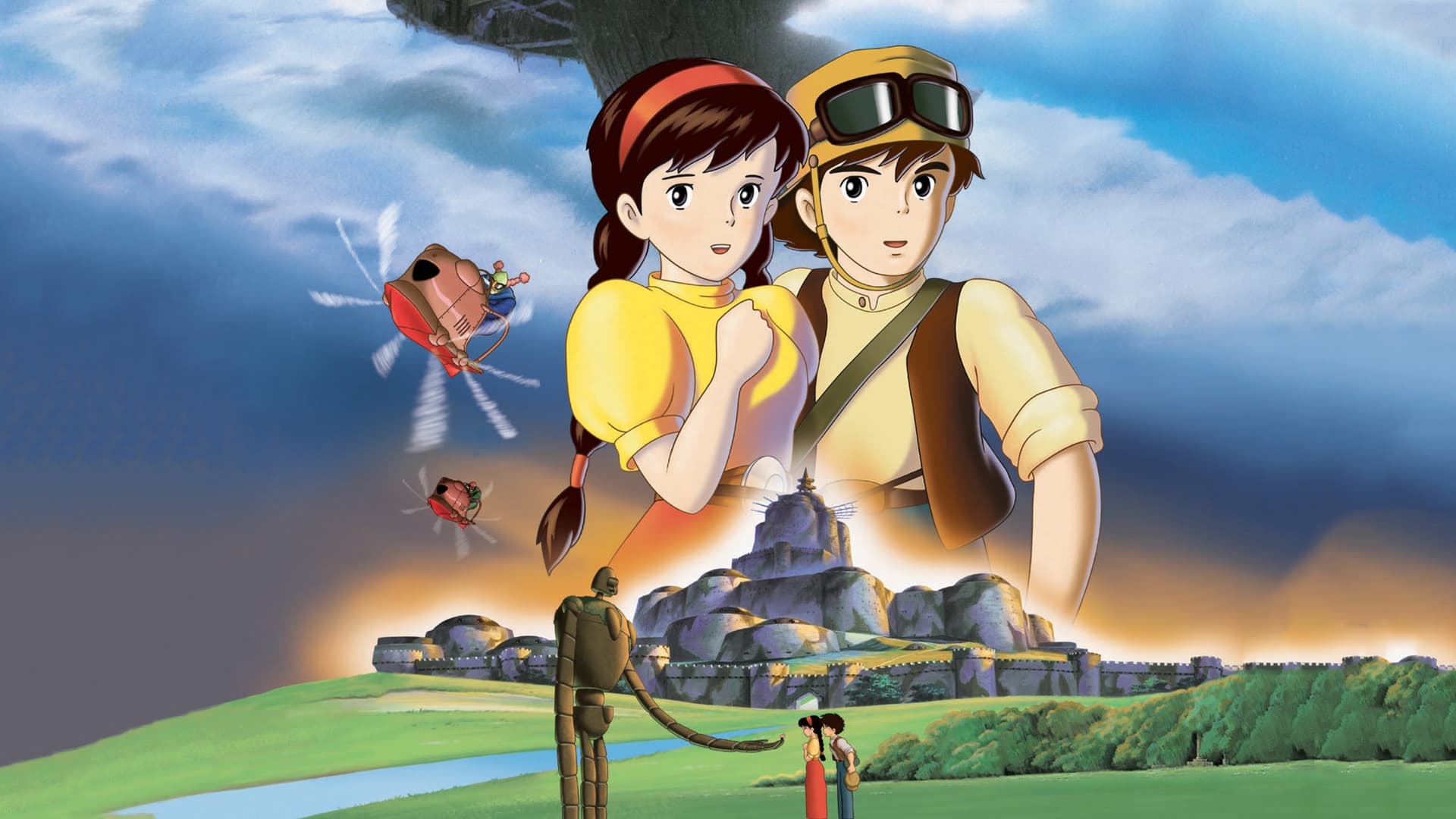
Castle in the Sky is an animated adventure film with an atmosphere that is both epic and poetic, driven by a sense of wonder tinged with constant tension. The plot follows two young orphans who seek to unravel the mystery of a legendary floating city coveted by pirates and military forces. Produced by Studio Ghibli, the film targets a family audience from older children onwards, but its sustained pace and sequences of intense peril make it more suited to children aged 8 and above.
Violence
Violence is present repeatedly and constitutes the main driver of the action. The film strings together gunfire, explosions of aircraft with crews on board, and a particularly striking sequence in which a giant robot destroys an entire military base before the eyes of fleeing soldiers. A character is knocked unconscious by a blow from a bottle from behind, and the villain deliberately shoots at the protagonist's braids in a scene of direct confrontation. A general and his men meet their death by falling from the floating city. The violence remains stylised and without visible bloodshed, which mitigates its raw impact, but the frequency and variety of peril situations directly involving the two child protagonists warrant anticipation. It is not gratuitous: it serves to build dramatic tension and to give weight to the stakes, but it is sustained enough that sensitive children should be accompanied.
Underlying Values
The film carries solid and coherent structural values: courage in the face of adversity, solidarity between characters of different origins, and mistrust of those who seek to seize power by force. The city of Laputa functions as a metaphor for human excess in the face of nature, and the narrative suggests that certain forms of power should not be in all hands. The friendship between the two protagonists is the true moral engine of the film, presented as more reliable than any institution or adult authority figure.
Parental and Family Portrayals
The two heroes are orphans and evolve without a family safety net, which is a constant of the narrative and not an incidental detail. This parental absence is the starting point for their autonomy and their ability to act alone in the face of danger. The substitute maternal figure is embodied by Dola, an elderly pirate chief, authoritarian but ultimately benevolent, who progressively adopts a protective role. The film implicitly values chosen family and group solidarity as functional substitutes for the traditional family unit.
Discrimination
The female protagonist begins the film in a situation of vulnerability that could confine her to the role of a character to be rescued, but she quickly demonstrates combativeness, intelligence and determination that place her on equal footing with the male hero. Dola, an older female character, is represented as a complex figure of power, neither purely villainous nor idealised, which stands out from the usual representations of middle-aged women in adventure narratives. These narrative choices merit being highlighted to a child as so many ways of questioning gender-related expectations.
Social Themes
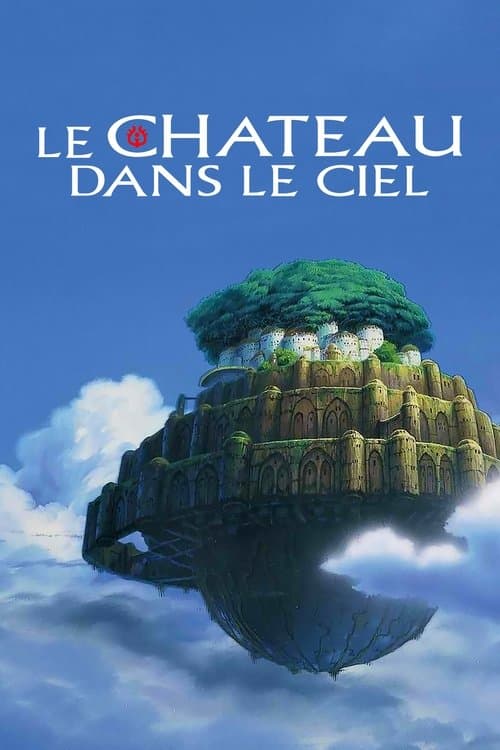
The film addresses in the background themes related to war, the arms race and the exploitation of natural and technological resources for military purposes. The city of Laputa concentrates these issues: coveted by the military for its destructive power, it becomes the symbol of a technology for which humanity is unworthy. The narrative does not develop these themes in a didactic manner, but they offer real material for discussion with an inquisitive child.
Strengths
The film is a work of remarkable visual and narrative richness for its genre. The construction of the imaginary world, between steampunk, mythology and lush nature, is coherent and immersive. The two protagonists are written with unusual depth for characters of their age in an adventure film: they make choices, assume consequences and are never reduced to supporting roles. The pacing skilfully alternates between intense action sequences and moments of contemplation that allow the narrative to breathe. It is a film that speaks to both child and adult simultaneously, without condescension towards either.
Age recommendation and discussion points
The film is suitable from age 8 for an emotionally resilient child, accompanied by an adult for the most tense passages. For fully serene viewing and an appreciation of the deeper stakes of the narrative, 10 years is a more comfortable age. After viewing, two angles of discussion naturally present themselves: why do the adults in the film seek to seize Laputa, and what does this say about the way humans use power when they have access to it? And also: what is it that makes Sheeta and Pazu an effective team, when they have neither family nor resources?
Synopsis
A young boy and a girl with a magic crystal must race against pirates and foreign agents in a search for a legendary floating castle.
About this title
- Format
- Feature film
- Year
- 1986
- Runtime
- 2h 4m
- Countries
- Japan
- Original language
- JA
- Studios
- Studio Ghibli, Nibariki, Tokuma Shoten
Content barometer
- Violence3/5Notable
- Fear3/5Notable tension
- Sexuality0/5None
- Language0/5None
- Narrative complexity2/5Moderate
- Adult themes0/5None
Watch-outs
- Death
- Violence
Values conveyed
- Courage
- Friendship
- Perseverance
- Autonomy
- teamwork
- loyalty
- responsibility