Calamity
Does this age rating seem accurate to you?
Detailed parental analysis
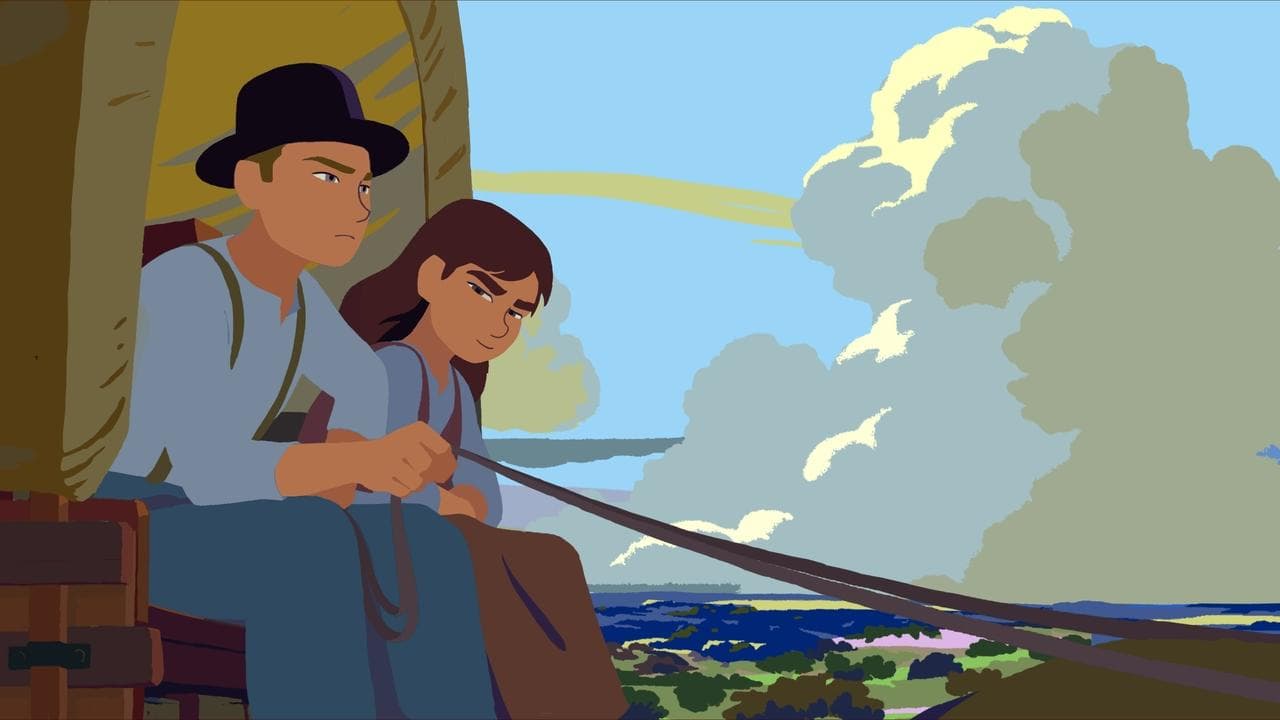
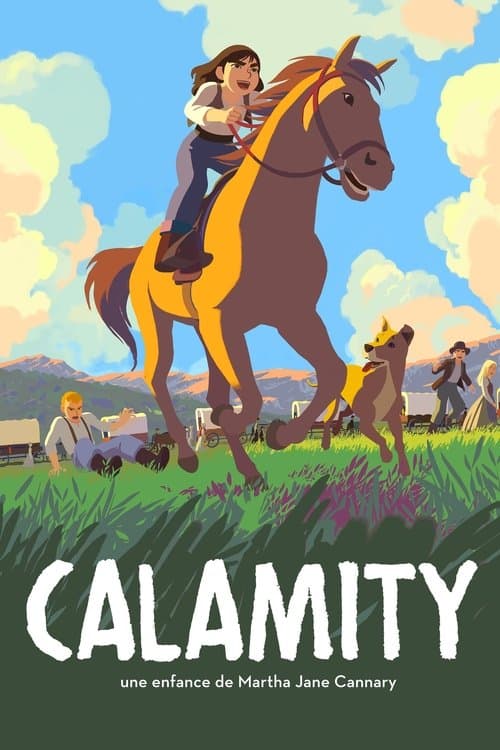
Calamity is an animated film with an adventurous and luminous tone, driven by lively energy and a warm visual palette. The story follows Martha Jane Cannary, a nineteenth-century girl who, forced to take charge of her family's destiny during a wagon train heading west across America, gradually discovers her own strength and her refusal of the roles imposed upon her. The film is primarily aimed at children from age 6 onwards, but speaks with real subtlety to all ages.
Underlying Values
The narrative is entirely structured around individual emancipation in the face of social norms. Wearing trousers, driving a wagon, wielding a lasso: each skill that Martha Jane acquires is an act of resistance against an order that assigns her an inferior place. The film does not preach; it shows, and that is its strength. Freedom is presented as something that must be conquered through effort and boldness, not as a right handed down from above. Solidarity is also at the heart of the narrative: the trials of the journey cannot be overcome alone, and the film states this clearly without turning it into a slogan.
Discrimination
The film takes nineteenth-century gender stereotypes as its central subject and stages them in order to dismantle them. The adults in the wagon train, men and women alike, reproduce injunctions that Martha Jane methodically refuses. This mechanism is intentional and pedagogically effective: the child sees the stereotype at work, understands its absurdity through the eyes of the heroine, and observes an alternative embodied by characters such as Madame Moustache, an independent woman who runs her own mine. The film does not caricature the conservative characters, which makes the critique more honest.
Violence
The scenes of physical tension remain within a register suited to young children. The encounter with a rattlesnake, the confrontation with a puma, and the passage through a dark and narrow crevasse constitute the most intense moments of the film. These sequences are anxiety-inducing but brief, and each one fits into a clear narrative logic: Martha Jane faces the challenge, overcomes it, grows. The father's injury, crushed by a horse, is shown without indulgence but without gore. No gratuitous or aestheticised violence.
Parental and Family Portrayals
The father is present but quickly sidelined by his injury, which places Martha Jane in a position of family responsibility. This functional absence is the trigger for the heroine's emancipation, not a criticism of the paternal figure. The father remains benevolent and the father-daughter relationship is affectionate. The maternal figure is absent from the narrative, without the film dwelling on this particularly.
Strengths
The film achieves something quite rare: treating a serious subject, female emancipation in a rigid society, with a lightness and energy that never dilute the message. The writing avoids manichaeism and leaves Martha Jane with genuine complexity, complete with her doubts, her clumsiness and her impulses. The setting of the American western is used with intelligence, both as an adventure backdrop and as a historical context legible for children. The film naturally generates discussions among children about what girls and boys are allowed to do, which is a sign of pedagogical success without heavy-handed didacticism.
Age recommendation and discussion points
The film is suitable from age 6 without reservation, and the few scenes of tension are sufficiently well-calibrated not to overwhelm. After viewing, two angles of discussion are worth pursuing: ask the child why the adults in the wagon train opposed Martha Jane driving the wagon, and what they think about that today; and explore with them what it means to learn something difficult in order to become free.
Synopsis
1863, a convoy in the American West, Martha Jane needs to learn how to take care of horses to drive the family wagon. Except she ends up wearing pants and cutting her hair. The scandal that its stark character provokes will force to face all the dangers in a gigantic and wild world where everything is possible.
About this title
- Format
- Feature film
- Year
- 2020
- Runtime
- 1h 24m
- Countries
- Denmark, France
- Original language
- FR
- Directed by
- Rémi Chayé
- Main cast
- Salomé Boulven, Alexandra Lamy, Alexis Tomassian, Jochen Hägele, Léonard Louf, Santiago Barban, Damien Witecka, Philippe Vincent, Jérémy Bardeau, Pascal Casanova
- Studios
- Maybe Movies, France 3 Cinéma, 2 Minutes, Nørlum, 22D Music
Content barometer
- Violence1/5Mild
- Fear2/5A few scenes
- Sexuality0/5None
- Language0/5None
- Narrative complexity1/5Accessible
- Adult themes0/5None
Watch-outs
- Gender stereotypes
Values conveyed
- Courage
- Perseverance
- Autonomy
- self-assertion
- freedom
- gender equality
- self-overcoming
- friendship