
Bubble
バブル
Does this age rating seem accurate to you?
Detailed parental analysis
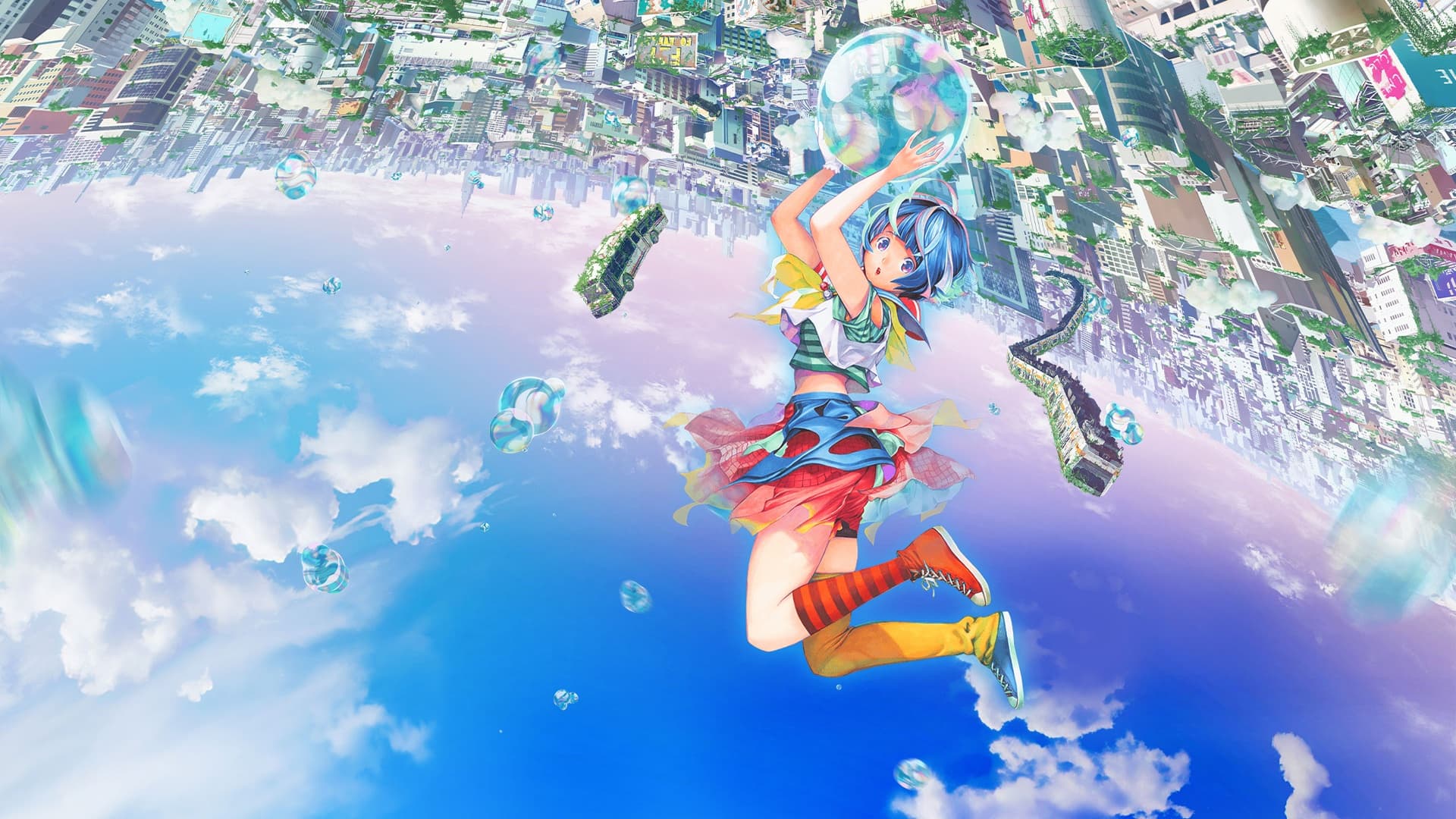
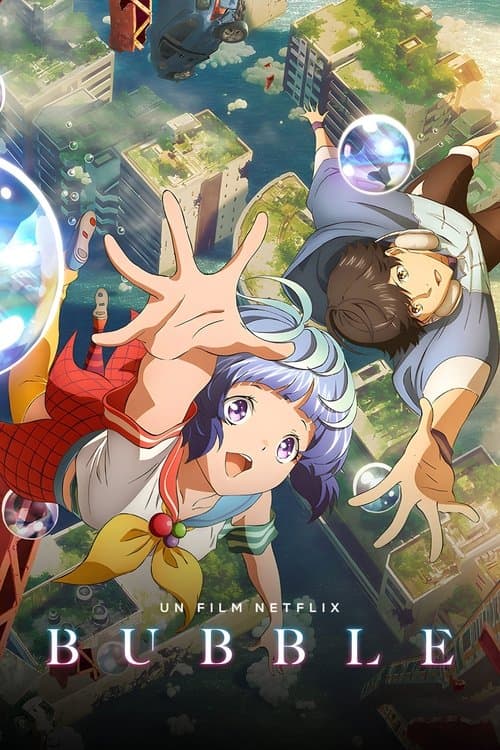
Bubble is a fantastical animated film with a contemplative and melancholic atmosphere, set in a post-apocalyptic Tokyo submerged in water and shrouded in mysterious bubbles. The plot follows Hibiki, a young man with particular sensitivities, whose encounter with a strange girl emerging from the waters will upend the delicate balance of a community of surviving orphans. The film is primarily aimed at teenagers, with a sensibility that may resonate with adults, and draws freely from Hans Christian Andersen's The Little Mermaid.
Underlying Values
The film builds a narrative founded on human connection, the capacity to perceive the world differently, and the value of those marginalised by ordinary society. The protagonist Hibiki, strongly suggested to be autistic, is never reduced to his disability: his sensory sensitivities are presented as a gift, a form of intelligence that allows him access to what others can neither hear nor feel. This is a positive message, but one that merits nuanced discussion, because the idea that disability confers extraordinary powers can feed a romanticised vision that obscures the concrete reality of autism spectrum disorders. In parallel, the narrative celebrates solidarity within a group of orphans who construct themselves as a substitute family, with organic and unidealised mutual support.
Social Themes
The film grounds its world in an ecological and urban catastrophe presented as the consequence of a chain of planetary crises, war, pollution, and climate upheaval, which archival imagery reminds us are historical realities. Submerged and uninhabitable Tokyo functions as an accessible metaphor for civilisational fragility. The narrative does not catastrophise: it proposes the idea that destruction always precedes a form of renewal, lending the film a reassuring tone on anxious subjects. It is a good entry point for discussing climate change with a teenager without resorting to a register of blame.
Parental and Family Portrayals
Parents are absent from the narrative: all protagonists are orphans, left to their own devices in a ruined world, under the very loose supervision of an adult who regularly drinks beer and sometimes confiscates alcohol from minors without much conviction. Family is entirely reconstituted, horizontal, founded on choice and loyalty among peers rather than a structuring adult framework. This is narratively coherent with the post-apocalyptic genre, but it is worth noting with a young viewer that the absence of a reliable parental figure is a topos of the genre, not a model.
Violence
Physical violence is present in the form of risky parkour competitions, with falls, narrowly avoided drownings, and minor injuries. The film also shows, soberly, hundreds of implicit deaths in a past explosion, evoked through stretchers draped in white sheets. A symbolic transformation of a character into bubbles constitutes the most emotionally intense sequence: it is not graphic but may be unsettling for the more sensitive. The whole remains within a justified narrative register, never gratuitous.
Substances
An adult drinks beer on several occasions and alcohol circulates within the environment of the young protagonists. Consumption is not glamorised or staged as cool behaviour, but nor is it explicitly criticised. It is a realistic set dressing element in a survival universe, which can serve as a simple conversation point about the normalisation of alcohol consumption among adults.
Discrimination
The group of survivors is predominantly male, and the few female characters are depicted as physically and intellectually superior to their male counterparts. This inverted pattern, whilst escaping the classical stereotype of the sidelined woman, remains a form of binary representation that gains no complexity. Female characters also appear in advertisements displaying very short skirts, without the film making it a subject of concern.
Strengths
Bubble offers careful artistic direction, with a representation of flooded Tokyo that manages to be both desolate and sumptuous. The narrative structure mirroring The Little Mermaid is carried through with coherence and offers a gateway to classical literature for teenagers unfamiliar with it. The treatment of the autistic character is more nuanced than what is typically found in mainstream animation: Hibiki is neither a reluctant hero nor a supporting player, but a subject in his own right whose way of perceiving the world structures the entire narrative. The film succeeds in addressing grief, connection, and the end of things without falling into sentimentality or spectacular trauma.
Age recommendation and discussion points
The film is suitable from age 12 onwards, with calm viewing from 13-14 years old for teenagers comfortable with melancholic narratives and open endings. Two discussion angles are worth pursuing after viewing: ask the child what he thinks about the fact that Hibiki perceives the world differently from others, and whether this makes him more or less fortunate in his view; and explore together what the film says about how we rebuild family and common ground when everything has collapsed.
Synopsis
In an abandoned Tokyo overrun by bubbles and gravitational abnormalities, one gifted young man has a fateful meeting with a mysterious girl.
About this title
- Format
- Feature film
- Year
- 2022
- Runtime
- 1h 41m
- Countries
- Japan
- Original language
- JA
- Directed by
- Tetsuro Araki
- Main cast
- Jun Shison, Riria., Alice Hirose, Mamoru Miyano, Yuki Kaji, Tasuku Hatanaka, Sayaka Senbongi, Ryota Osaka, Wataru Hatano, Marina Inoue
- Studios
- WIT STUDIO, Story, Nitroplus, Lawson Entertainment, Straight Edge, Warner Bros. Japan
Content barometer
- Violence2/5Moderate
- Fear2/5A few scenes
- Sexuality1/5Allusions
- Language1/5Mild
- Narrative complexity2/5Moderate
- Adult themes1/5Mild
Values conveyed
- Acceptance of difference
- friendship
- courage
- sacrifice
- belonging
- self-surpassing
- rebirth