Brother Bear
Does this age rating seem accurate to you?
Detailed parental analysis
Brother Bear is a Disney animated film with a contemplative atmosphere and dense emotional weight, rooted in a universe of Native American legends and animistic spirituality. The story follows a young man who, after killing a bear out of vengeance, is himself transformed into a bear and forced to discover the world through its eyes. The film is primarily aimed at children aged 6-7 and above, but its emotional charge and themes of death and guilt make it more accessible and relevant from age 8 onwards.
Underlying Values
This is the heart of the film. The narrative methodically constructs a critique of vengeance: the protagonist triggers a cycle of violence believing he is avenging himself against a predator, when in fact he was the aggressor. The film leaves no ambiguity about personal responsibility and the blindness that anger can breed. Brotherhood, even between beings opposed in every way, is valued as the central moral force. What the narrative conveys about empathy towards animals is particularly solid: the shift in perspective is narratively embodied, not merely stated. These messages lend themselves to concrete conversation with a child capable of reflecting on the consequences of his actions.
Violence
Violence is present at two distinct levels. On one hand, scenes of combat between humans and bears are realistic, physical and intense for a family animated film: there are blows struck, a fatal fall, a death directly caused by the protagonist. These sequences are neither softened nor gratuitous; they serve the film's moral purpose, but they can surprise or disturb young or sensitive children. On the other hand, the film includes a classical comic streak with falls, traps and repeated blows to the head, treated in a slapstick register without consequence. The coexistence of these two registers can be slightly unsettling for a young child who has not yet mastered the distinction.
Parental and Family Portrayals
The film's family structure is entirely masculine and fraternal: three brothers form the emotional core of the narrative, without a living parental figure on screen. The death of the bear mother, revealed gradually to the protagonist, constitutes an emotionally powerful moment that can touch children who have experienced bereavement. The elder brothers are represented as models of benevolent authority, which gives the narrative a positive dynamic of masculine intergenerational transmission, but leaves virtually all female representation absent beyond the character of the shaman.
Discrimination
The near-total absence of female characters in a film with universal ambition is an angle that some parents may wish to note. The only significant female figure is an old shaman, confined to the role of a wise dispenser of lessons. This narrative choice is not thematised by the film itself, but it is sufficiently marked to merit mention to a child attentive to such representations.
Social Themes
The film is anchored in an animistic cosmology inspired by Native American traditions, with totems, spirits of ancestors and spiritual transformation. This universe is treated with a degree of respect, without caricature, but it constitutes a genuine subject of conversation with children from families with affirmed religious convictions. This is not content that seeks to persuade, but it presents representations of the sacred, death and the afterlife to which some families will wish to respond.
Strengths
The film draws genuine strength from its narrative structure: the shift in perspective imposed on the protagonist is not a gimmick, it is the very mechanism by which the narrative produces its moral message. The animation lavishes attention on prehistoric landscapes with a visual generosity rarely seen, and the music contributes to establishing an emotionally coherent atmosphere. The comic duo of the moose provides an effective counterpoint without undermining the substance. What is pedagogically notable is that the film does not moralise from without: it is the experience lived by the character that compels him to understand, which makes it a particularly concrete tool for discussing empathy with a child.
Age recommendation and discussion points
The film is recommended from age 8 onwards for relaxed viewing; below that age, combat scenes, deaths and emotional density can be difficult to navigate without adult support. Two angles of discussion are worth opening after the film: why did the character believe he was right to seek vengeance, and at what point did he understand he was wrong; and what does it change to see the world through the eyes of someone very different from oneself.
Synopsis
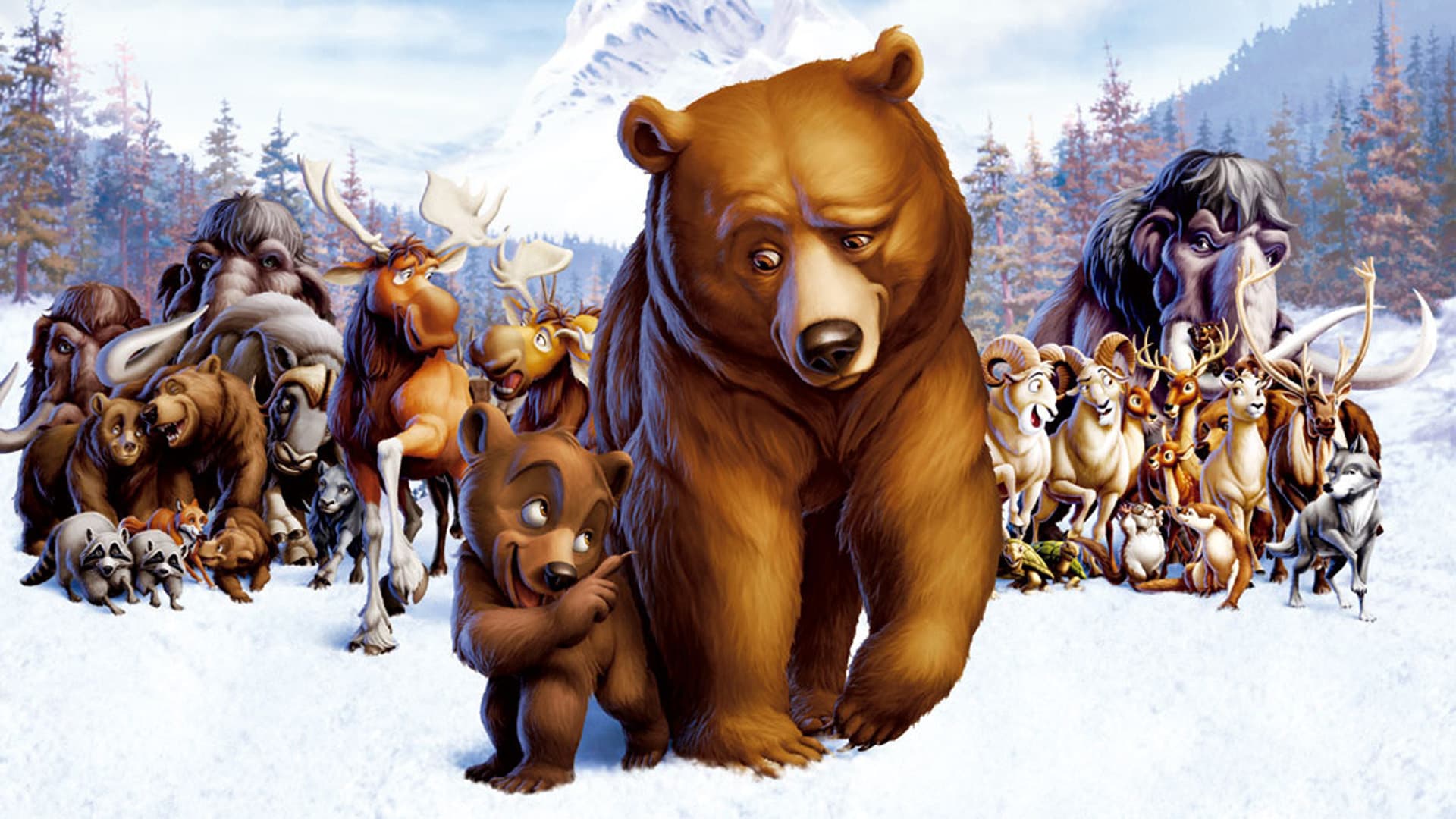
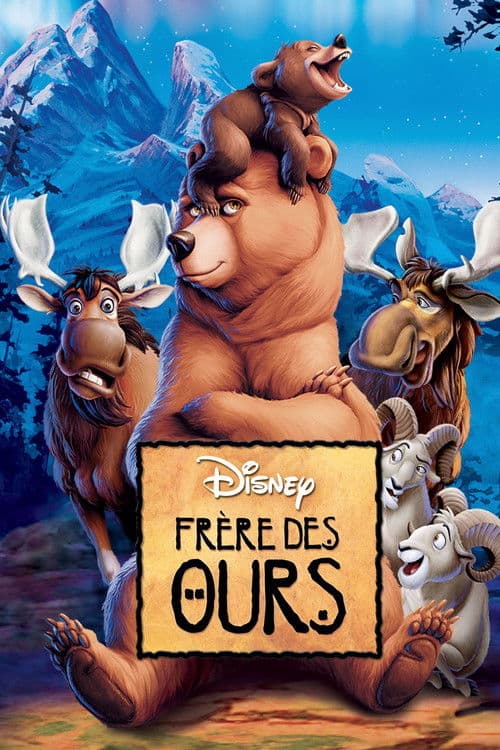
When an impulsive boy named Kenai is magically transformed into a bear, he must literally walk in another's footsteps until he learns some valuable life lessons. His courageous and often zany journey introduces him to a forest full of wildlife, including the lovable bear cub Koda, hilarious moose Rutt and Tuke, woolly mammoths and rambunctious rams.
About this title
- Format
- Feature film
- Year
- 2003
- Runtime
- 1h 22m
- Countries
- United States of America
- Original language
- EN
- Studios
- Walt Disney Feature Animation
Content barometer
- Violence3/5Notable
- Fear3/5Notable tension
- Sexuality0/5None
- Language0/5None
- Narrative complexity1/5Accessible
- Adult themes0/5None
Values conveyed
- Compassion
- Loyalty
- Forgiveness
- friendship
- brotherhood
- empathy