
The Secret of NIMH
The Secret of NIMH
Your feedback improves this guide
Your feedback highlights guides that need a second look and keeps the rating trustworthy.
Does this age rating seem accurate to you?
Sign in to vote
Watch-outs
What this film brings
Content barometer
Violence
3/5
Notable
Fear
3/5
Notable tension
Sexuality
0/5
None
Language
0/5
None
Narrative complexity
1/5
Accessible
Adult themes
1/5
Mild
Expert review
The Secret of NIMH is a family animated adventure, but its mood is much darker and more intense than many films aimed at very young children. Sensitive elements include an ongoing sense of grief, a seriously ill child, a highly threatening farm cat, repeated danger scenes, fights between rats with real stakes, and unsettling references to animal experimentation in a laboratory. The violence is stylized rather than graphic, yet the fear factor is notable because tense scenes return often, and the film uses shadows, stormy settings, and intimidating characters such as the owl to build suspense. There is no sexual content and almost no strong language, though the story does involve a plan to drug a dangerous animal, which may merit a mild substances flag without becoming a major theme. For many children, the main challenge will be the overall darkness, the emotional pressure, and the sadness linked to survival and loss rather than explicit on screen harm. I would suggest it mainly for ages 8 and up, or around 7 with a parent present for children who already handle emotionally intense animated stories well.
Synopsis
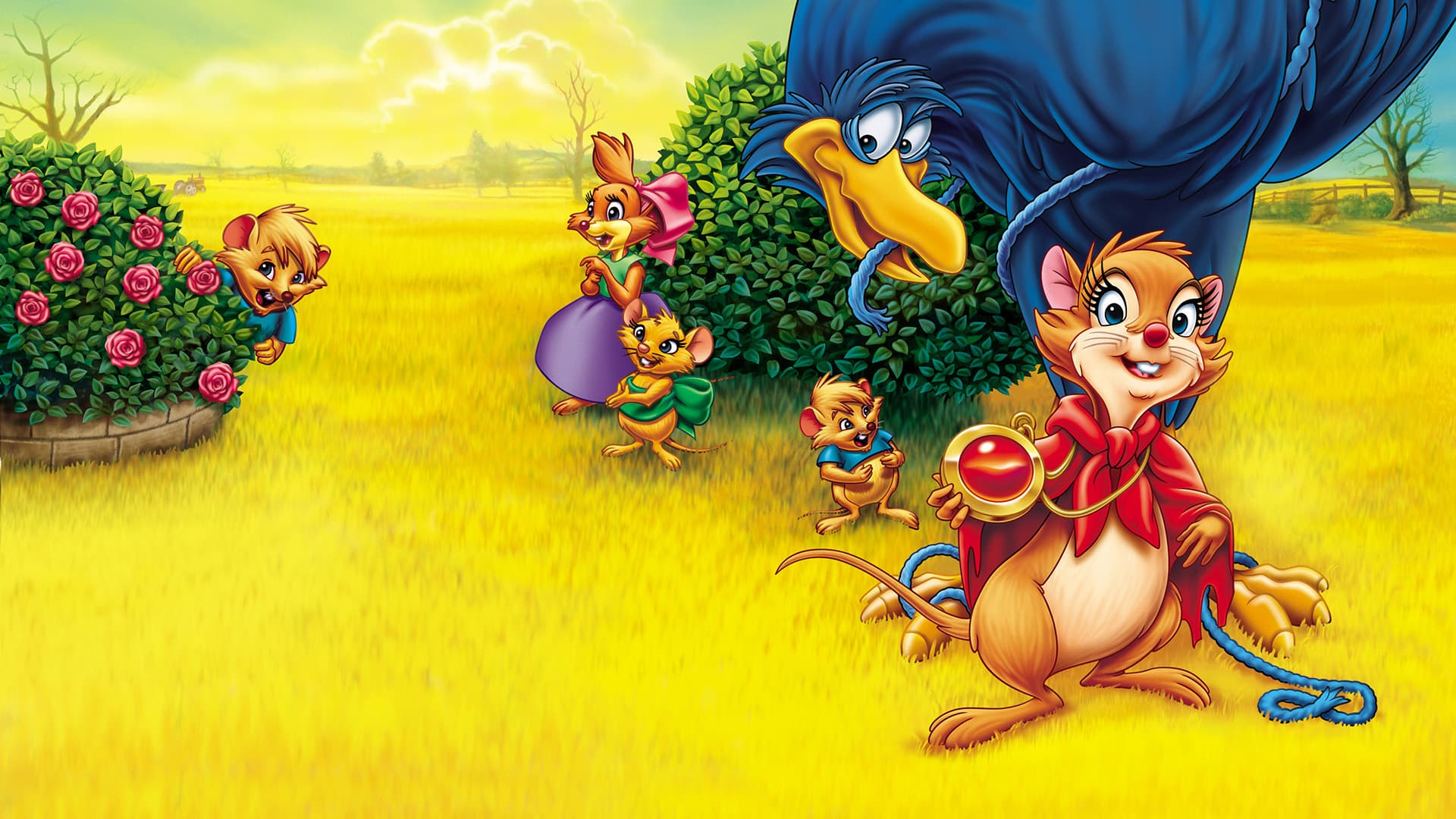
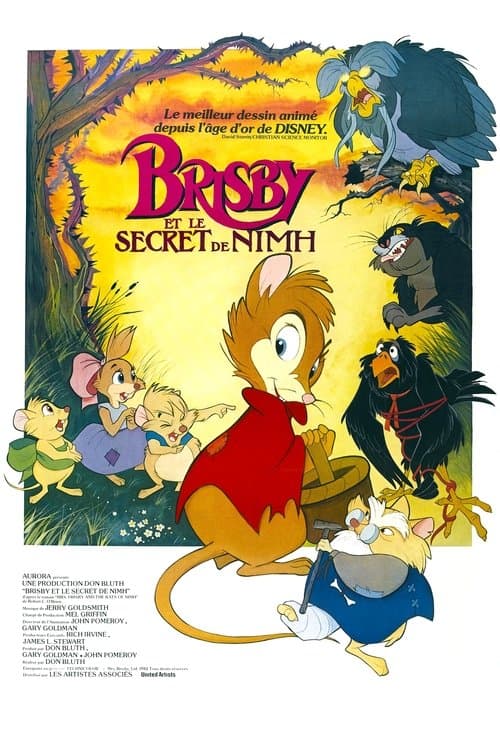
A widowed field mouse must move her family -- including an ailing son -- to escape a farmer's plow. Aided by a crow and a pack of superintelligent, escaped lab rats, the brave mother struggles to transplant her home to firmer ground.
Difficult scenes
From the beginning, the film creates strong worry around Timothy, Mrs. Brisby s sick son, who has pneumonia and cannot travel with the rest of the family. This serious illness, combined with the approaching farmer s plow, may upset children who are sensitive to stories about danger, sickness, or losing a loved one. Dragon the cat is presented as a genuine predator rather than a playful comic threat. His attacks, the dark chase scenes, and the reminder that he already killed Mrs. Brisby s husband give his appearances a sustained level of fear that can be memorable for younger viewers. The visit to the Great Owl stands out because of the nighttime setting, heavy sound design, intimidating appearance, and the sense of danger when Mrs. Brisby faces him alone. The scene is not graphic, but it can feel very intense for children who are not comfortable with looming creatures and shadowy imagery. The story explains that the rats and some mice were subjected to experiments in a human laboratory, introducing a clear theme of animal mistreatment and confinement. The presentation remains suitable for older children, yet the idea itself is emotionally heavy and may lead to questions about suffering, cruelty, and fairness. Later in the film, power struggles among the rats lead to confrontations that feel more serious than in a gentle animated adventure, with credible peril, possible injury, and strong dramatic pressure. A storm and the danger surrounding the family home increase the urgency even further, which may be stressful for a young viewer.
Where to watch
No verified platform for the US market yet. We keep this section updated as availability changes.
About this title
- Format
- Feature film
- Year
- 1982
- Runtime
- 1h 22m
- Countries
- United States of America
- Original language
- EN
- Directed by
- Don Bluth
- Main cast
- Elizabeth Hartman, Derek Jacobi, Arthur Malet, Dom DeLuise, Hermione Baddeley, Shannen Doherty, Wil Wheaton, Jodi Hicks, Ina Fried, John Carradine
- Studios
- United Artists, Aurora, Don Bluth Entertainment, Mrs. Brisby, Metro-Goldwyn-Mayer
Content barometer
Violence
3/5
Notable
Fear
3/5
Notable tension
Sexuality
0/5
None
Language
0/5
None
Narrative complexity
1/5
Accessible
Adult themes
1/5
Mild
Expert review
The Secret of NIMH is a family animated adventure, but its mood is much darker and more intense than many films aimed at very young children. Sensitive elements include an ongoing sense of grief, a seriously ill child, a highly threatening farm cat, repeated danger scenes, fights between rats with real stakes, and unsettling references to animal experimentation in a laboratory. The violence is stylized rather than graphic, yet the fear factor is notable because tense scenes return often, and the film uses shadows, stormy settings, and intimidating characters such as the owl to build suspense. There is no sexual content and almost no strong language, though the story does involve a plan to drug a dangerous animal, which may merit a mild substances flag without becoming a major theme. For many children, the main challenge will be the overall darkness, the emotional pressure, and the sadness linked to survival and loss rather than explicit on screen harm. I would suggest it mainly for ages 8 and up, or around 7 with a parent present for children who already handle emotionally intense animated stories well.
Synopsis
A widowed field mouse must move her family -- including an ailing son -- to escape a farmer's plow. Aided by a crow and a pack of superintelligent, escaped lab rats, the brave mother struggles to transplant her home to firmer ground.
Difficult scenes
From the beginning, the film creates strong worry around Timothy, Mrs. Brisby s sick son, who has pneumonia and cannot travel with the rest of the family. This serious illness, combined with the approaching farmer s plow, may upset children who are sensitive to stories about danger, sickness, or losing a loved one. Dragon the cat is presented as a genuine predator rather than a playful comic threat. His attacks, the dark chase scenes, and the reminder that he already killed Mrs. Brisby s husband give his appearances a sustained level of fear that can be memorable for younger viewers. The visit to the Great Owl stands out because of the nighttime setting, heavy sound design, intimidating appearance, and the sense of danger when Mrs. Brisby faces him alone. The scene is not graphic, but it can feel very intense for children who are not comfortable with looming creatures and shadowy imagery. The story explains that the rats and some mice were subjected to experiments in a human laboratory, introducing a clear theme of animal mistreatment and confinement. The presentation remains suitable for older children, yet the idea itself is emotionally heavy and may lead to questions about suffering, cruelty, and fairness. Later in the film, power struggles among the rats lead to confrontations that feel more serious than in a gentle animated adventure, with credible peril, possible injury, and strong dramatic pressure. A storm and the danger surrounding the family home increase the urgency even further, which may be stressful for a young viewer.