

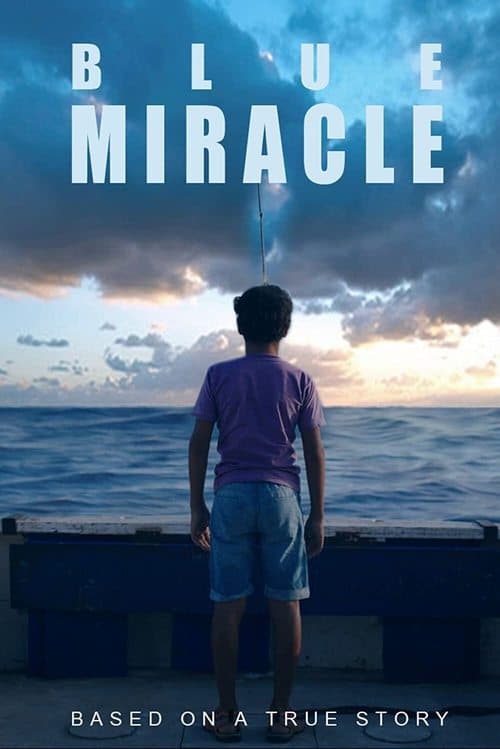
Blue Miracle
Does this age rating seem accurate to you?
Detailed parental analysis
Blue Miracle is a warm family film with an atmosphere that is both luminous and emotionally charged, rooted in an authentic Mexican setting. The plot follows the director of an orphanage who, forced to find funds to save his establishment, signs up with his boys for a high seas sport fishing tournament in a forced partnership with a gruff and solitary fisherman. The film is primarily aimed at children from upper primary school age and families, without being intended for very young children or strictly reserved for teenagers.
Parental and Family Portrayals
The heart of the film rests on the figure of substitute fatherhood: the orphanage director embodies a model of a benevolent, stable and self-sacrificing adult who places the wellbeing of children before his own. In parallel, the adult fisherman undergoes an arc of redemption that gradually leads him to take on an unexpected mentoring role. This dual portrait of fatherhood is what gives the film its emotional depth. Beneath the surface, the children carry stories of broken families, parents dead or incarcerated because of drugs or violence, presented with sobriety and compassion rather than voyeurism. The film thus offers an implicit reflection on what it means to care for a child without being their biological parent, which makes it a natural starting point for a conversation with children about family in its broadest sense.
Underlying Values
The narrative is structured around integrity, perseverance and merit in adversity, without ever falling into naive optimism. Faith and prayer appear as intimate and collective resources, rooted in a specific culture and presented respectfully without proselytising. The relationship with money is treated with subtlety: the orphanage struggles to survive without poverty being romanticised, and economic success is never presented as an end in itself. The idea that collective work and trust placed in strangers can produce something that the individual alone could not achieve constitutes a strong structural value of the film.
Social Themes
The film immerses the viewer in a concrete Mexican social reality: street violence, economic precariousness, orphaned children from criminalised backgrounds. A street scene shows shootings in the background, and children mention brothers killed by gunfire. These elements are not mere backdrop details; they anchor the narrative in a reality that some French children have never encountered. The treatment remains accessible and not anxiety-inducing overall, but this context deserves to be named before or after viewing for children less exposed to these realities.
Violence
Violence is not the register of the film, but it is present in the background. The most striking scenes are a recurring flashback of the drowning of the main character's father, a fight between two adults that falls into the water with risk of drowning, and mentions of the traumatic backgrounds of the children, notably scars left by physical abuse. None of these scenes is graphic or self-indulgent. They are driven by clear narrative intention and serve to build emotion rather than impress. For sensitive children, the hurricane scene and near-drowning sequences may, however, generate physical tension to anticipate.
Substances
Several adults consume alcohol visibly and repeatedly, including beer, tequila and whisky, sometimes to excess. The consumption is not presented heroically, but neither is it explicitly questioned in the narrative. It forms part of the portrait of an adult in difficulty, which gives it narrative grounding. Drugs, meanwhile, are not shown on screen but mentioned as the cause of death or imprisonment of the children's parents.
Language
The language is moderate and corresponds to what one expects of a family film with parental guidance. The terms employed, especially by children, remain in a childish register and slightly disrespectful without crossing into obscenity. Nothing that requires particular warning beyond the film's natural target age.
Strengths
Blue Miracle succeeds in telling a true story without falling into hagiography or an overly smooth moral tale. The relationship between the hardened fisherman and the orphanage children builds with credible progression, avoiding the usual sentimental shortcuts of the genre. The film gives concrete visibility to the poverty and ordinary violence of a peripheral Mexico without exoticising it, which is narratively honest. The sporting dimension of the fishing tournament functions as a genuine dramatic engine, with tension well calibrated for a family audience. For children who have never reflected on what life is like for fostered or orphaned children, the film opens a useful and accessible emotional window.
Age recommendation and discussion points
The film is suitable from age 10, with viewing to be serene from this age for most children, provided there is no particular sensitivity to drowning scenes or accounts of trauma. For younger or very sensitive children, parental pre-screening remains advisable. Two angles of discussion naturally emerge after the film: what is it that makes an adult able to be a father or parental figure without being biologically so, and how does one speak of violence or poverty experienced by children in other countries without becoming accustomed to it as mere backdrop.
Synopsis
To save their cash-strapped orphanage, a guardian and his kids partner with a washed-up boat captain for a chance to win a lucrative fishing competition.
About this title
- Format
- Feature film
- Year
- 2021
- Runtime
- 1h 35m
- Countries
- Mexico, United States of America
- Original language
- EN
- Directed by
- Julio Quintana
- Main cast
- Jimmy Gonzáles, Dennis Quaid, Anthony Gonzalez, Bruce McGill, Raymond Cruz, Dana Wheeler-Nicholson, Fernanda Urrejola, Nathan Arenas, Chris Doubek, Isaac Arellanes
- Studios
- Third Coast Content, Endeavor Content, Mucho Mas Media, Provident Films, Reserve Entertainment
Content barometer
- Violence2/5Moderate
- Fear2/5A few scenes
- Sexuality0/5None
- Language1/5Mild
- Narrative complexity3/5Complex
- Adult themes2/5Present
Values conveyed
- Perseverance
- Compassion
- solidarity
- hope
- chosen family
- trust
- self-improvement