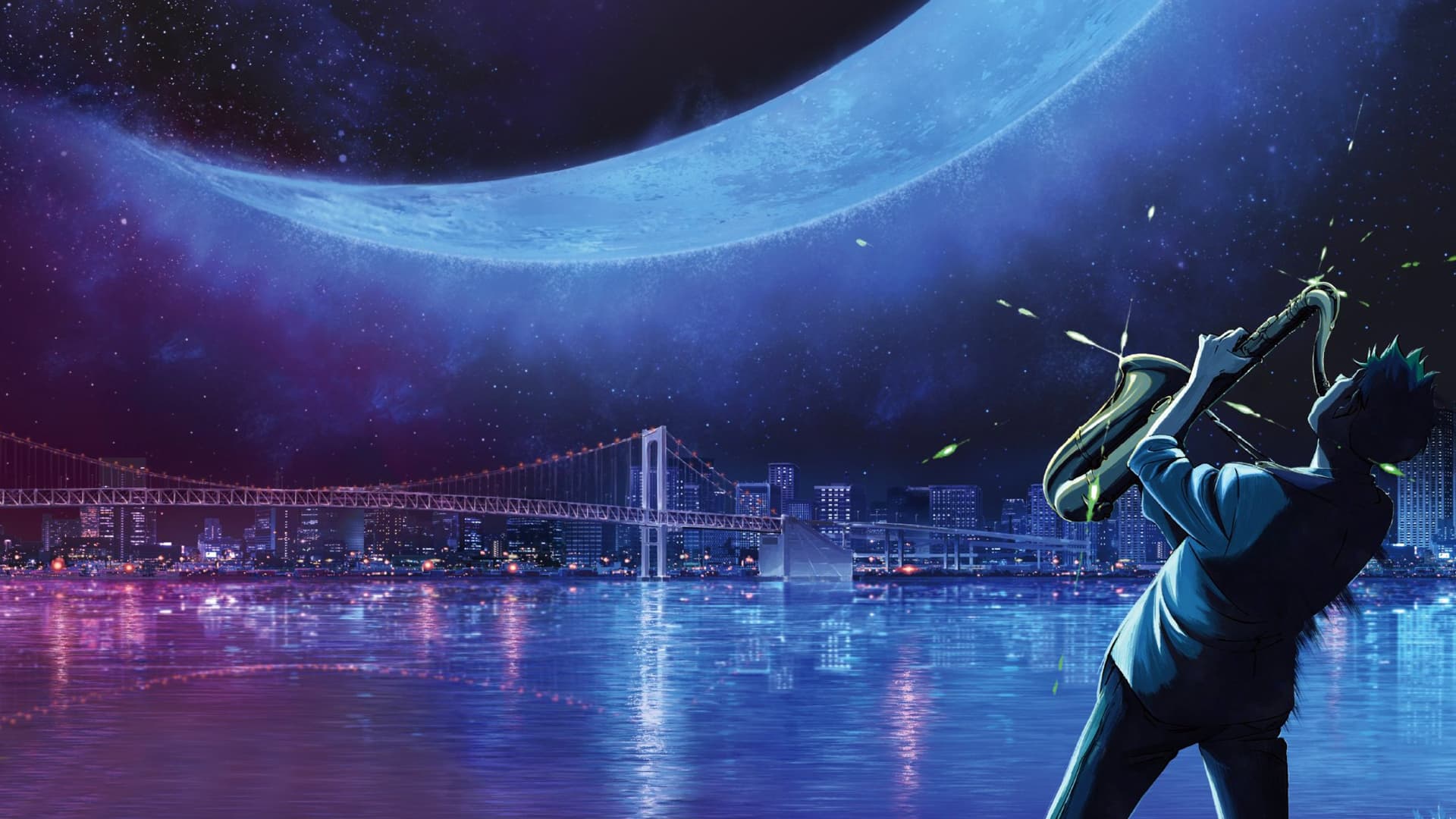


Blue Giant
Does this age rating seem accurate to you?
Detailed parental analysis
Blue Giant is a Japanese animated film with a tone that is both exhilarating and melancholic, carried by a musical energy that literally flows across the screen. The story follows a young man determined to become the world's greatest saxophonist, who leaves his hometown for Tokyo where he forms a jazz trio with two friends who are equally talented and flawed. The film is primarily aimed at teenagers and adults, but its emotional sincerity makes it accessible from early secondary school onwards.
Underlying Values
The film builds its entire narrative around a central conviction: jazz, and art in general, cannot be reduced to technique but springs from emotional truth. The three main characters embody different relationships to work and gift, and the film does not simply choose sides between them. What is unambiguously valued is perseverance in the face of doubt, the courage to expose one's vulnerability, and the refusal to abandon one's ambitions because others judge them unrealistic. The narrative also valorises deep, unselfconscious male friendship: the characters cry, tell each other they love each other, support each other without this ever being treated with mockery. This is a rare emotional model worthy of discussion.
Discrimination
Female characters are few in number and underdeveloped. The main female figure runs a music venue and supports the protagonists, but remains narratively sidelined. This imbalance is noticeable without being caricatural, and can open a useful discussion on the representation of women in narratives centred on music or artistic performance.
Violence
Violence is sporadic and not gratuitous. A physical altercation occurs during a moment of emotional tension between close characters, and the film shows blood in this context. These elements are treated with gravity and serve a genuine narrative purpose: they underscore the personal and physical cost that pursuing a dream can demand. Nothing traumatising or prolonged.
Substances
Performances take place in jazz bars and clubs where adults consume alcohol in the background. Alcohol is neither foregrounded nor valorised as a lifestyle: it forms part of the natural setting of jazz venues. It is a contextual presence, with no problematic or encouraging use among the protagonists.
Language
The language is generally clean. A few rare mild expletives and one or two off-colour jokes about anatomy are present, without constituting a dominant feature of the film. The overall tone is sincere and serious.
Strengths
Blue Giant is an emotionally intense and artistically ambitious work. The representation of jazz is remarkable: the animation visually translates the sonic power of improvisations with an inventiveness that makes the music feel as much as it is heard. The film poses serious questions about talent, work, the place of the heart in art, and the personal cost of extreme ambitions, without ever resorting to easy moralising. The representation of male friendship, open and without emotional self-consciousness, is a genuine pedagogical asset for a young audience. The film has provoked strong and lasting emotional reactions in adults, which testifies to writing that transcends mere entertainment.
Age recommendation and discussion points
The film is suitable from age 10, and can be fully experienced from age 12 onwards for viewing without reservation. Two angles are worth discussing after the credits: what makes a performance truly touch someone, beyond technical perfection? And how do you respond when those you love tell you that your dream is unreachable?
Synopsis
High school student Dai Miyamoto has his life is turned upside down the day he discovers jazz. Picking up a saxophone and leaving his sleepy hometown for the bustling nightclubs of Tokyo, Dai will find that the life of a professional musician isn’t for the faint of heart, as he must confront what it truly means to be great.
Where to watch
Availability checked on Apr 27, 2026
About this title
- Format
- Feature film
- Year
- 2023
- Runtime
- 2h
- Countries
- Japan
- Original language
- JA
- Directed by
- Yuzuru Tachikawa
- Main cast
- Yuki Yamada, Shotaro Mamiya, Amane Okayama, Yusuke Kondoh, Mirei Suda, Kenji Nomura, Hiroki Touchi, Yutaka Aoyama, Masayuki Kato, Sayaka Kinoshita
- Studios
- NUT, TOHO
Content barometer
- Violence1/5Mild
- Fear1/5Mild
- Sexuality0/5None
- Language1/5Mild
- Narrative complexity3/5Complex
- Adult themes1/5Mild
Watch-outs
- Grief
- Gender stereotypes
- Death / grief
Values conveyed
- Courage
- Friendship
- Perseverance
- passion
- discipline