Big City Greens
Does this age rating seem accurate to you?
Detailed parental analysis
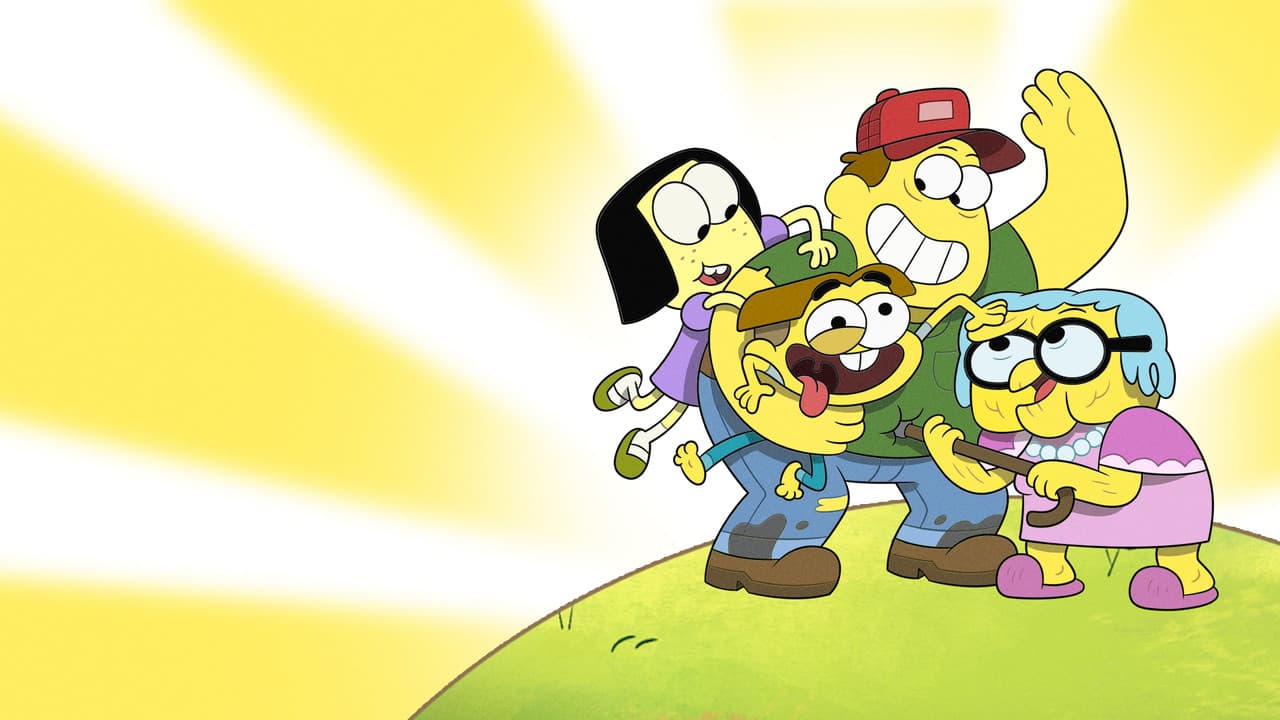
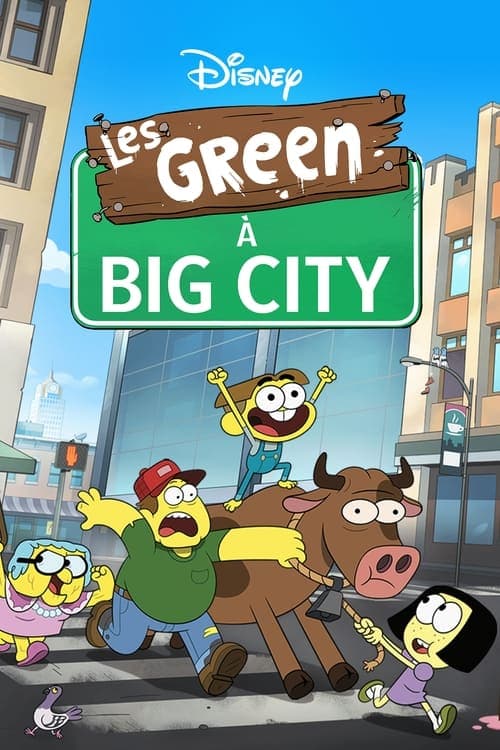
The Greens at Big City is an American animated television series with an upbeat and deliberately absurd tone, intended for children aged 7 and above. It follows the Green family, who have moved from the countryside to the city and must navigate an urban environment that is entirely foreign to them. The humour rests on the cultural clash between the Greens and their city-dwelling neighbours, with Cricket, the mischievous son, as the primary driver of the adventures.
Underlying Values
The series builds its narrative around solid family values: loyalty to one's own, perseverance in the face of obstacles, and the ability to acknowledge one's mistakes. The characters regularly get into trouble, but the narrative arc of each episode almost systematically leads them to apologise and make amends for their wrongs. This repeated pattern is pedagogically sound for young children. In parallel, the series subtly values simplicity and authenticity against urban sophistication, without falling into a naive celebration of ignorance.
Discrimination
The entire premise of the series rests on a rural-urban contrast exploited for comic effect: the Greens are presented with dirty clothes, a pronounced accent, a dilapidated house and behaviour deemed unrefined, whilst their city neighbours appear more cultured and socially adept. This comedic device perpetuates stereotypes about rural communities and working-class people, even if the series does not treat them maliciously. It is worth discussing with a child so they understand that comedy based on incongruity says nothing about the real worth of people.
Parental and Family Portrayals
The Green family offers an atypical and broadly positive representation of parenthood. Father Bill raises his children alone with the help of his mother, Gramma Alice, a colourful character with a prosthetic leg and a strong personality. Mother Nancy, absent from the home on a daily basis, is shown as a loving, competent and respected figure, which avoids the pitfall of depicting an absent mother negatively. Co-parenting between Bill and Nancy functions in a caring manner, which constitutes a rare and useful representation to show children from separated families.
Violence
Violence is exclusively cartoonish and slapstick: falls, tomato fights, punches on puppets. It carries no dramatic weight and remains within the classic codes of children's comic animation. Gramma Alice regularly carries a sword, a recurring detail treated as a humorous eccentricity rather than a threat. A few episodes, notably those with a Halloween theme, may frighten younger or sensitive children, but overall the series remains far removed from anxiety-inducing violence.
Sex and Nudity
Several episodes contain scenes of nudity treated in a comedic manner: Gramma completely naked at a dinner episode, a male character naked at a parade, paintings of Roman nudes in an art-themed episode. These moments are clearly played for laughs and without sexual connotation, but they may surprise parents who are not expecting them. There is no sexualisation of characters present in the series.
Substances
Alcohol consumption appears occasionally, notably in an episode where motorcyclists are shown drinking. The scene is neither valorised nor commented upon, but it is visible. The presence remains anecdotal and without particular narrative significance.
Language
The language remains broadly mild, with common euphemisms such as 'dang', 'heck' or 'gosh'. Mild insults such as 'idiot', 'stupid' or 'rubbish' appear in exchanges between characters. Nothing that exceeds the usual standards of family animation, but sufficient for some parents to wish to discuss it with their children.
Strengths
The series succeeds in building engaging and consistent characters over time, with Gramma Alice particularly memorable in her blend of gruffness and affection. The writing of episodes follows a clear structure that helps young children understand the consequences of actions and the value of apologies. The tone is warm without being saccharine, and the humour works equally well for children and adults watching with them. The representation of an unconventional family, with an absent but loving mother and an active grandmother despite her disability, subtly enriches the landscape of family models offered to children.
Age recommendation and discussion points
The series is suitable from age 7, with parental presence recommended for younger children or those sensitive to mildly frightening content. Two angles of discussion are worth exploring after viewing: why do the Greens make people laugh because of the way they live, and does that mean they are worse than their neighbours? And also: what makes a family work well, even when it does not look like the families we usually see?
Synopsis
The offbeat adventures of 10-year-old Cricket Green, a mischievous and optimistic country boy who moves to the big city with his wildly out of place family – older sister Tilly, father Bill and Gramma Alice.
About this title
- Format
- TV series
- Year
- 2018
- Runtime
- 11m
- Countries
- United States of America
- Original language
- EN
- Directed by
- Shane Houghton, Chris Houghton, Monica Ray
- Main cast
- Chris Houghton, Marieve Herington, Bob Joles, Artemis Pebdani, Zeno Robinson, Wendi McLendon-Covey
- Studios
- Disney Television Animation, Rough Draft Korea, Sugarcube
Content barometer
- Violence1/5Mild
- Fear2/5A few scenes
- Sexuality1/5Allusions
- Language1/5Mild
- Narrative complexity1/5Accessible
- Adult themes1/5Mild
Watch-outs
- Alcohol
- Gender stereotypes
Values conveyed
- Acceptance of difference
- Perseverance
- Loyalty
- family
- friendship
- adaptation
- humor