Ben & Holly's Little Kingdom
Does this age rating seem accurate to you?
Detailed parental analysis
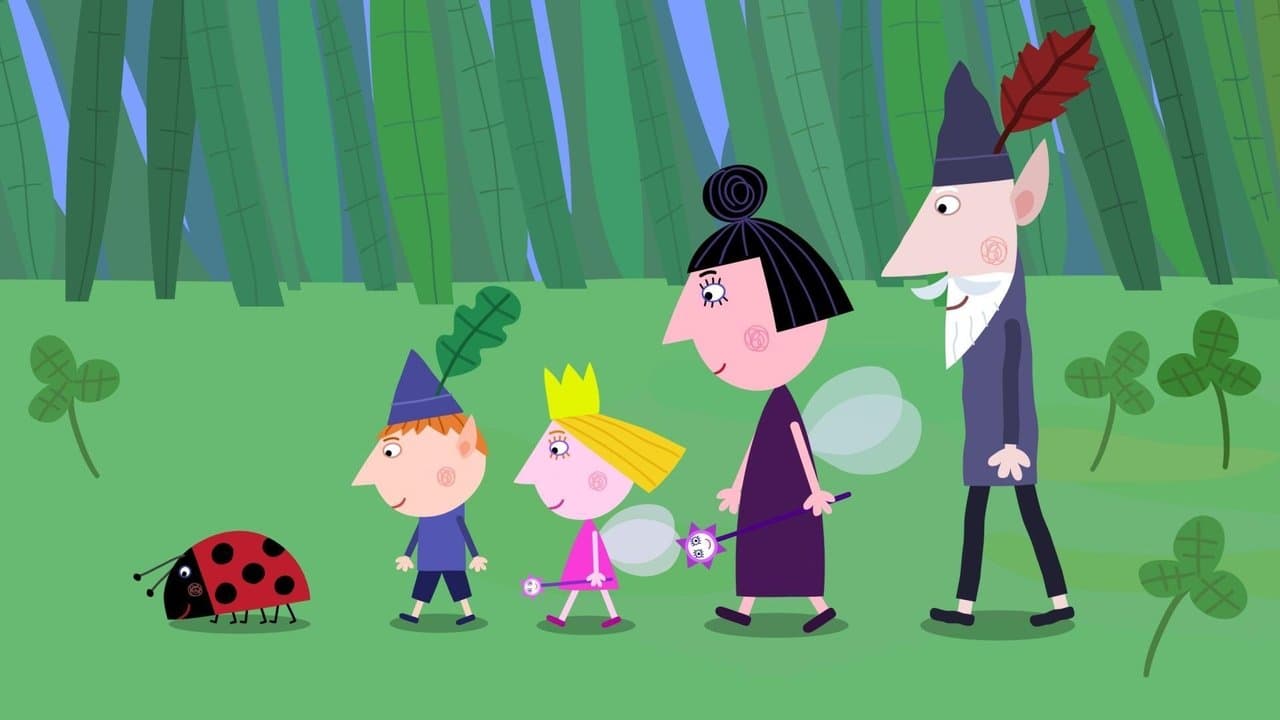
Ben & Holly's Little Kingdom is a light and colourful British animated series, driven by multi-layered humour that entertains both children and the parents watching alongside them. Each short episode follows the adventures of Holly, a little fairy princess, and her best friend Ben, an elf, in a miniature kingdom populated by magical creatures and colourful characters. The series targets preschool-age children, with a layer of adult humour subtly woven in for accompanying adults.
Underlying Values
The series builds its narrative around a genuine friendship between two characters from distinct social backgrounds: Holly is a fairy princess, Ben a common elf. This relationship crosses the class and racial prejudices that structure the little kingdom, and the narrative questions them regularly without resolving them artificially. The characters make mistakes, attempt to correct them and sometimes provoke larger ones as a result, which establishes a logic of learning through experience rather than imposed morality. Teamwork, perseverance and the complementarity of talents are valued concretely and repeatedly through the situations presented.
Language
The language remains broadly gentle, but a few unkind expressions circulate in the series, notably 'silly old fool' and the use of the word 'stupid', which constitute the strongest formulations in the show. These expressions are spoken by adult characters, which lends them a form of narrative legitimacy in the eyes of young viewers. Parents have indeed reported that their children have reproduced these phrases after watching. The subject merits being addressed simply: explaining that certain words can hurt even when adults use them on screen.
Discrimination
The series reproduces at times outdated gender stereotypes, notably in the distribution of roles between female and male characters and in certain attitudes of the kingdom's adults. These representations are not caricatural to the point of constituting an explicit message, but they are sufficiently present to merit parental attention, particularly with children in the process of forming their own reference points. Conversely, the central relationship between Ben and Holly concretely illustrates that friendship can cross social boundaries, which nuances the overall picture.
Parental and Family Portrayals
Parental and adult figures are present and broadly benevolent, but often overwhelmed by events or slightly incompetent when faced with magic going wrong. Nanny Plum, a key adult character, is characterised by recurring sarcasm and a tendency towards arrogance that form part of her humour, but which can also function as a behavioural model for young children who are highly receptive. The kingdom's parents are affectionate without being idealised, which gives a realistic and accessible family image.
Strengths
The series distinguishes itself through genuinely accomplished two-level writing: children find accessible magical adventures and engaging characters, whilst adults pick up on a secondary humour made of sarcasm, cultural references and well-judged absurdity. The pacing of short episodes is well calibrated for preschool attention spans, and the situations rest on a coherent internal logic that gives children the means to anticipate and understand the consequences of actions. The visual universe is inventive and warm, and the series manages to address complex social dynamics, such as class hierarchy or difference, with a lightness that does not erase their substance.
Age recommendation and discussion points
The series is suitable from age 3 or 4, with shared viewing recommended for younger children in order to contextualise the few unkind expressions and occasional gender stereotypes. Two angles of discussion are worth pursuing after episodes: asking the child why Ben and Holly are friends despite their differences, and returning to moments when a character says something hurtful to explain that even adults on screen can get their words wrong.
Synopsis
The friendship between fairy princess Holly and Ben Elf in an enchanted magical kingdom of elves and fairies.
Where to watch
Availability checked on May 06, 2026
About this title
- Format
- TV series
- Year
- 2009
- Runtime
- 11m
- Countries
- Canada, United Kingdom, United States of America
- Original language
- EN
- Directed by
- Neville Astley
- Main cast
- Sian Taylor, Preston Nyman, David Graham, Sarah Ann Kennedy, Ian Puleston-Davies, Sara Crowe, Jonny Butler, Judy Flynn, Oliver May, Lucy Moss
Content barometer
- Violence0/5None
- Fear0/5None
- Sexuality0/5None
- Language1/5Mild
- Narrative complexity1/5Accessible
- Adult themes0/5None
Watch-outs
- Strong language
- Gender stereotypes