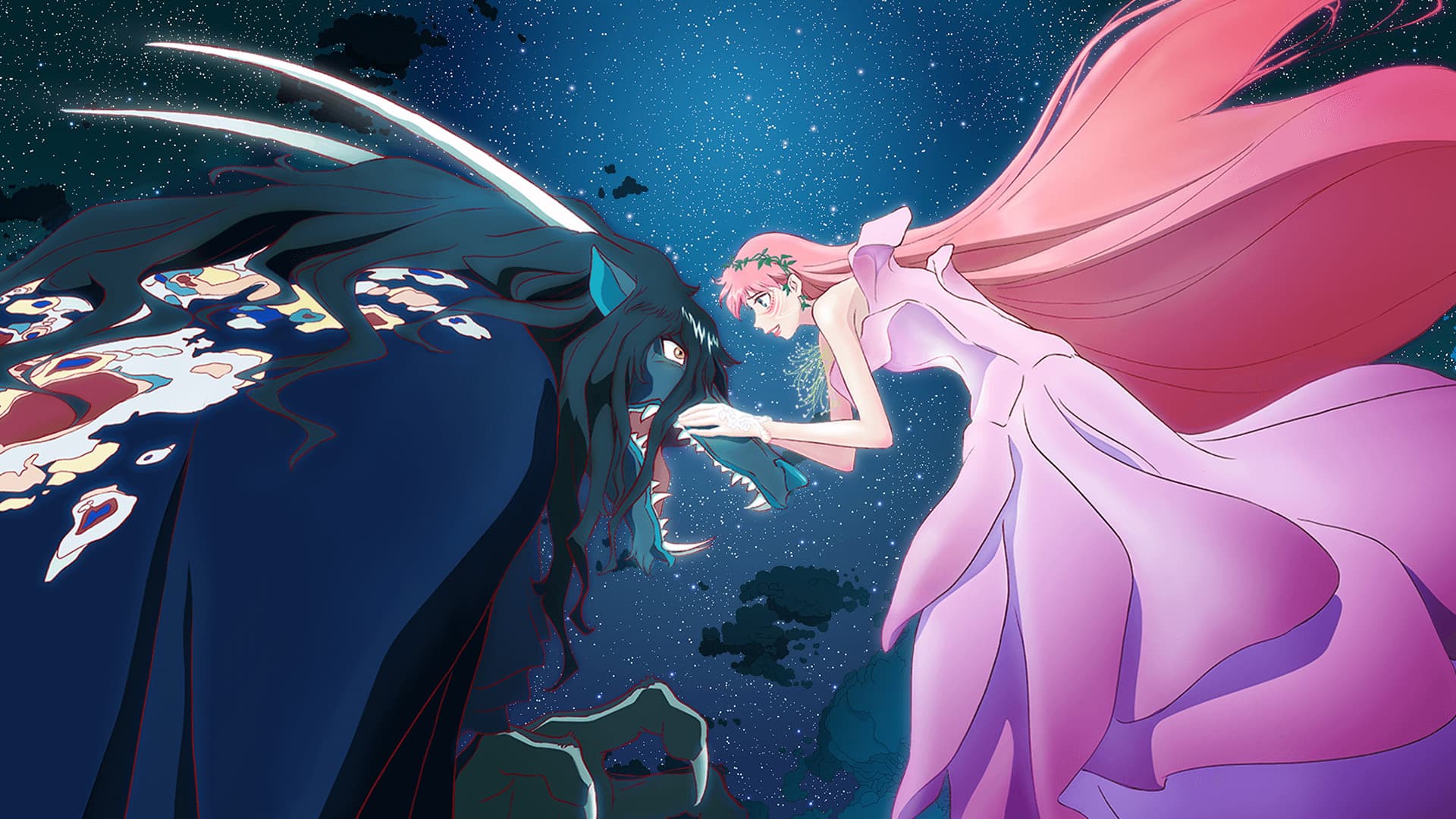

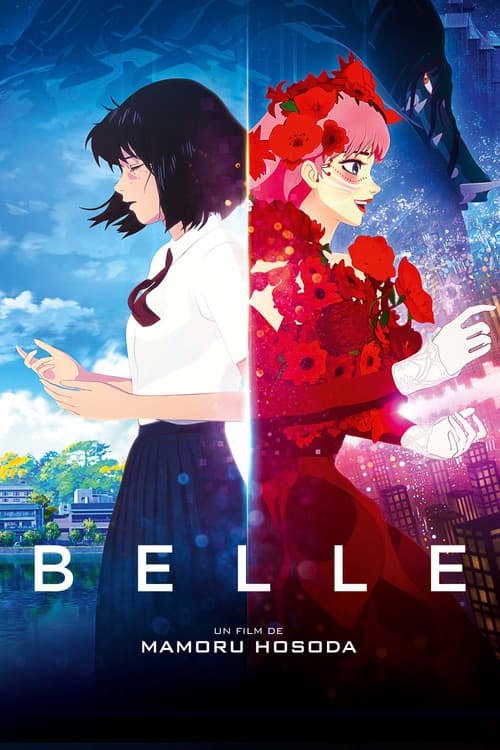
Belle
竜とそばかすの姫
Does this age rating seem accurate to you?
Detailed parental analysis
Belle is a fantastical animated film with a tone that is both luminous and melancholic, alternating between the everyday life of an introverted Japanese schoolgirl and a vast virtual world where she emerges as a globally celebrated singer. The plot follows Suzu, a teenager marked by the loss of her mother, who discovers through hiding behind an avatar the strength she does not permit herself in real life. The film primarily targets teenagers and young adults, though its themes of emotional reconstruction and parental failings add a depth that adult viewers will appreciate more fully.
Parental and Family Portrayals
The film constructs a nuanced and decidedly positive vision of the virtual world, presented not as a space of addiction or corruption, but as a terrain for self-discovery and authentic human connection. This stance is deliberate and consistent in the writing: anonymity is not a mask for cowardice, but sometimes the only condition under which a wounded individual can exist. In parallel, the narrative strongly values the courage to show oneself as one truly is, compassion towards the more vulnerable, and the decision to act even without any guarantee of success. Female friendship occupies a central place and is treated with rare sincerity, without rivalry or betrayal.
Underlying Values
The film constructs a nuanced and decidedly positive vision of the virtual world, presented not as a space of addiction or corruption, but as a terrain for self-discovery and authentic human connection. This stance is deliberate and consistent in the writing: anonymity is not a mask for cowardice, but sometimes the only condition under which a wounded individual can exist. In parallel, the narrative strongly values the courage to show oneself as one truly is, compassion towards the more vulnerable, and the decision to act even without any guarantee of success. Female friendship occupies a central place and is treated with rare sincerity, without rivalry or betrayal.
Violence
Violence unfolds on two levels. In the virtual world, combat scenes between avatars are spectacular, with massive destruction, visual impact, and a castle reduced to flames: all of this remains in a stylised register that should not disturb teenagers. In the real world, domestic violence inflicted by a father on his sons is treated differently: it is shown briefly but explicitly, with a scene in which the father physically injures Suzu, causing a visible scratch on her cheek. This violence carries strong narrative purpose; it serves to make the danger concrete, but it may be distressing for younger children or those who have themselves been exposed to similar situations.
Sex and Nudity
The film contains a suggestive scene and stylised nudity in the context of the virtual world, with no explicit character. A friendship between Suzu and an older teacher is also evoked with romantic ambiguity that is neither fully assumed nor questioned by the narrative. These elements remain discreet but merit mention for parents of younger children.
Language
The language is moderate and free of severe profanity. A few mildly aggressive phrases are scattered throughout exchanges, particularly in scenes of tension, without ever exceeding a level common to the genre.
Strengths
The film deploys impressive visual and musical mastery: the sung sequences in the virtual world have genuine emotional scope, and the soundtrack functions as a narrative vector in its own right, not merely as dressing. The characterisation of Suzu is true and moving, supported by a credible inner progression that avoids genre clichés. The film raises intelligent questions about online identity, the difference between persona and person, and the way vulnerability can become a strength, making it a particularly rich subject for conversation with teenagers who inhabit these digital spaces themselves. The third act is more uneven, with an abrupt shift in register towards serious subjects treated less rigorously, but this does not undermine the solidity of the whole.
Age recommendation and discussion points
The film is recommended from age 13 onwards, with particular care for children sensitive to themes of loss or mistreatment, for whom parental accompaniment is advised. Two angles merit exploration after viewing: firstly, ask the teenager what they think about Suzu intervening alone to help mistreated children, and whether this is how such situations should be resolved in reality; secondly, discuss the difference between who one is online and who one is in real life, and what this reveals or conceals about oneself.
Synopsis
Suzu is a 17-year-old high-school student living in a rural town with her father. Wounded by the loss of her mother at a young age, Suzu one day discovers the massive online world "U" and dives into this alternate reality as her avatar, Belle. Before long, all of U's eyes are fixed on Belle, when, suddenly, a mysterious, dragon-like figure appears before her.
About this title
- Format
- Feature film
- Year
- 2021
- Runtime
- 2h 1m
- Countries
- Japan
- Original language
- JA
- Studios
- Studio Chizu, Nippon Television Network Corporation, dentsu, TOHO, KADOKAWA, Hakuhodo DY Media Partners, Yomiuri Telecasting Corporation, BookWalker, NTT Docomo, Lawson Entertainment, Yomiuri Shimbun Company, movic
Content barometer
- Violence3/5Notable
- Fear3/5Notable tension
- Sexuality2/5Mild
- Language1/5Mild
- Narrative complexity3/5Complex
- Adult themes0/5None
Watch-outs
- Grief
- Death / grief
- Abuse
- Sexuality
Values conveyed
- Courage
- Friendship
- Compassion
- grief and resilience
- identity and self-confidence
- empathy
- child protection
- courage to be seen
- parent-child bond