
Bedknobs and Broomsticks
Does this age rating seem accurate to you?
Detailed parental analysis
The Apprentice Witch is a whimsical Disney comedy blending live-action footage and animated sequences in an overall light and warm atmosphere, with a touch of adventure. The plot follows an aspiring witch who, during the Second World War, finds herself having to look after three evacuated children whilst trying to master a spell capable of protecting England. The film is primarily aimed at school-age children and families, with a resolutely positive tone despite its historical setting.
Social Themes
The film takes place during the Second World War and features a landing of Nazi soldiers on British soil, culminating in a final battle. This wartime context is treated with a deliberate lightness: enemy soldiers are stripped of their uniforms and routed in comical fashion, without any character being killed. This narrative choice makes the historical threat accessible without glossing over it brutally, but it does call for a preliminary conversation with children who are not yet familiar with this chapter of history. For a curious child, it serves as a gateway to the Second World War that needs to be accompanied by an adult capable of providing proper historical context.
Underlying Values
The narrative carries solid and clear values: cooperation amongst very different individuals, perseverance in the face of doubt, and the idea that believing in oneself and in others has a concrete impact. The protagonist embodies an asserted form of female independence for the era, pursuing her apprenticeship through personal conviction and sense of duty. The collective ultimately takes precedence over individual interests, and the film cohesively links personal effort to common good.
Violence
Violence appears in two very distinct forms. The animated football sequence is pure slapstick without consequence, designed for laughs. The final battle introduces armed soldiers firing rifles and confronting an army of ghostly animated armours equipped with bows and spears. The tone remains spectacular without becoming threatening: no deaths, no blood, enemies are neutralised by magic rather than physically defeated. For more sensitive or younger children, the scene may startle with its sudden visual intensity, but it does not exceed the bounds of classical family adventure cinema.
Parental and Family Portrayals
The three children are war evacuees, separated from their parents and entrusted to a stranger. This situation of an improvised makeshift family is the emotional engine of the film. The protagonist, initially reluctant, develops a genuine maternal bond with the children as the narrative unfolds. The absence of biological parents is treated as a matter of war with restraint, without excessive dramatisation, but it anchors the film in an emotional reality that some children sensitive to this type of separation might feel.
Substances
A male character mentions stopping at the pub for a pint to calm himself, and an animated character smokes a cigar in a brief sequence. These elements are incidental and not valorised: they reflect the cultural codes of the era without conveying a message about alcohol or tobacco consumption.
Sex and Nudity
A male character has a brief hallucination in which he sees a scantily clad cabaret dancer walking towards him on a railway track. The scene is brief, humorous and entirely free of explicit content. It will sail well over the heads of young children and requires no particular comment for older ones.
Strengths
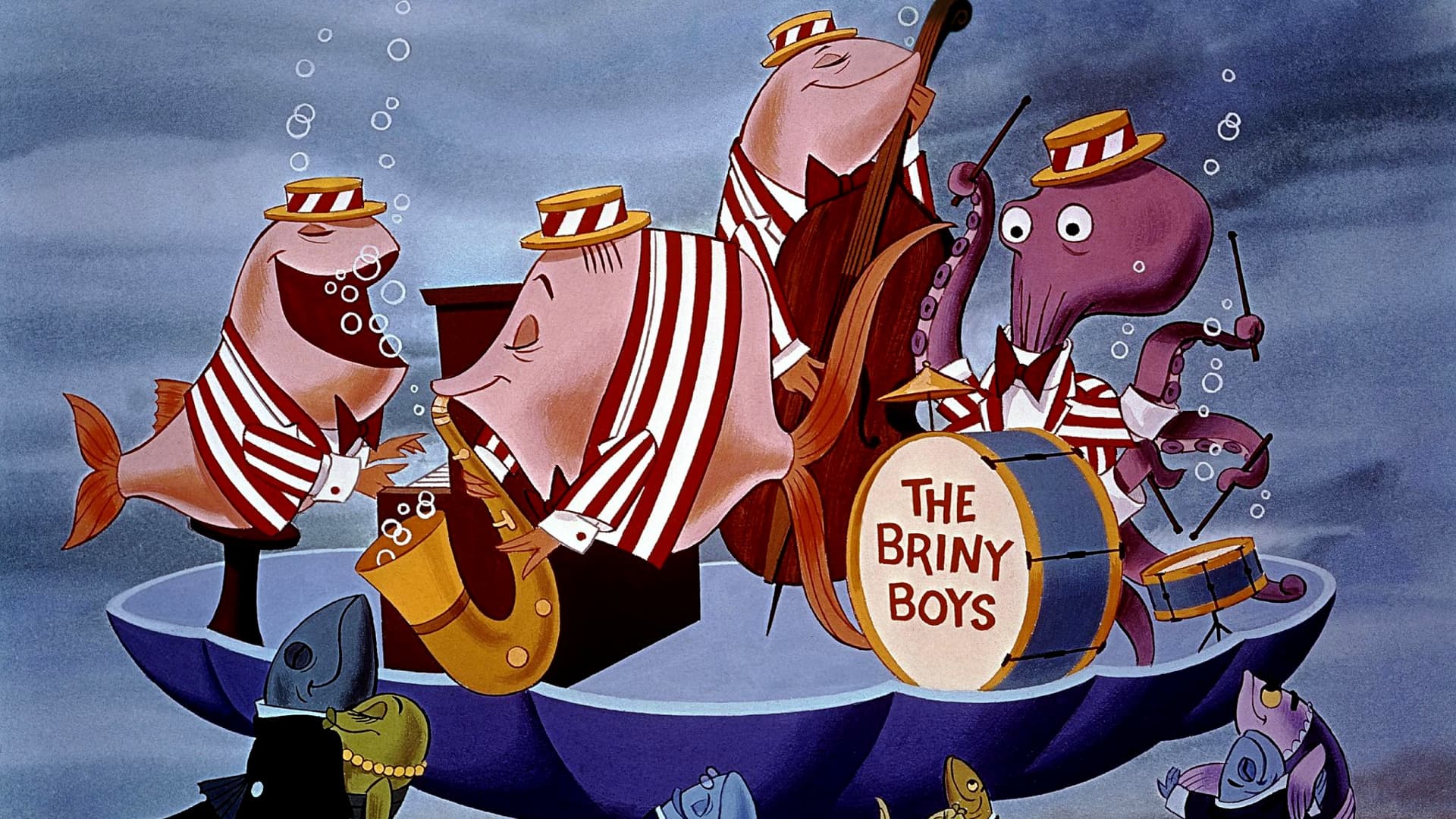
The film succeeds in weaving a coherent fantastical adventure atmosphere by combining magic, humour and a serious historical setting whilst never losing its lightness. The underwater animated sequence is a demonstration of visual inventiveness and brisk comedy that remains memorable. The songs are well integrated into the narrative and contribute to character development rather than slowing it down. On a narrative level, the film manages to build a credible relationship between a gruff adult and unwanted children, which gives it genuine emotional depth beneath its fantastical wrapping. It is also a natural and engaging introduction to the reality of British civilians during the Second World War.
Age recommendation and discussion points
The film is suitable from age 6 onwards, with adult guidance for the youngest children who are not yet familiar with the Second World War context. From age 8 and upwards, viewing is relaxed and independent. Two angles of discussion are worth pursuing after the film: asking the child why Nazi soldiers are made ridiculous rather than terrifying, and what this says about the way we tell children about war; and exploring together what it means to believe in something one cannot yet prove, as the protagonist does with her magic.
Synopsis
Three children evacuated from London during World War II are forced to stay with an eccentric spinster. The children's initial fears disappear when they find out she is in fact a trainee witch.
About this title
- Format
- Feature film
- Year
- 1971
- Runtime
- 1h 57m
- Countries
- United States of America
- Original language
- EN
- Directed by
- Robert Stevenson
- Main cast
- Angela Lansbury, David Tomlinson, Roddy McDowall, Sam Jaffe, John Ericson, Bruce Forsyth, Cindy O'Callaghan, Roy Snart, Ian Weighill, Tessie O'Shea
- Studios
- Walt Disney Productions
Content barometer
- Violence2/5Moderate
- Fear2/5A few scenes
- Sexuality1/5Allusions
- Language0/5None
- Narrative complexity2/5Moderate
- Adult themes1/5Mild
Watch-outs
- Alcohol
- Violence
Values conveyed
- Courage
- Perseverance
- Autonomy
- friendship
- cooperation
- family
- imagination