Beauty and the Beast
Does this age rating seem accurate to you?
Detailed parental analysis
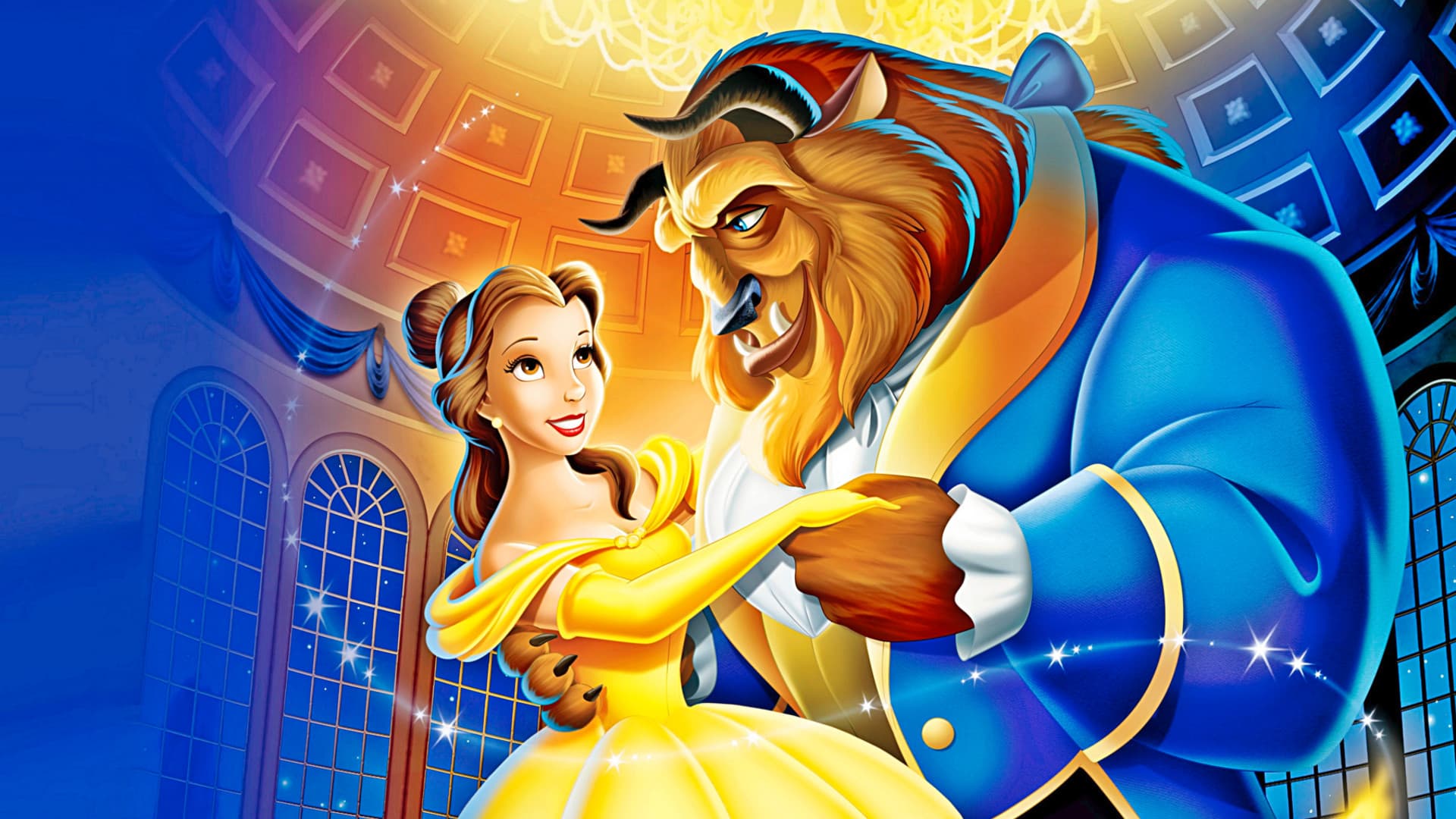
Beauty and the Beast is a Disney musical fairy tale with contrasting atmospheres, alternating between enchanted lightness and genuinely dark and unsettling moments. A cultured young woman finds herself imprisoned in a castle haunted by a monstrous creature, and gradually discovers what lies beneath appearances. The film is primarily aimed at school-age children, but its emotional richness and narrative tensions make it a film that accompanying adults will experience fully.
Violence
Violence is present on several occasions and with genuine intensity for an animated film intended for children. The opening scene in the forest, with wolves attacking in darkness, is genuinely frightening. The Beast is wounded by wolves, with visible blood. The final confrontation between Gaston and the Beast concludes with a stabbing in the back, followed by an agony in Belle's arms that leads one to believe the character has died. The attack on the castle by villagers, led by Gaston shouting 'Kill the beast', creates sustained tension with real danger for characters to whom the child has become attached. These sequences have a clear narrative purpose and are not gratuitous, but their intensity should not be underestimated for sensitive children.
Underlying Values
The film carries a solid central message: appearance says nothing of a being's worth, and fear of the other can be weaponised by those seeking to dominate. Gaston embodies with remarkable precision the scapegoating mechanism: he fabricates a threat, sows fear in the community and mobilises the crowd against the one he designates as a monster, to serve his own interests. This pattern is sufficiently clear to be discussed with a child. In counterpoint, Belle values intelligence, curiosity and refusal to submit to social pressure regarding arranged marriage. The relationship between Belle and the Beast raises a genuine question about the boundary between mutual taming and a relationship under constraint, which the film does not always resolve convincingly.
Parental and Family Portrayals
Belle's father, Maurice, is a loving but fragile and clumsy character, incapable of protecting his daughter. Belle reverses the protection dynamic by accepting imprisonment in his place, making her the functional adult figure of the pair. The mother is absent, without explanation. This pattern of the affectionate but powerless father, compensated by a daughter who assumes family responsibility, is recurrent in fairy tales and deserves to be named with children who might internalise it as a norm.
Discrimination
Gaston is an avowed caricature of the dominant male: vain, physically imposing, convinced that strength and appearance are sufficient to legitimise his authority over women and the community. The film explicitly presents him as a repellent figure, which makes him less a problematic stereotype than a critique of patriarchy through absurdity. The scene where he attempts to kiss Belle by force and pins her against a door, then threatens to have her father committed to an asylum to coerce her into marriage, is a direct representation of coercion and emotional blackmail. The film does not minimise these behaviours and condemns them clearly through its narration.
Strengths
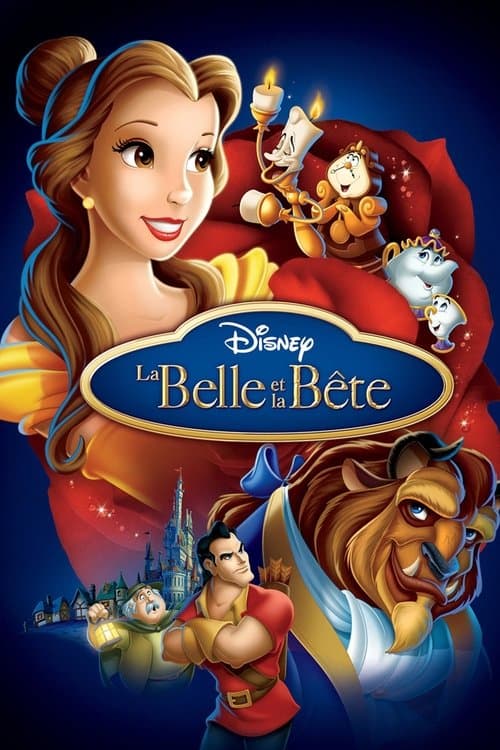
Beauty and the Beast is one of the most accomplished animated films of its era in terms of musical writing and emotional construction. The songs are integrated into the narrative rather than superimposed upon it, and certain scenes achieve a dramatic intensity rare for the genre. The character of Belle is one of the first Disney female heroes to actively refuse the role of passive ingénue: she reads, she thinks, she chooses. The gallery of secondary characters (the enchanted objects of the castle) offers welcome lightness that balances moments of tension. The film naturally lends itself to discussion about fear of the unknown, manipulation of crowds and the distinction between freely given love and a relationship under pressure, which gives it genuine pedagogical value beyond entertainment.
Age recommendation and discussion points
The film is suitable from age 6 for children not sensitive to scares, but a serene viewing is better situated around 7-8 years for children who react strongly to frightening scenes or shouting. Two angles of discussion are worth opening after viewing: why does Gaston succeed so easily in convincing villagers to attack someone they do not know, and what distinguishes, in real life, a relationship where one learns to know each other from a relationship where one remains out of fear or obligation.
Synopsis
Follow the adventures of Belle, a bright young woman who finds herself in the castle of a prince who's been turned into a mysterious beast. With the help of the castle's enchanted staff, Belle soon learns the most important lesson of all -- that true beauty comes from within.
About this title
- Format
- Feature film
- Year
- 1991
- Runtime
- 1h 27m
- Countries
- United States of America
- Original language
- EN
- Studios
- Silver Screen Partners IV, Walt Disney Feature Animation, Walt Disney Pictures
Content barometer
- Violence3/5Notable
- Fear4/5Intense
- Sexuality1/5Allusions
- Language0/5None
- Narrative complexity1/5Accessible
- Adult themes0/5None
Values conveyed
- Courage
- Acceptance of difference
- Compassion
- Forgiveness
- true love
- generosity
- looking beyond appearances
- friendship
- sacrifice
- intellectual curiosity