
Bao
Does this age rating seem accurate to you?
Detailed parental analysis
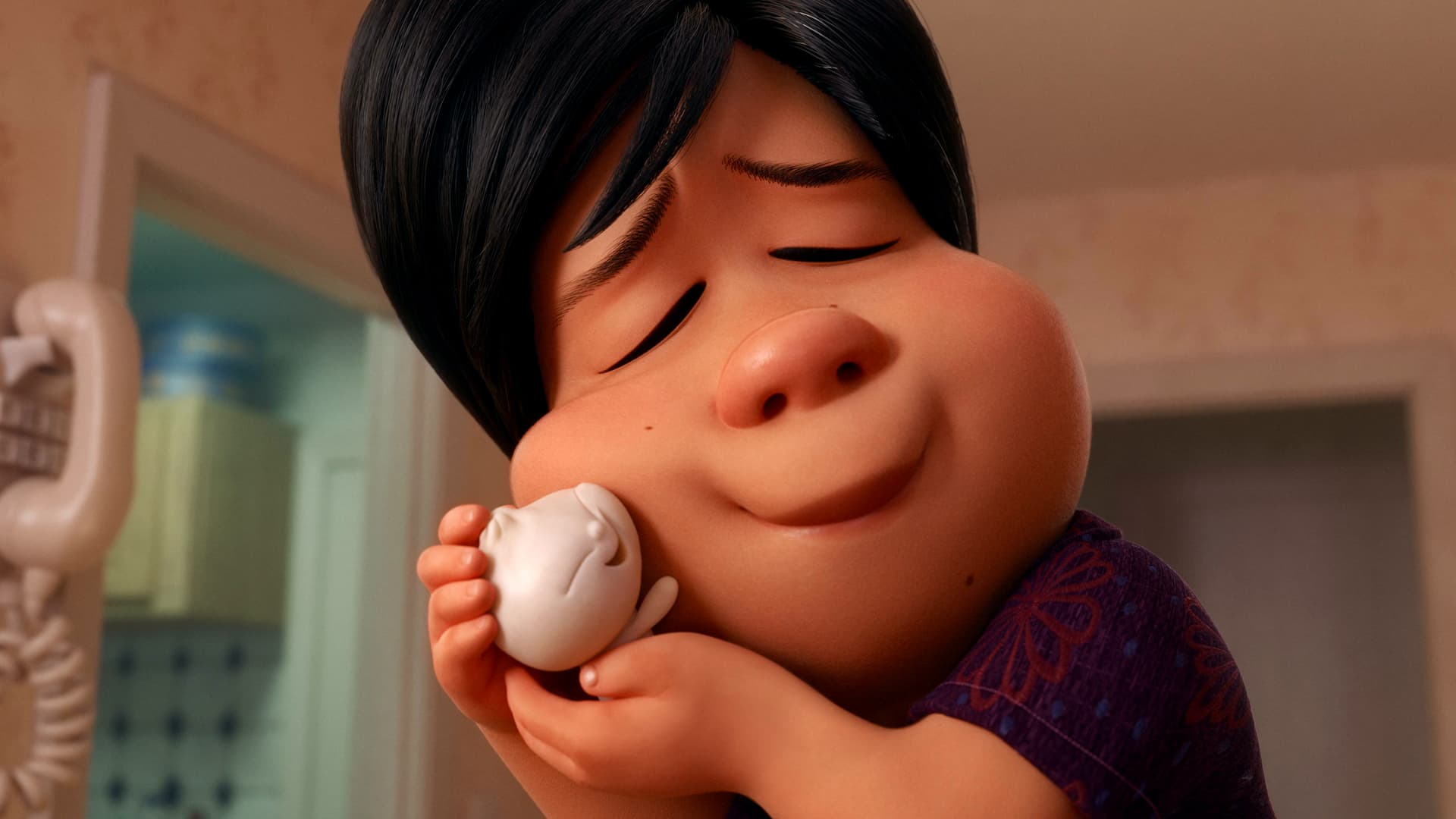
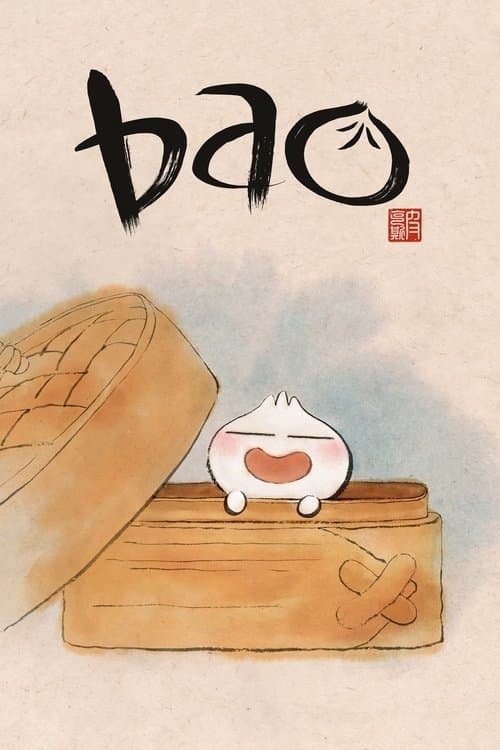
Bao is a Pixar animated short with a bittersweet atmosphere, oscillating between the tenderness of everyday life and an intense emotion that builds gradually. Without a single line of dialogue, it tells the story of a Sino-Canadian mother who watches her little steamed bao come to life and grow up, condensing in a few minutes the complexity of maternal love and letting go. The film is primarily aimed at adults and parents, but can touch older children provided it is watched in their company.
Parental and Family Portrayals
Maternal representation is the absolute heart of the film and its most demanding subject to address with a child. The mother embodies a devouring love, literally: in a deliberately shocking final scene, she swallows the bao to prevent it from leaving. This extreme gesture, later revealed as a metaphor for grieving childhood rather than a real event, says something true about certain forms of overprotective parenting. The film does not condemn the mother; it explains her with empathy, showing her loneliness and fear of abandonment. For a child, the scene can be incomprehensible or unsettling without adult guidance; for a teenager, it can open an honest conversation about the boundaries between love and control.
Underlying Values
The narrative celebrates family love transmitted through food and daily gesture, particularly in an immigration context where these rituals become bridges between cultures. But it also carries, in a more complex way, a reflection on the conformity expected of a child and the difficulty a mother has in accepting that her child develops outside of her. The tension between parental devotion and excessive control is not resolved by a simplistic message: the film chooses reconciliation and forgiveness, but without denying that the path involved real excesses. This is a rare balance, one worth discussing with a child or teenager.
Social Themes
The film is rooted in the experience of Chinese immigration in North America, and the cultural dynamic it describes is precise: the mother transmits her love through culinary codes and gestures drawn from her culture of origin, in an environment that is not her own. The relationship with the bao's Caucasian girlfriend raises, without ever stating it explicitly, the question of integration, mixed marriage, and a mother's fear of seeing her child distance herself from her roots. Some viewers unfamiliar with this cultural reality have sometimes misunderstood or poorly received this element of the narrative, which paradoxically makes it a good entry point for discussing cultural identity and otherness with a child.
Discrimination
The film does not caricature its characters, but it constructs a symbolic opposition between the Chinese maternal figure and the blonde Western girlfriend, an opposition that reflects a reality lived by many immigrant families without thereby validating it morally. The mother's reaction is shown as excessive and painful, not as a model. It is worth drawing a child's or teenager's attention to this construction: the film does not take sides, but it makes a real tension visible.
Strengths
Bao is a remarkably effective exercise in storytelling for its eight-minute length: without a word of dialogue, it manages to construct a complete emotional arc, to surprise and then to move. The absence of verbal language makes it an object accessible to all families, regardless of their language, and its emotional musicality is genuine. The film has a rare density in the short format: it says something precise about cultural transmission, the grieving of childhood as seen by the parent, and the pain of love held too tightly, without ever being didactic. For an adult or parent, watching can be a cathartic experience; for an accompanied child, it is a concrete introduction to complex emotions rarely shown from this perspective.
Age recommendation and discussion points
The film is not recommended for children under 7 years old due to a final scene that is potentially incomprehensible and anxiety-inducing for a very young child; from 8 to 9 years old, it can be watched as a family provided the parent is prepared to explain the metaphor. Two concrete discussion prompts after viewing: ask the child why he or she thinks the mother reacts so violently to the bao's departure, and what it means to him or her to receive love through a cooked dish or a repeated gesture.
Synopsis
An aging Chinese mother suffering from empty nest syndrome gets another chance at motherhood when one of her dumplings springs to life as a lively, giggly dumpling boy.
About this title
- Format
- Short film
- Year
- 2018
- Runtime
- 8m
- Countries
- United States of America
- Original language
- EN
- Directed by
- Domee Shi
- Main cast
- Daniel Kailin, Sindy Lau, Sharmaine Yeoh, Tim Zhang
- Studios
- Pixar
Content barometer
- Violence1/5Mild
- Fear2/5A few scenes
- Sexuality0/5None
- Language0/5None
- Narrative complexity0/5Simple
- Adult themes0/5None
Watch-outs
- Grief
- Death / grief
Values conveyed
- Acceptance of difference
- Compassion
- Forgiveness
- maternal love
- reconciliation
- family bond
- cultural transmission
- letting go