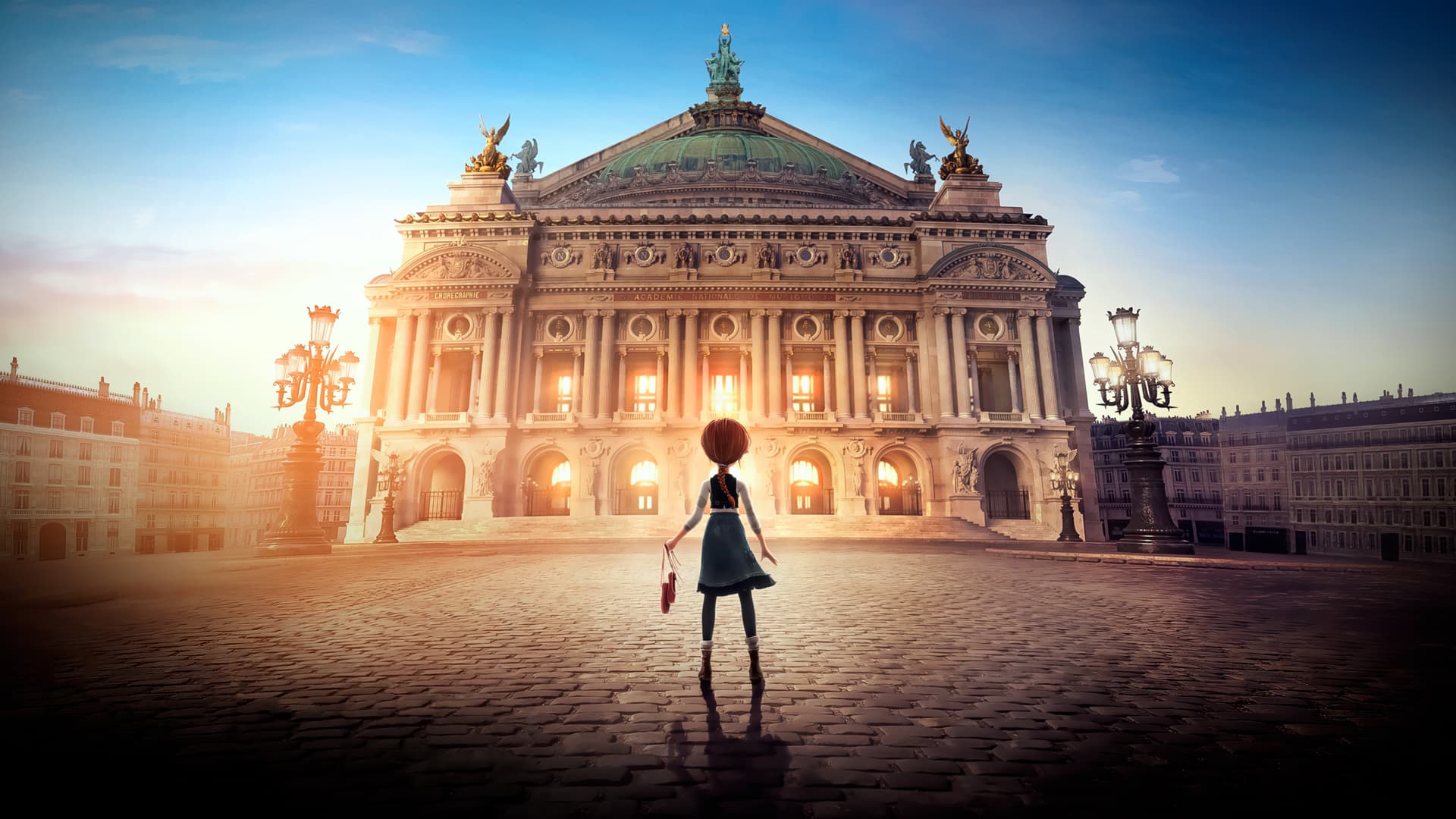

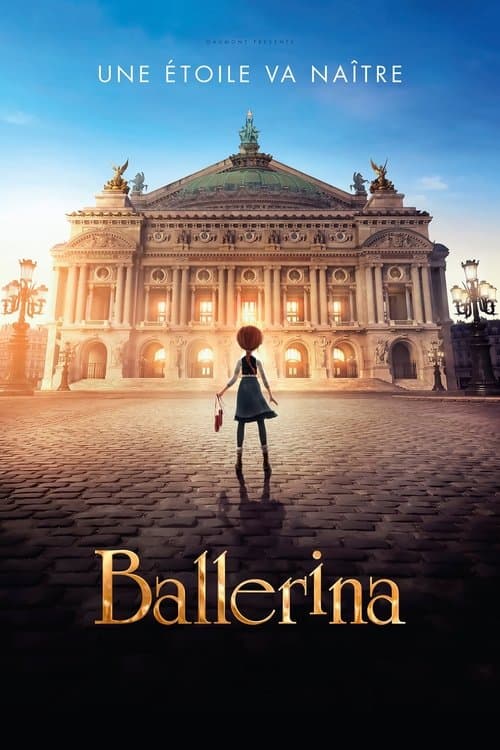
Ballerina
Does this age rating seem accurate to you?
Detailed parental analysis
Ballerina is a bright and engaging family animated film, carried by an atmosphere that is both warm and gently melancholic, bathed in the Paris of the late 19th century. The plot follows Félicie, a determined orphan who dreams of becoming a prima ballerina at the Paris Opera, and must overcome obstacles and deceptions to realise her dream. The film is aimed at children from around 6 or 7 years old and works well as a family film that can be shared with pre-adolescents.
Underlying Values
The film places perseverance and hard work at the heart of its narrative, without ever presenting them as simple magic formulas: Félicie fails, falls apart, loses all motivation before picking herself up again. This honest representation of failure as a necessary step is one of the film's greatest moral strengths. In parallel, the narrative values authenticity against surface performance, contrasting Félicie, who dances with her lived experience, with Camille, who excels technically without putting her soul into it. The film leans slightly towards valorising the singular individual against the system, which merits nuancing with the child: Félicie's success also owes much to a demanding teacher and the friendship of Victor, reminding us that human support is essential to personal growth.
Parental and Family Portrayals
Camille's mother, Régine Le Haut, embodies the archetype of the toxic parental figure who projects her unrealised ambitions onto her child, to the point of psychologically mistreating her and putting her life in danger. The film does not soften this parental violence: it is clearly designated as an evil. Conversely, the teacher Odette plays the role of a substitute attachment figure, demanding yet benevolent, whose influence structures Félicie's journey. Félicie herself is an orphan and subtly carries a quest for connection that gives emotional depth to the film. This is a good starting point for discussing with a child what a trustworthy adult figure is and what it means to support someone in their development without imposing your own desires on them.
Violence
The film's violence takes two distinct forms. The comic and slapstick violence around Victor's character, who absorbs falls and blows in an exaggerated, cartoonish manner, is unambiguous: it is funny and leaves no narrative trace. In contrast, the scene in which Régine Le Haut threatens Félicie with a mallet and attempts to push her from the top of a statue is of another kind: it is violent in intent, even if it remains treated in a spectacular register without graphic violence. This scene may surprise the youngest or sensitive children. It is narratively justified as the climax of the conflict with the antagonist, but a child of 5 or 6 years old might find it frightening.
Discrimination
The film adopts a classical visual aesthetic in which likeable characters are beautiful and with regular features, whilst antagonists or comedic supporting characters display coarser or caricatural traits. This graphical convention is old in animation, but it implicitly conveys the idea that outward appearance reflects inner moral worth, an association worth pointing out to a child. The one-eyed attendant is the most obvious example: his features symbolically soften when he changes his behaviour, directly linking appearance and kindness in a rather schematic way.
Social Themes
The film is set in the late 19th century context, with the construction of the Eiffel Tower in the background and life in the wings of the Paris Opera. Without making it an explicit political argument, the narrative quietly raises the question of access to the arts for those without resources or legitimate birth. Félicie, a poor orphan, penetrates a world reserved for a social elite through cunning before establishing herself through merit. This tension between social origin and individual aspiration is present without being didactic, and can open a natural conversation about equality of opportunity.
Strengths
The film succeeds in representing post-failure depression with a sincerity rare in children's animation: Félicie who loses all energy and desire after falling is a moment of emotional truth that transcends the conventions of the genre. The relationship between Félicie and her teacher Odette is carefully constructed, avoiding the simplistic omniscient mentor schema to show a transmission based on mutual rigour and progressive trust. The Parisian Belle Époque setting is rendered with a care for detail that offers a beautiful gateway into the history of the Opera and the art of classical dance, without ever descending into illustrated lessons. For children who dream of the stage or who practise an artistic or sporting discipline, the film speaks with particular aptness about what a serious ambition truly costs.
Age recommendation and discussion points
The film is suitable from around 6 or 7 years old for peaceful viewing, with a note for very sensitive children for whom the roof scene may seem intense. Two angles of discussion are worth pursuing after the film: why does Félicie succeed where Camille, technically superior, fails to convince, and what does that say about the difference between performing and feeling? And conversely: would everyone have Félicie's chance if the only condition were wanting it hard enough?
Synopsis
In 1879 Paris, a young orphan dreams of becoming a ballerina and flees her rural Brittany for Paris, where she passes for someone else and accedes to the position of pupil at the Grand Opera house.
About this title
- Format
- Feature film
- Year
- 2016
- Runtime
- 1h 30m
- Countries
- Canada, France
- Original language
- EN
- Studios
- Main Journey, Caramel Films, Quad Productions, L'Atelier Animation, Gaumont, M6 Films
Content barometer
- Violence2/5Moderate
- Fear2/5A few scenes
- Sexuality0/5None
- Language0/5None
- Narrative complexity1/5Accessible
- Adult themes0/5None
Values conveyed
- Courage
- Perseverance
- Autonomy
- friendship
- dream
- self-surpassing
- honesty
- mentorship
- artistic passion