
Bad Dinosaurs

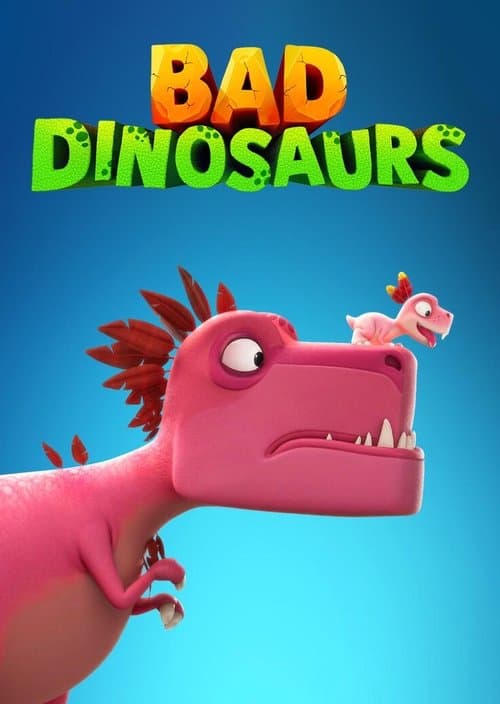
Bad Dinosaurs
Your feedback improves this guide
Your feedback highlights guides that need a second look and keeps the rating trustworthy.
Does this age rating seem accurate to you?
Flagged films are manually reviewed by our team.
Watch-outs
Content barometer
Violence
2/5
Moderate
Fear
1/5
Mild
Sexuality
0/5
None
Language
1/5
Mild
Narrative complexity
1/5
Accessible
Adult themes
0/5
None
Detailed parental analysis
ⓘ- Violence
- Underlying Values
- Parental and Family Portrayals
- Language
Terribly Dinosaurs is a comedic and uninhibited animated series, driven by constant slapstick energy and a resolutely joyful and absurd atmosphere. It follows a family of dinosaurs confronted with the hazards of prehistoric life, without a single word of dialogue, expressed only through gestures, grunts and facial expressions. The target audience is young children, from six or seven years old onwards, although the crude physical humour can amuse adults as much as it can irritate them.
Violence
Violence is omnipresent but entirely slapstick in nature: blows, bites, cliff falls, projectiles and collisions follow one another at a sustained pace in every episode. It is never gory or realistic, and sits within a cartoon tradition where characters bounce back without lasting consequence. Hunting scenes and the consumption of other creatures involve the death of animals, but are treated in a comedic and stylised manner. The main risk is not trauma but the normalisation of aggressive behaviour as a comedic device, without the narrative ever questioning it.
Underlying Values
The value system of the narrative is its most questionable point for a thoughtful parent. Selfish behaviour, food theft between characters and wrongdoing are regularly rewarded with laughter, without narrative consequence or questioning. Rivalry between siblings is the main comedic driver, at the expense of any family solidarity. The persistence and resilience of characters in the face of obstacles constitute the only positive structural counterweight, but they serve individual stubbornness more than cooperation.
Parental and Family Portrayals
The family unit is present and central, which is a positive anchor point for young children. Parental figures are, however, portrayed as out of their depth, clumsy and often victims of the same excesses as their offspring. The family model is dysfunctional in a comedic manner, without stable authority figures or examples of emotional regulation. For a young child, this representation deserves to be named explicitly.
Language
The complete absence of verbal dialogue eliminates crude language or insults outright. Conversely, scatological humour constitutes a visual language in its own right: flatulence, urine and defecation are present in every episode as a recurring comedic device. This register is deliberate and consistent with the genre, but its frequency and centrality exceed what is found in most comparable productions for this age group.
Strengths
The absence of dialogue is the series' most interesting formal choice: it makes the content accessible to children who do not yet master reading or who have language difficulties, and it forces the narrative to express everything through the body, rhythm and visual staging. The animation is clear, expressive and well-paced, with an effective sense of comedic timing. For very young children, the repetition of situations and characters provides a reassuring anchor point. The series has no particular narrative or educational ambition, and makes no claim to have one.
Age recommendation and discussion points
The series is suitable from six years old for supervised viewing, and from seven years old for more independent viewing. Two angles of discussion are worth pursuing after watching: asking the child whether the characters are doing good or bad things, and why it is still funny, allows you to begin a reflection on the difference between what makes us laugh and what is right. You can also return to scenes of sibling rivalry to ask how the characters might have handled things differently.
Synopsis
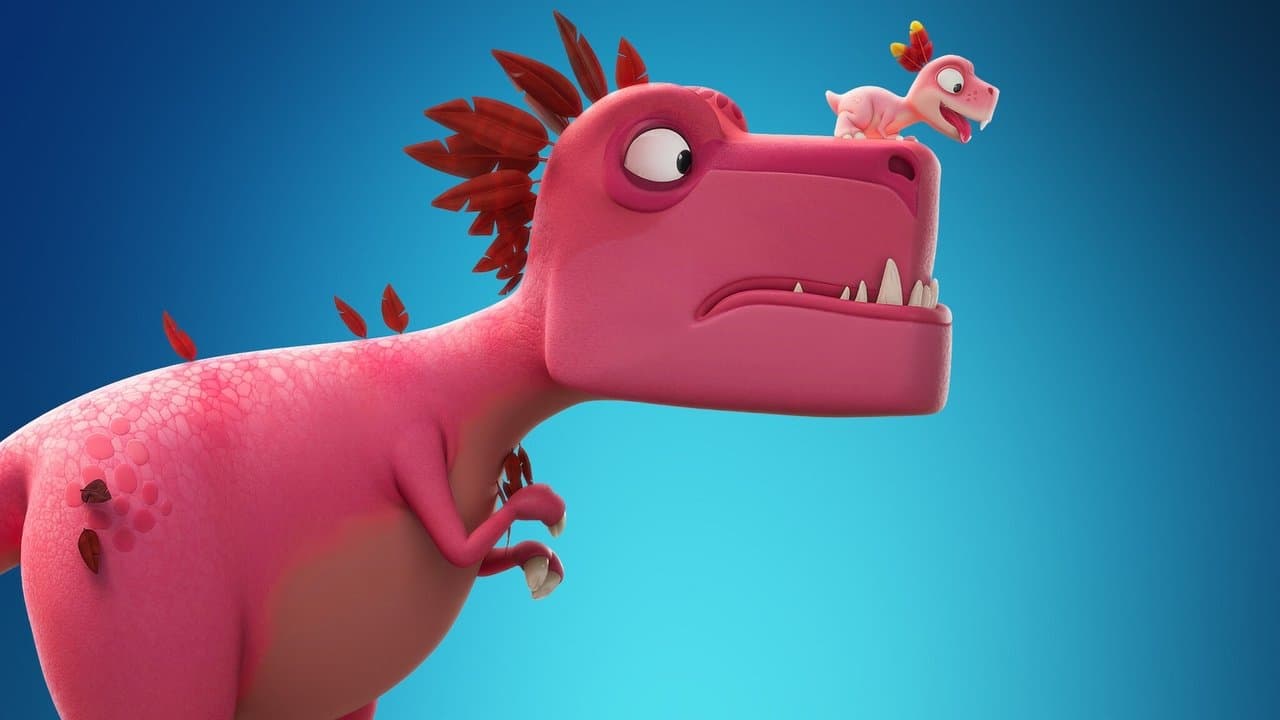
A lovably mischievous Tyrannosaurus family explores their colorful prehistoric world, having slapstick fun with the silly dinosaurs who live there.
Where to watch
No verified platform for the US market yet. We keep this section updated as availability changes.
Availability checked on May 04, 2026
About this title
- Format
- TV series
- Year
- 2024
- Countries
- Serbia, Spain
- Original language
- EN
- Directed by
- Alex Mallinson, Joel Veitch, David Shute
- Main cast
- Talullah Veitch, Adam Diggle, Josie Long, Luisa Guerreiro, Darren Strange, Ruth Bratt, Dan March, Nathaniel Tapley, Joel Veitch
- Studios
- Snafu Pictures, Able & Baker
Content barometer
Violence
2/5
Moderate
Fear
1/5
Mild
Sexuality
0/5
None
Language
1/5
Mild
Narrative complexity
1/5
Accessible
Adult themes
0/5
None
Detailed parental analysis
ⓘ- Violence
- Underlying Values
- Parental and Family Portrayals
- Language
Terribly Dinosaurs is a comedic and uninhibited animated series, driven by constant slapstick energy and a resolutely joyful and absurd atmosphere. It follows a family of dinosaurs confronted with the hazards of prehistoric life, without a single word of dialogue, expressed only through gestures, grunts and facial expressions. The target audience is young children, from six or seven years old onwards, although the crude physical humour can amuse adults as much as it can irritate them.
Violence
Violence is omnipresent but entirely slapstick in nature: blows, bites, cliff falls, projectiles and collisions follow one another at a sustained pace in every episode. It is never gory or realistic, and sits within a cartoon tradition where characters bounce back without lasting consequence. Hunting scenes and the consumption of other creatures involve the death of animals, but are treated in a comedic and stylised manner. The main risk is not trauma but the normalisation of aggressive behaviour as a comedic device, without the narrative ever questioning it.
Underlying Values
The value system of the narrative is its most questionable point for a thoughtful parent. Selfish behaviour, food theft between characters and wrongdoing are regularly rewarded with laughter, without narrative consequence or questioning. Rivalry between siblings is the main comedic driver, at the expense of any family solidarity. The persistence and resilience of characters in the face of obstacles constitute the only positive structural counterweight, but they serve individual stubbornness more than cooperation.
Parental and Family Portrayals
The family unit is present and central, which is a positive anchor point for young children. Parental figures are, however, portrayed as out of their depth, clumsy and often victims of the same excesses as their offspring. The family model is dysfunctional in a comedic manner, without stable authority figures or examples of emotional regulation. For a young child, this representation deserves to be named explicitly.
Language
The complete absence of verbal dialogue eliminates crude language or insults outright. Conversely, scatological humour constitutes a visual language in its own right: flatulence, urine and defecation are present in every episode as a recurring comedic device. This register is deliberate and consistent with the genre, but its frequency and centrality exceed what is found in most comparable productions for this age group.
Strengths
The absence of dialogue is the series' most interesting formal choice: it makes the content accessible to children who do not yet master reading or who have language difficulties, and it forces the narrative to express everything through the body, rhythm and visual staging. The animation is clear, expressive and well-paced, with an effective sense of comedic timing. For very young children, the repetition of situations and characters provides a reassuring anchor point. The series has no particular narrative or educational ambition, and makes no claim to have one.
Age recommendation and discussion points
The series is suitable from six years old for supervised viewing, and from seven years old for more independent viewing. Two angles of discussion are worth pursuing after watching: asking the child whether the characters are doing good or bad things, and why it is still funny, allows you to begin a reflection on the difference between what makes us laugh and what is right. You can also return to scenes of sibling rivalry to ask how the characters might have handled things differently.
Synopsis
A lovably mischievous Tyrannosaurus family explores their colorful prehistoric world, having slapstick fun with the silly dinosaurs who live there.