Babar: King of the Elephants
Does this age rating seem accurate to you?
Detailed parental analysis
Babar, King of the Elephants is an animated film intended for young children, with an overall light and colourful atmosphere, punctuated by emotionally intense sequences. The story follows an orphaned elephant calf who, after a long journey fraught with trials, returns to the forest to establish a city and become king. The film is primarily aimed at nursery-aged children and those in the early years of primary school, with a decidedly moralistic and benevolent tone.
Parental and Family Portrayals
The death of Babar's mother, shot down by a rifle in the opening minutes, is the most impactful element for young children. Babar is shown beside his dead mother, begging her to continue playing, an image of genuine emotional brutality despite the softness of the animation. The rest of the narrative is structured around this lost parental figure, progressively replaced by benevolent substitute figures. Orphanhood is treated as a motor for emancipation, but the initial scene can deeply distress a sensitive child under five years old.
Violence
Beyond the mother's death, the film accumulates several sequences with strong dramatic charge: an elderly character bitten by a snake and presumed dying, a young child narrowly avoiding drowning and an attack by a crocodile, a fire with a victim rendered unconscious. A nightmare sequence features a demonic figure accompanied by animals symbolising fear, despair, illness and anger, visually marked. In counterbalance, the armed conflict between elephants and rhinoceroses is resolved without bloodshed, with Babar resorting to cunning and then diplomacy, making him a model of constructive conflict resolution for children.
Underlying Values
The film conveys a vision of power that merits discussion: Babar is a good king because he ensures fairness in the distribution of resources and refuses royal privileges, which is a coherent and positive message. However, the narrative structure implicitly presents human culture and its attributes (clothing, cities, monarchy) as an elevation above the natural life of elephants in the forest. This muted colonial prism is never questioned in the film: adopting the codes of Western civilisation is presented as obvious and desirable progress. This is an angle that the parent can use to initiate a conversation about the diversity of ways of life and the very notion of progress.
Social Themes
War between the elephant and rhinoceros peoples takes up a significant portion of the narrative. The preparation of armies, charges in formation and rising tensions are shown with a certain dramatic intensity. The film chooses, however, to resolve this conflict through collective intelligence, dialogue and sincere apologies rather than military victory, making it a lesson in peaceful conflict resolution accessible to young children.
Strengths
The film possesses genuine emotional coherence on the themes of grief and self-reconstruction, approached at child level without ever being evaded. The nightmare sequence, whilst potentially frightening, illustrates with some originality the way inner anxieties take concrete form. The resolution of conflicts through cunning and speech rather than force offers a healthy and uncommon narrative model within the genre. From an educational standpoint, the building of the city through the cooperation of all animals constitutes a fine staging of collective work and the equality of contributions.
Age recommendation and discussion points
The film is recommended from 5 or 6 years old for serene viewing; below 5 years old, the mother's death and accumulated danger sequences risk being too heavy for a sensitive child. Two angles of discussion are worth exploring after viewing: why does Babar choose to build a city 'like the humans' rather than remain in the forest, and does that mean his former life was worse; and how he manages to stop the war without fighting, and whether this solution would be possible in real life.
Synopsis
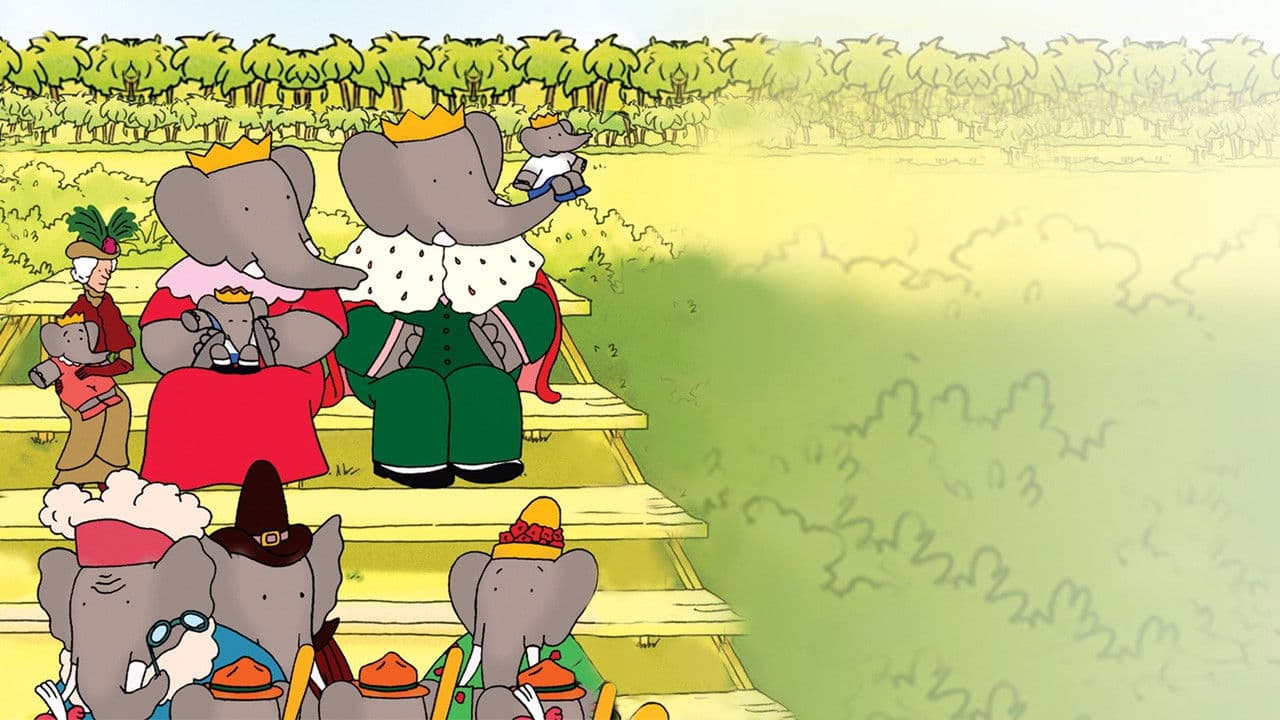
Babar is a young elephant in the great forest. Whilst out with his mother a hunter kills his mother and he flees to escape the same fate. He eventually finds himself in a human city and experiences the many differences between city and forest life. Treated as an outsider he is taken in by an elderly woman, dressed in fancy suits, taught to write and count and is brought up in human culture.
About this title
- Format
- Feature film
- Year
- 1999
- Runtime
- 1h 16m
- Countries
- Canada, France, Germany
- Original language
- EN
- Directed by
- Raymond Jafelice
- Main cast
- Philip Williams, Wayne Robson, Ellen-Ray Hennessy, Kristin Fairlie, Dan Lett, Chris Wiggins, Jennifer Martini, Kyle Fairlie, Elizabeth Hanna, Paul Haddad
- Studios
- Nelvana, Home Made Movies, TV-Loonland, The Clifford Ross Company, Alliance Atlantis
Content barometer
- Violence2/5Moderate
- Fear3/5Notable tension
- Sexuality0/5None
- Language0/5None
- Narrative complexity1/5Accessible
- Adult themes0/5None
Values conveyed
- Courage
- Forgiveness
- friendship
- grief and rebuilding
- curiosity
- return to one's roots
- solidarity
- benevolent leadership