April and the Extraordinary World
April and the Extraordinary World
Your feedback improves this guide
Your feedback highlights guides that need a second look and keeps the rating trustworthy.
Does this age rating seem accurate to you?
Sign in to vote
Watch-outs
What this film brings
Content barometer
Violence
2/5
Moderate
Fear
3/5
Notable tension
Sexuality
0/5
None
Language
1/5
Mild
Narrative complexity
2/5
Moderate
Adult themes
0/5
None
Expert review
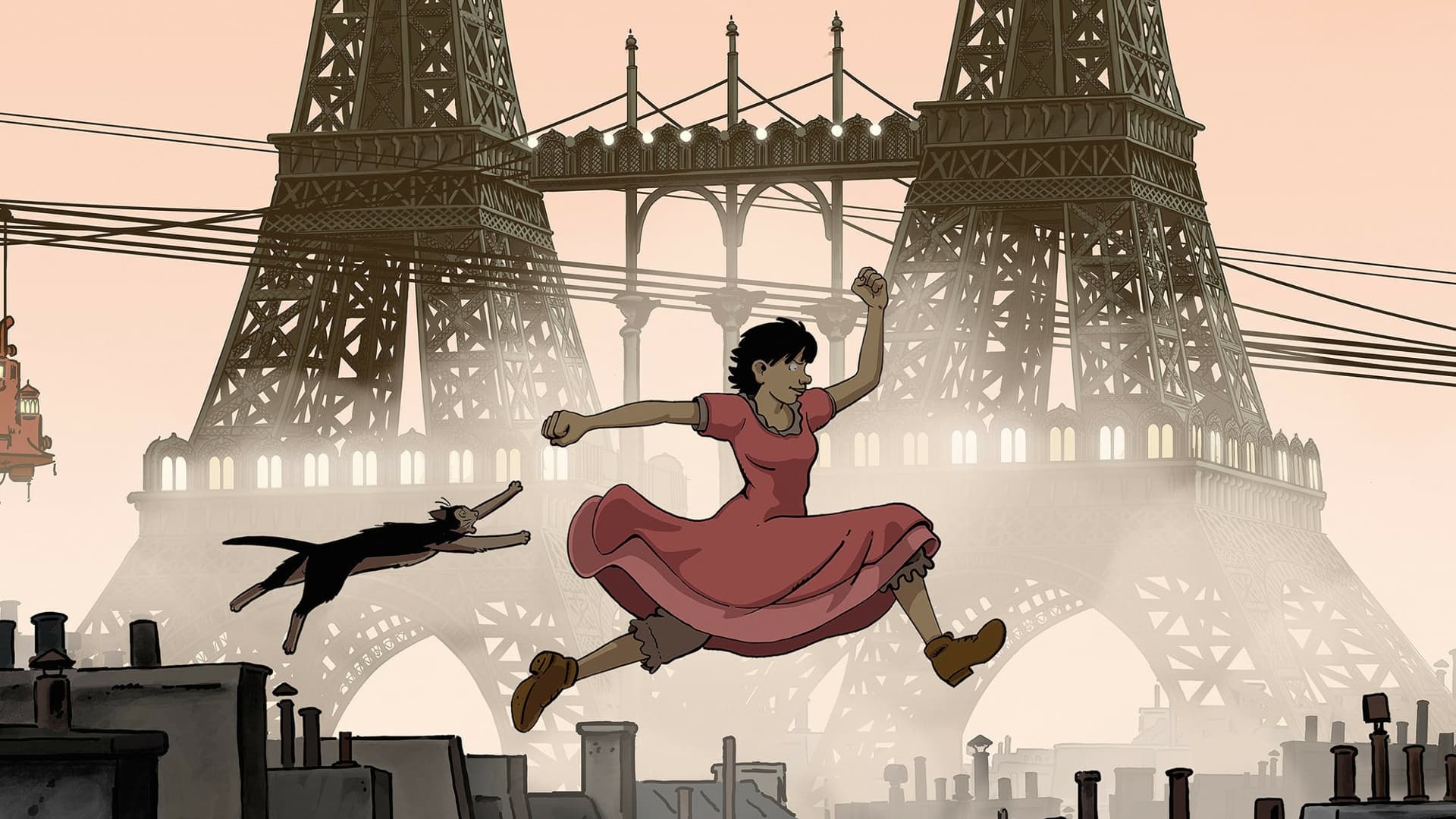
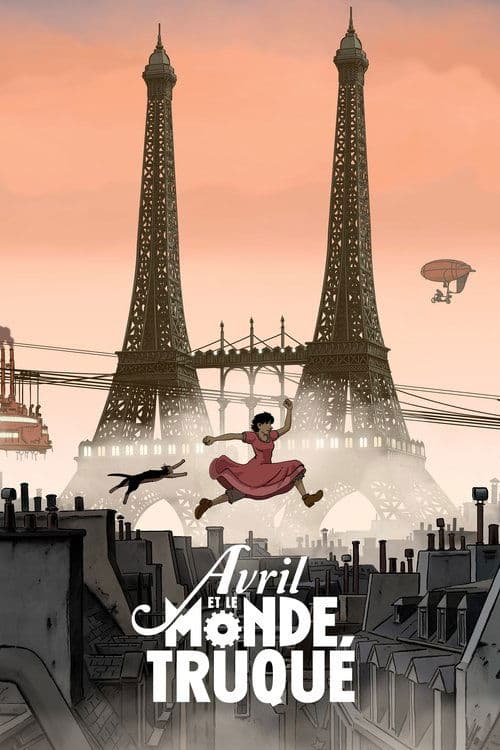
April and the Extraordinary World is a French animated film set in a steampunk alternate history of the 1940s, where scientific progress has been suppressed and the world remains trapped in steam and coal technology. The film's tone is deliberately dark and melancholic, with a visual style influenced by cartoonist Jacques Tardi, centered on a brave teenage heroine caught in a global conspiracy involving talking animals and threatening creatures. Sensitive elements include the apparent death of April's parents in an explosion, intense chase sequences featuring cyborg soldiers, menacing reptilian antagonists with plans to destroy humanity, and a persistently heavy atmosphere of global threat. These elements remain stylized and never graphic or gory, but their frequency and dramatic weight make this film more appropriate for preteens than for young children. Parents can use the film as a springboard for conversations about family loss, resistance against injustice, and the role of science in society.
Synopsis
It's 1941, but France is trapped in the 19th Century, governed by steam and Napoleon V. Avril, a teenage girl, goes in search of her missing scientist parents.
Difficult scenes
Early in the film, Gustave Franklin's laboratory explodes with all its occupants inside. This abrupt scene immediately establishes a serious tone: adults die in an accident, and young viewers quickly understand that the film's world is not a safe or forgiving one. Death is portrayed as a real consequence of events, not as a comic device. During the family's escape by airship, April witnesses her parents disappear into a strange storm cloud before the vessel explodes. This traumatic separation scene, in which a child watches her parents vanish without being able to help, may strongly affect younger viewers who are sensitive to fears of abandonment or parental loss. Sent to a state orphanage after her parents' presumed deaths, April is left alone in a cold and authoritarian system. Though this sequence is brief, it reinforces the feeling of isolation and injustice suffered by the protagonist, and may resonate with children who have experienced situations of family separation. Cyborg soldiers, half-human and half-machine, launch an intense attack on Pops' house. Their hybrid mechanical appearance, combined with their relentless aggression, may be unsettling for younger or more sensitive children who find altered human figures threatening. The two komodo dragons, Rodrigue and Chimène, are genuinely menacing antagonists: intelligent, manipulative, and driven by a plan to wipe out humanity. Their underground presence and absolute control over the kidnapped scientists give the film a persistently heavy and oppressive atmosphere of threat that runs through much of the narrative.
Where to watch
No verified platform for the US market yet. We keep this section updated as availability changes.
About this title
- Format
- Feature film
- Year
- 2015
- Runtime
- 1h 45m
- Countries
- France, Canada, Belgium
- Original language
- FR
- Directed by
- Franck Ekinci, Christian Desmares
- Main cast
- Marion Cotillard, Philippe Katerine, Jean Rochefort, Olivier Gourmet, Marc-André Grondin, Bouli Lanners, Anne Coesens, Macha Grenon, Benoît Brière, Gérard Dessalles
- Studios
- StudioCanal, Je suis bien content, Kaïbou, Need Productions, ARTE France Cinéma, Jouror Distribution, RTBF, Proximus, Tchack
Content barometer
Violence
2/5
Moderate
Fear
3/5
Notable tension
Sexuality
0/5
None
Language
1/5
Mild
Narrative complexity
2/5
Moderate
Adult themes
0/5
None
Expert review
April and the Extraordinary World is a French animated film set in a steampunk alternate history of the 1940s, where scientific progress has been suppressed and the world remains trapped in steam and coal technology. The film's tone is deliberately dark and melancholic, with a visual style influenced by cartoonist Jacques Tardi, centered on a brave teenage heroine caught in a global conspiracy involving talking animals and threatening creatures. Sensitive elements include the apparent death of April's parents in an explosion, intense chase sequences featuring cyborg soldiers, menacing reptilian antagonists with plans to destroy humanity, and a persistently heavy atmosphere of global threat. These elements remain stylized and never graphic or gory, but their frequency and dramatic weight make this film more appropriate for preteens than for young children. Parents can use the film as a springboard for conversations about family loss, resistance against injustice, and the role of science in society.
Synopsis
It's 1941, but France is trapped in the 19th Century, governed by steam and Napoleon V. Avril, a teenage girl, goes in search of her missing scientist parents.
Difficult scenes
Early in the film, Gustave Franklin's laboratory explodes with all its occupants inside. This abrupt scene immediately establishes a serious tone: adults die in an accident, and young viewers quickly understand that the film's world is not a safe or forgiving one. Death is portrayed as a real consequence of events, not as a comic device. During the family's escape by airship, April witnesses her parents disappear into a strange storm cloud before the vessel explodes. This traumatic separation scene, in which a child watches her parents vanish without being able to help, may strongly affect younger viewers who are sensitive to fears of abandonment or parental loss. Sent to a state orphanage after her parents' presumed deaths, April is left alone in a cold and authoritarian system. Though this sequence is brief, it reinforces the feeling of isolation and injustice suffered by the protagonist, and may resonate with children who have experienced situations of family separation. Cyborg soldiers, half-human and half-machine, launch an intense attack on Pops' house. Their hybrid mechanical appearance, combined with their relentless aggression, may be unsettling for younger or more sensitive children who find altered human figures threatening. The two komodo dragons, Rodrigue and Chimène, are genuinely menacing antagonists: intelligent, manipulative, and driven by a plan to wipe out humanity. Their underground presence and absolute control over the kidnapped scientists give the film a persistently heavy and oppressive atmosphere of threat that runs through much of the narrative.