Avengers: Infinity War
Does this age rating seem accurate to you?
Detailed parental analysis
Avengers: Infinity War is a superhero film with a resolutely dark and epic atmosphere, culminating in a tragic ending without precedent in the genre. The plot brings together dozens of heroes facing a powerful antagonist who seeks to eliminate half of all life in the universe. The film targets teenage and adult audiences, but assumes familiarity with roughly twenty previous films to be fully understood. Its tone, pacing and conclusion make it a feature film unsuitable for children.
Violence
The violence is intense, frequent and constitutive of the narrative. From the opening, we see Asgardian corpses strewn across a ship's bridge, and the torture scene where the villain literally crushes the protagonist's head sets the tone: physical suffering is not softened. A female character is thrown from a cliff, and her bloodied body is shown on the ground. The violence serves the narrative, it is not gratuitous in its purpose, but its visual intensity remains sustained throughout the film, without genuine moments of respite. For a child, the succession of these sequences without hope of positive resolution is particularly harrowing.
Underlying Values
The film offers a moral confrontation more complex than it first appears: the villain acts from ideological conviction rather than pure cruelty, which makes him a narratively destabilising adversary. His reasoning, founded on resource scarcity and the necessity of sacrificing part of the population to save the rest, is articulated with an internal coherence that the heroes struggle to counter intellectually. This narrative choice merits explicit discussion, as children and teenagers may leave the film with the feeling that the villain had a sound logic. In counterpoint, the narrative firmly valorises collective sacrifice, solidarity amongst allies and the willingness to stake one's life for others, even when this fails to change the outcome.
Social Themes
The central premise, eliminating half of all life to preserve resource balance, is a direct metaphor for contemporary debates on overpopulation, the management of planetary resources and political utilitarianism. The film does not settle the matter: it presents the argument without validating it, but also without opposing it with a convincing refutation, since the villain prevails. This is fertile ground for discussion amongst teenagers capable of distinguishing the staging of a thought from adherence to that thought.
Discrimination
The most prominent female characters largely function in orbit around their male partners: one is sacrificed by the villain who is also her paternal figure, the other sees her arc dictated by her romantic relationship. None of the heroines truly pilots her own narrative trajectory in this film. This imbalance is not offset by scenes valorising their own agency, and this is a point parents can name if they wish to discuss it with their children.
Parental and Family Portrayals
The father-daughter relationship between the villain and one of the principal female characters is central and profoundly dysfunctional: he has adopted her, transmitted a genuine attachment to her, and ultimately sacrifices her to achieve his objective. This paternal figure, simultaneously loving and destructive, is one of the film's strongest emotional tensions, and it may resonate differently depending on a child's or teenager's personal history.
Strengths
The film manages to make dozens of characters coexist within a coherent narrative, which amounts to genuine storytelling expertise. Its decision to adopt the villain's perspective as the guiding thread and to grant him real moral depth distinguishes it from most productions in the genre. The ending, which refuses the customary triumph and leaves the heroes defeated, constitutes a rare narrative risk-taking in an entertainment of this scale. For a teenager who is a fan of the franchise, the film offers an emotionally dense experience and material for reflection on the power of ideology, the cost of sacrifice and the limits of collective strength in the face of absolute conviction.
Age recommendation and discussion points
The film is absolutely not recommended before the age of 12, and a comfortable viewing is better situated from age 14 onwards, once the teenager is able to distinguish a character's logic from its moral legitimacy. Two angles of discussion to prioritise after viewing: firstly, why does the villain think he is right, and what makes his reasoning seductive despite its horror; secondly, how to respond to a story that ends without victory, and what this says about the fact that collective effort and sacrifice do not always guarantee success.
Synopsis
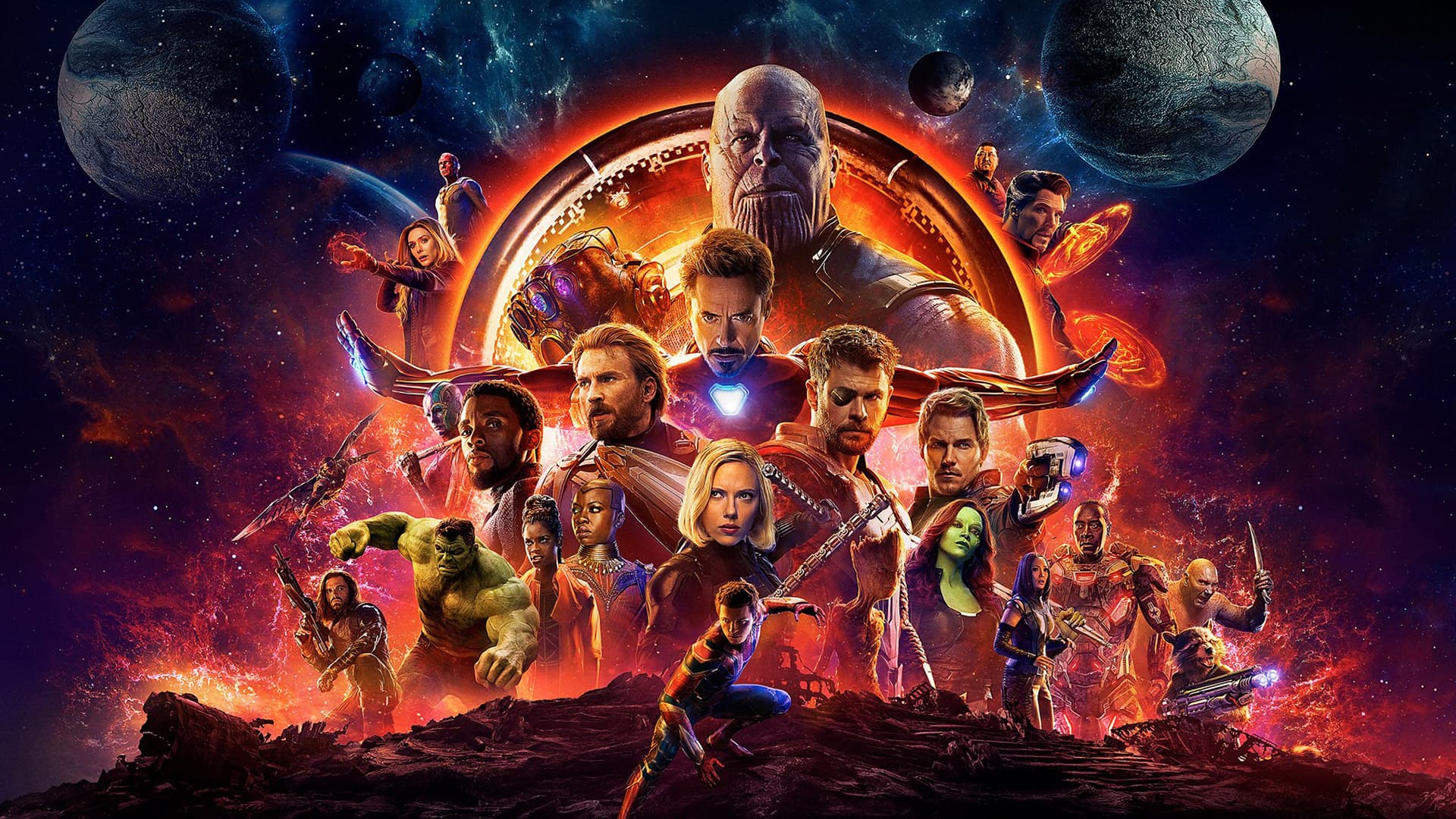
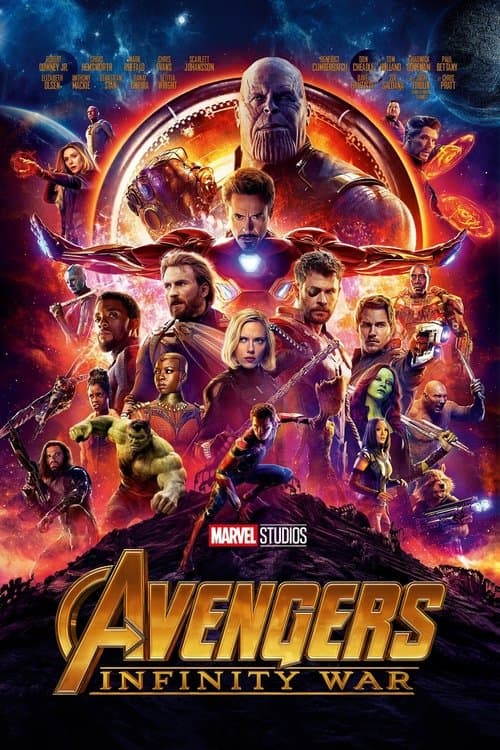
As the Avengers and their allies have continued to protect the world from threats too large for any one hero to handle, a new danger has emerged from the cosmic shadows: Thanos. A despot of intergalactic infamy, his goal is to collect all six Infinity Stones, artifacts of unimaginable power, and use them to inflict his twisted will on all of reality. Everything the Avengers have fought for has led up to this moment - the fate of Earth and existence itself has never been more uncertain.
Where to watch
Availability checked on Apr 13, 2026
About this title
- Format
- Feature film
- Year
- 2018
- Runtime
- 2h 29m
- Countries
- United States of America
- Original language
- EN
- Directed by
- Anthony Russo, Joe Russo
- Main cast
- Robert Downey Jr., Chris Evans, Chris Hemsworth, Josh Brolin, Mark Ruffalo, Scarlett Johansson, Don Cheadle, Benedict Cumberbatch, Tom Holland, Chadwick Boseman
- Studios
- Marvel Studios