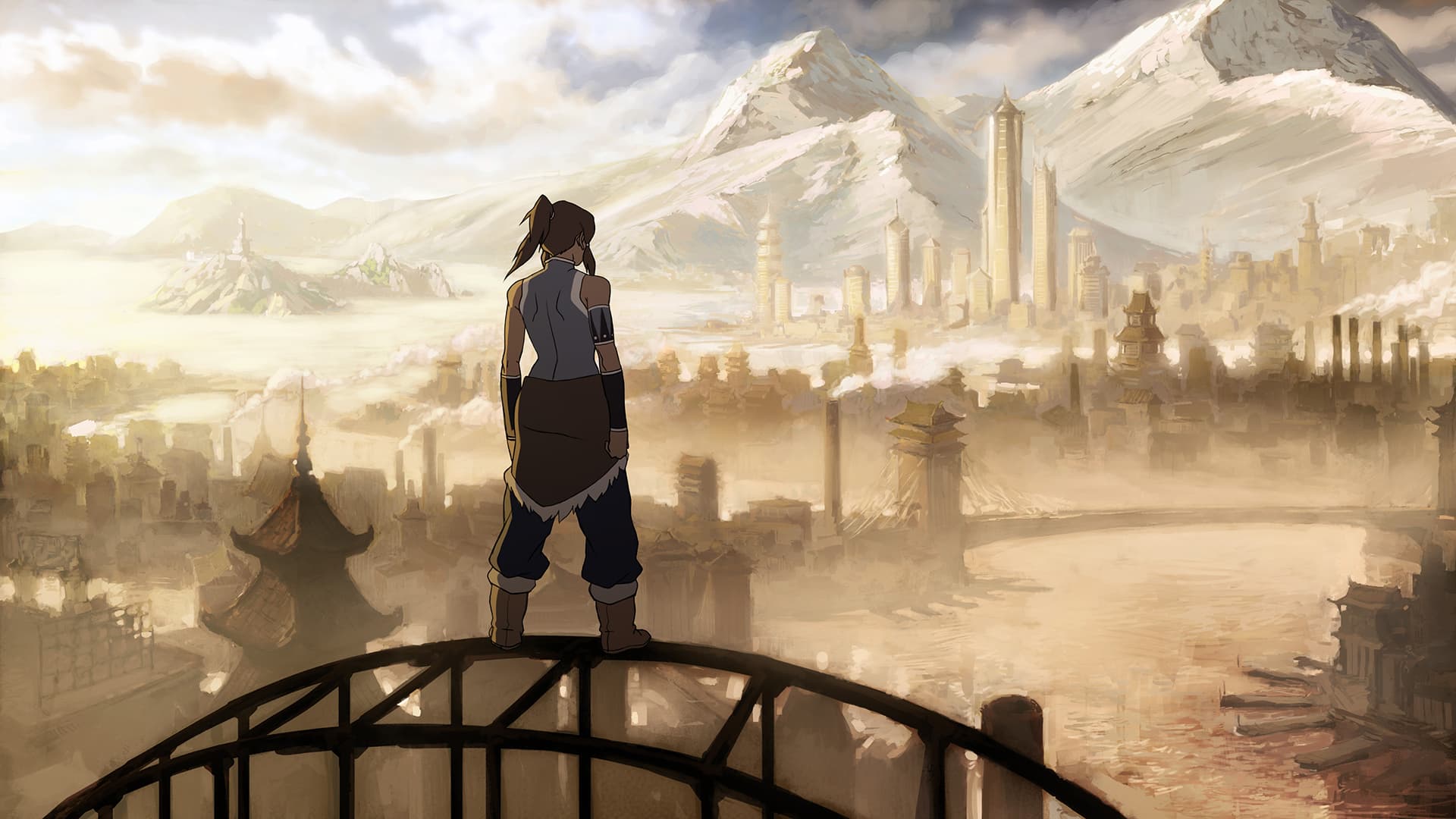


The Legend of Korra
The Legend of Korra
Your feedback improves this guide
Your feedback highlights guides that need a second look and keeps the rating trustworthy.
Does this age rating seem accurate to you?
Sign in to vote
Watch-outs
What this film brings
Content barometer
Violence
3/5
Notable
Fear
3/5
Notable tension
Sexuality
1/5
Allusions
Language
1/5
Mild
Narrative complexity
1/5
Accessible
Adult themes
0/5
None
Expert review
This animated series expands the Avatar universe with a teenage heroine in a fast paced urban fantasy adventure that is emotionally more layered than many children's shows. Sensitive material mainly comes from frequent fights, kidnappings, political threats, a few significant deaths, and spiritual imagery or villains that may unsettle younger viewers, especially scenes involving powers that remove bending abilities and later material about psychological trauma. The presentation stays stylized and not graphic, yet the overall intensity clearly rises across the seasons, with sustained tension and themes of grief, fear, authoritarianism, and recovery that go beyond a very young child's comfort zone. For most children, parental guidance is best from about age 9 to help explain the political conflict and offer reassurance during darker scenes, and the series becomes truly engaging around age 10 when a child can follow the plot, emotions, and character dynamics.
Synopsis
Avatar Korra, a headstrong, rebellious, feisty young woman who continually challenges and breaks with tradition, is on her quest to become a fully realized Avatar. In this story, the Avatar struggles to find balance within herself.
Difficult scenes
From the first season onward, several action scenes pit Korra and her allies against masked enemies in a city shaped by political unrest. The main villain has a power framed as especially disturbing because he immobilizes people and removes a core part of who they are, which can be very unsettling for children who are sensitive to loss of control. In the middle seasons, the story grows darker with threatening spirits, visions, unsettling transformations, and rising danger around the balance of the world. Some scenes use more intense imagery than the earlier Avatar series, with an almost apocalyptic mood, more serious battles, and an atmosphere that can feel oppressive at times. One season features a highly dangerous group of antagonists who kidnap, imprison, and try to kill Korra in order to destroy what she represents. It also includes the explicit death of an important character and a wider sense of political chaos that may upset children who are not ready for it. The final stretch gives real weight to the psychological aftermath of earlier events, showing a heroine who is weakened, anxious, and deeply affected by what she endured. These scenes are meaningful and well handled, yet they may strongly affect children who are sensitive to emotional suffering, sadness, or fears about not recovering.
Where to watch
No verified platform for the US market yet. We keep this section updated as availability changes.
About this title
- Format
- TV series
- Year
- 2012
- Runtime
- 23m
- Countries
- Japan, United States of America, South Korea
- Original language
- EN
- Directed by
- Bryan Konietzko, Michael Dante DiMartino
- Main cast
- Janet Varney, David Faustino, P.J. Byrne, Seychelle Gabriel, J.K. Simmons, Dee Bradley Baker
- Studios
- Pierrot, Nickelodeon Animation Studio, Studio Mir, Ginormous Madman
Content barometer
Violence
3/5
Notable
Fear
3/5
Notable tension
Sexuality
1/5
Allusions
Language
1/5
Mild
Narrative complexity
1/5
Accessible
Adult themes
0/5
None
Expert review
This animated series expands the Avatar universe with a teenage heroine in a fast paced urban fantasy adventure that is emotionally more layered than many children's shows. Sensitive material mainly comes from frequent fights, kidnappings, political threats, a few significant deaths, and spiritual imagery or villains that may unsettle younger viewers, especially scenes involving powers that remove bending abilities and later material about psychological trauma. The presentation stays stylized and not graphic, yet the overall intensity clearly rises across the seasons, with sustained tension and themes of grief, fear, authoritarianism, and recovery that go beyond a very young child's comfort zone. For most children, parental guidance is best from about age 9 to help explain the political conflict and offer reassurance during darker scenes, and the series becomes truly engaging around age 10 when a child can follow the plot, emotions, and character dynamics.
Synopsis
Avatar Korra, a headstrong, rebellious, feisty young woman who continually challenges and breaks with tradition, is on her quest to become a fully realized Avatar. In this story, the Avatar struggles to find balance within herself.
Difficult scenes
From the first season onward, several action scenes pit Korra and her allies against masked enemies in a city shaped by political unrest. The main villain has a power framed as especially disturbing because he immobilizes people and removes a core part of who they are, which can be very unsettling for children who are sensitive to loss of control. In the middle seasons, the story grows darker with threatening spirits, visions, unsettling transformations, and rising danger around the balance of the world. Some scenes use more intense imagery than the earlier Avatar series, with an almost apocalyptic mood, more serious battles, and an atmosphere that can feel oppressive at times. One season features a highly dangerous group of antagonists who kidnap, imprison, and try to kill Korra in order to destroy what she represents. It also includes the explicit death of an important character and a wider sense of political chaos that may upset children who are not ready for it. The final stretch gives real weight to the psychological aftermath of earlier events, showing a heroine who is weakened, anxious, and deeply affected by what she endured. These scenes are meaningful and well handled, yet they may strongly affect children who are sensitive to emotional suffering, sadness, or fears about not recovering.