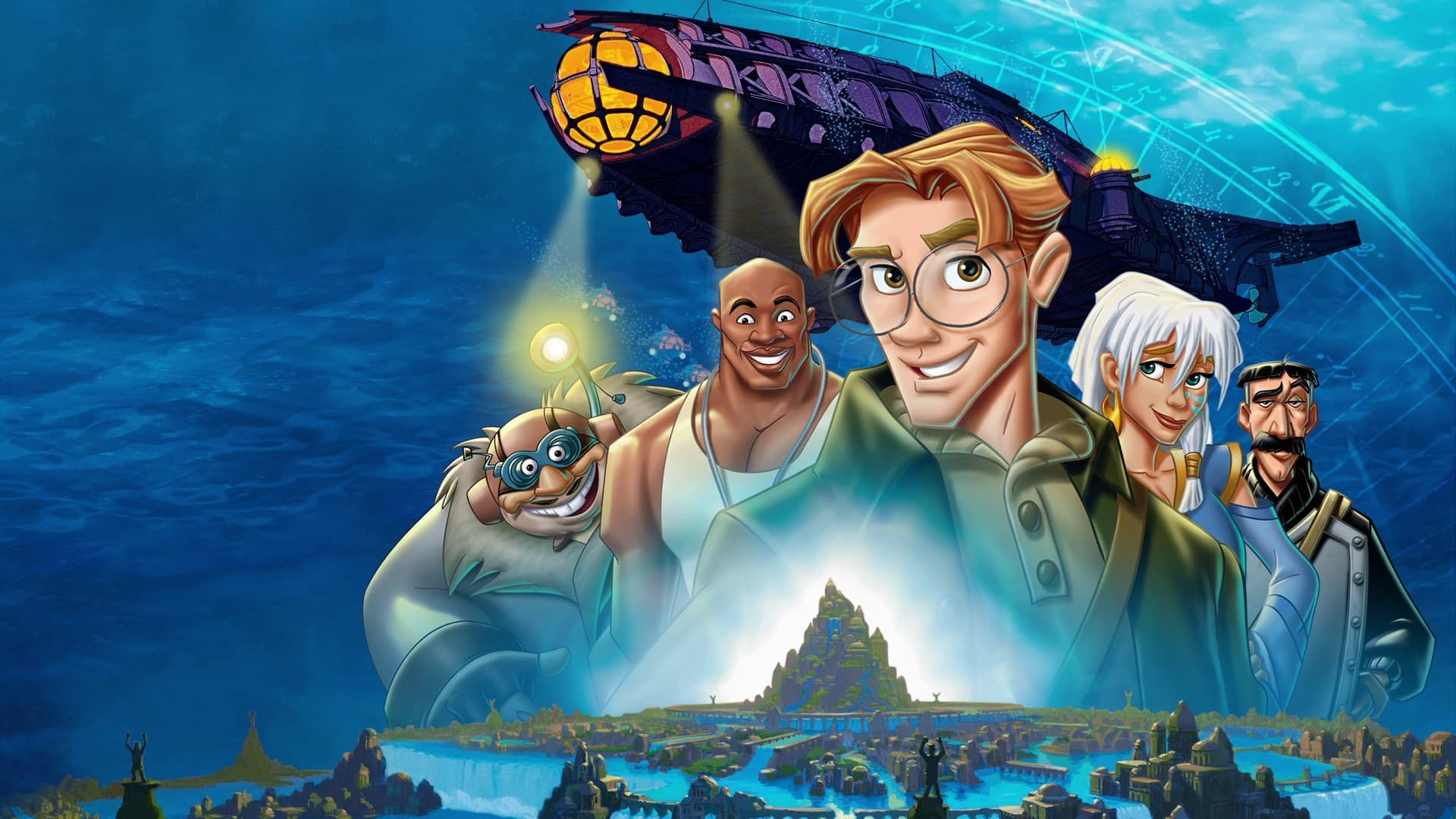

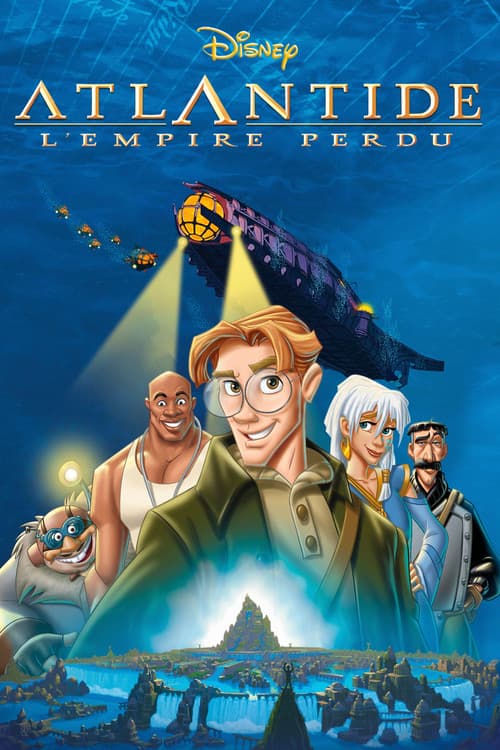
Atlantis: The Lost Empire
Does this age rating seem accurate to you?
Detailed parental analysis
Atlantis, the Lost Empire is an adventure film with a distinctly dark and tense atmosphere, far closer to action cinema for adults than to traditional family animation. The plot follows an awkward young linguist who joins a secret expedition in search of the sunken continent of Atlantis, where he makes a discovery that exceeds all expectations. The film is clearly aimed at older children, pre-teens and teenagers, and will disappoint or unsettle younger children accustomed to sung and lighthearted Disney productions.
Violence
Violence is the most prominent feature of this film and alone justifies genuine parental watchfulness. From the opening minutes, a gigantic sea monster destroys a submarine and causes the deaths of nearly all members of a crew of two hundred people, a scene whose scale is clearly designed to make an impression. Direct physical violence is present throughout the narrative: violent punches inflicted on an elderly king, aerial combat with firearms, machine guns, electrical discharges and vehicle explosions. Two scenes contain visible blood, extremely rare in Disney animation. The king's death is explicit, presented as internal bleeding, and accompanied by a sober but emotionally charged funeral ceremony. The violence is not gratuitous: it serves dramatic tension and a clear moral message about greed and exploitation. This does not diminish it in the eyes of a young child, who lacks the narrative tools to contextualise it.
Underlying Values
The film constructs a solid and coherent structural argument around several axes. Greed is depicted as destructive on the scale of an entire civilisation, without ambiguity: the antagonist sacrifices human and cultural lives for personal profit. The danger of weaponising natural energy points to a readable critique of armament and military-industrial logic. In counterpoint, the film strongly valorises personal sacrifice, cultural transmission and the defence of one's people against predatory foreign forces. The main character embodies a form of discreet self-affirmation: confined to thankless tasks and despised by his peers, he finds his place not through force but through his intellectual abilities. This is an unusual hero model in the genre, and an interesting pedagogical starting point.
Social Themes
Cultural preservation is a central theme treated with genuine depth: the Atlanteans have lost their language, their writing, their origins, without even realising it, which gives the film a melancholic dimension about the erasure of cultures under external pressure. The parallel with actual colonial dynamics, though never explicitly stated, is sufficiently readable for an attentive teenager to perceive it. Criticism of the military use of natural resources and archaeological plunder in the name of science or profit further enriches this subtext.
Parental and Family Portrayals
The prologue shows a mother torn from her daughter during the cataclysm that founded Atlantis, a brief scene but visually violent and emotionally ambiguous for young viewers who lack immediate context. The king is a caring but weakened parental figure, whose death marks a strong emotional turning point in the narrative. Adult authority figures are broadly presented as failing or corrupt, with the notable exception of the main character and a few team members, which reinforces the logic of a narrative carried by a younger generation forced to remedy the failures of their elders.
Strengths
The film stands in sharp contrast to contemporary Disney production through its refusal of songs, its sustained pace and its visual universe inspired by early twentieth-century illustration, with cohesive and ambitious artistic direction. The characterisation of the expedition's secondary characters is remarkable: each possesses a personality, skill set and personal arc, which gives the narrative a texture rare in the genre. The construction of the hero as an intellectual character, passionate and clumsy linguist, represents a welcome departure from the physically dominant protagonist model. The film also raises questions about cultural identity, memory loss and scientific legitimacy in the face of a people's endogenous knowledge, subjects that open real discussions with teenagers.
Age recommendation and discussion points
The film is not recommended for children under 8 years old due to visual violence, the explicit death of characters and anxiety-inducing scenes from the prologue onwards. From 8 or 9 years old, it is accessible with parental accompaniment, and fully appropriate from 10 years old for undisturbed viewing. Two angles of discussion merit being addressed after the film: why do explorers who arrive with good intentions end up endangering what they wanted to discover, and what does it mean to lose one's language and origins without even realising it.
Synopsis
A young linguist named Milo Thatch joins an intrepid group of explorers to find the mysterious lost continent of Atlantis.
About this title
- Format
- Feature film
- Year
- 2001
- Runtime
- 1h 35m
- Countries
- United States of America
- Original language
- EN
- Directed by
- Gary Trousdale, Kirk Wise
- Main cast
- Michael J. Fox, Cree Summer, James Garner, Claudia Christian, Corey Burton, Phil Morris, Jacqueline Obradors, Don Novello, Jim Varney, Florence Stanley
- Studios
- Walt Disney Pictures, Walt Disney Feature Animation