
Assassination Classroom the Movie: Our Time
劇場版「暗殺教室」みんなの時間
Does this age rating seem accurate to you?
Detailed parental analysis
Assassination Classroom: Our Time is an action comedy tinged with emotion, adapted from the manga and animated series of the same name, in which a class of students considered to be underachievers is tasked with assassinating their extraterrestrial teacher before the end of the school year. The atmosphere blends absurd humour, stylised action sequences and genuinely touching moments about self-confidence and self-improvement. The film is aimed primarily at teenagers and young adults already familiar with the franchise, although newcomers may find something to enjoy in it.
Violence
Violence is omnipresent in the very structure of the narrative, since the plot rests on repeated assassination attempts. It is, however, treated largely on a comic and cartoonish register: failures are played for laughs, confrontations are stylised rather than realistic, and blood, when it appears, remains discreet and minimally graphic. This humorous distancing prevents the film from tipping into darkness, but it deserves to be discussed with a younger child, as it normalises the idea of killing as a comic device and as a legitimate objective for the characters.
Underlying Values
The film carries solid and clearly affirmed structural values: perseverance in the face of academic and social failure, possible redemption for those sidelined by the system, and the confidence that a benevolent adult can transform marginalised students. As a counterpoint, the narrative explicitly criticises academic elitism and the hierarchy between high and low achievers, making it interesting material for discussion about one's relationship with school and personal worth. The figure of the teacher embodies a demanding but profoundly humanistic pedagogical ideal, even wrapped in total narrative absurdity.
Discrimination
The film explicitly depicts an elitist school system that relegates struggling students to a stigmatised class, treated as inferior by the institution and by other students. This treatment is not neutral: it is denounced as unjust and constitutes the emotional driving force of the narrative. It is a concrete angle for discussing with a teenager school bullying, hierarchy among students and the way institutions can lock individuals into boxes.
Language
The language contains some mild profanities, consistent with the register of the original animated series. A character's nickname incorporates the English term 'bitch', which may be surprising in a film aimed at a teenage audience but remains isolated and not promoted as a model of language.
Strengths
The film succeeds in what few works of its kind manage to do: use an absurd premise to carry a sincere message about pedagogical confidence and the worth of students whom school abandons. The writing skilfully balances the comic register and moments of genuine emotion, without one overwhelming the other. For a teenager struggling academically or who feels sidelined, the narrative can have real and positive resonance. The franchise also offers a gateway into manga and anime culture for parents wishing to share this universe with their child.
Age recommendation and discussion points
The film is suitable from age 12 onwards, an age at which teenagers can fully appreciate the humour, emotion and criticism of the school system without being unsettled by assassination themes treated in comic mode. Two angles of discussion are worth opening after viewing: why do we find it funny to see children trying to kill their teacher, and what does this say about our relationship with school authority? And more directly: does the school you attend treat all students the same way?
Synopsis
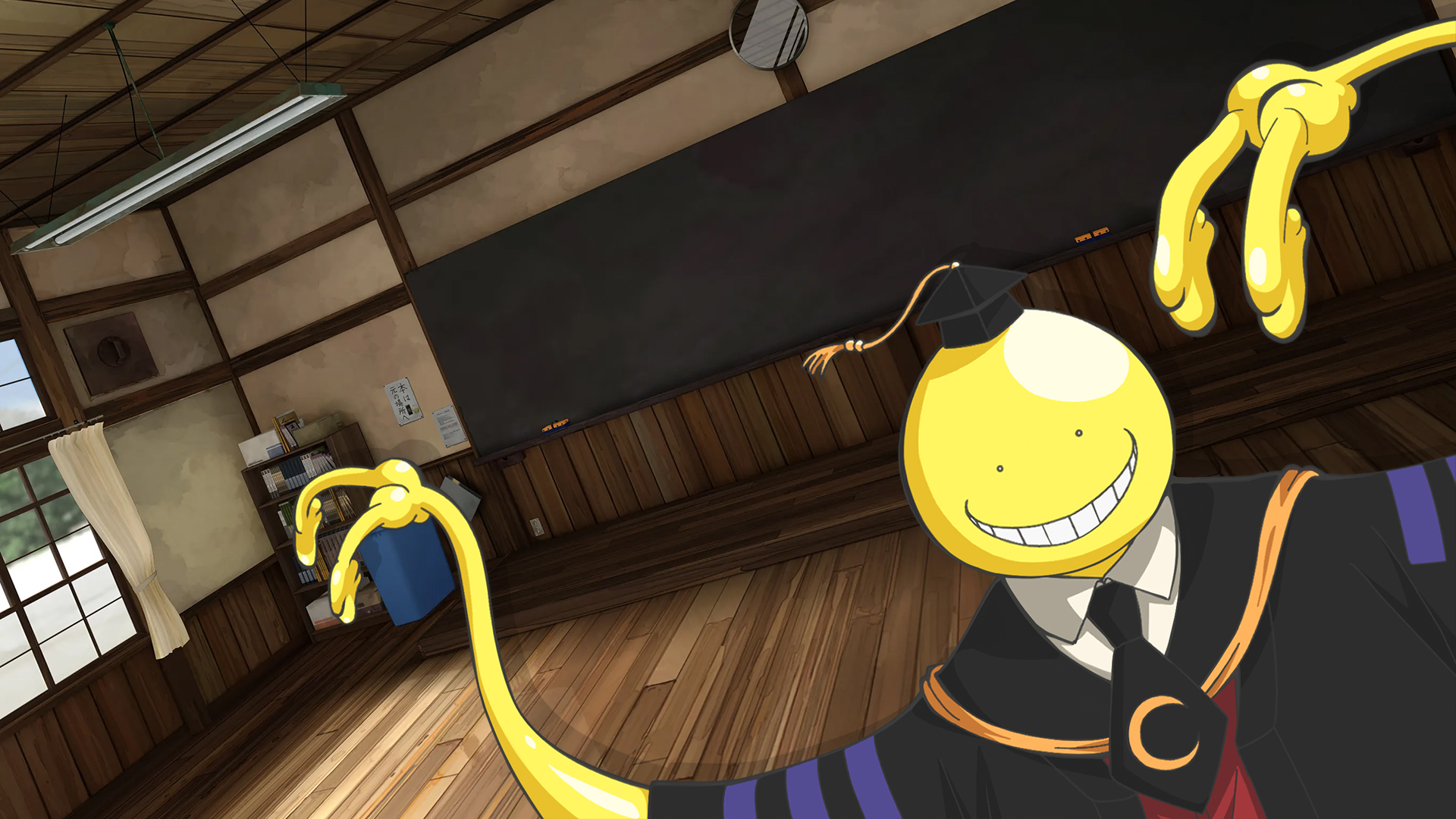
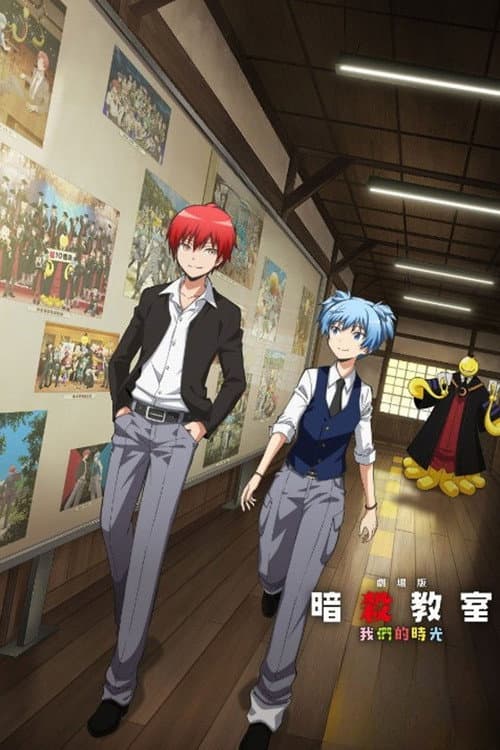
United by a common mission to eliminate their teacher, Koro-sensei, an alien creature with phenomenal strength, join Nagisa and his Class 3-E classmates in brand-new adventures.
About this title
- Format
- Feature film
- Year
- 2026
- Countries
- Japan
- Original language
- JA
- Directed by
- Masaki Kitamura
- Main cast
- Jun Fukuyama, Tomokazu Sugita, Shizuka Itoh, Mai Fuchigami, Nobuhiko Okamoto, Aya Suzaki, Ayaka Suwa, Chie Matsuura, Takahiro Mizushima, Eiji Miyashita
- Studios
- Shueisha, Lerche
Content barometer
- Violence2/5Moderate
- Fear1/5Mild
- Sexuality0/5None
- Language2/5Moderate
- Narrative complexity0/5Simple
- Adult themes0/5None
Watch-outs
- Bullying
- Strong language
- Mockery
- Violence