
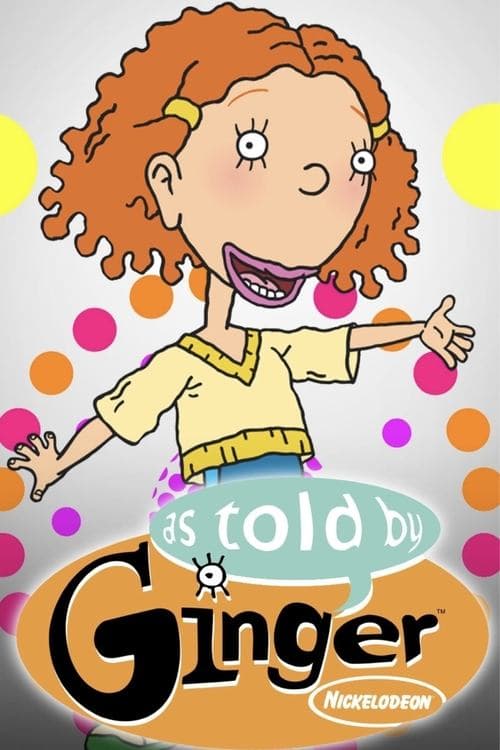
As Told by Ginger
Does this age rating seem accurate to you?
Detailed parental analysis
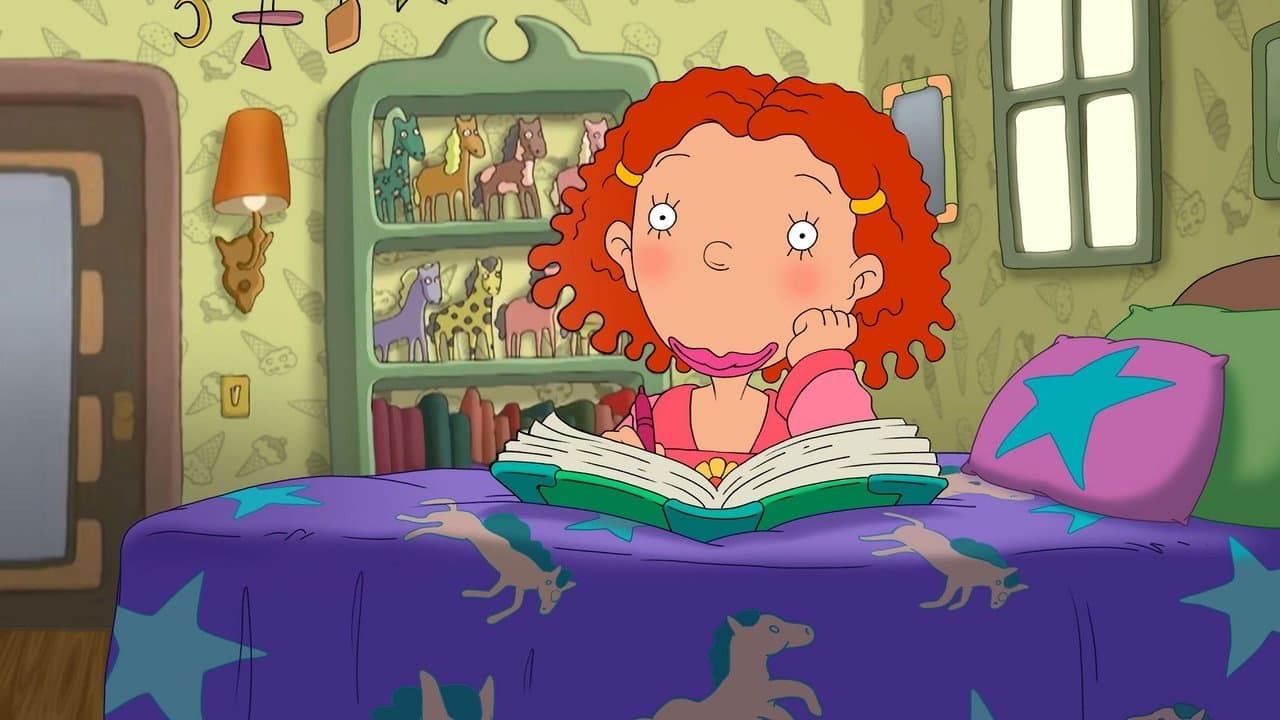
As Told by Ginger is an American animated series with a bittersweet tone, blending lightness with moments of genuine emotion. It follows Ginger, an ordinary teenager navigating between her longtime group of friends and her first encounters with the world of popularity at middle school. The series is aimed primarily at pre-teens and teenagers, with an emotional maturity that sets it clearly apart from conventional children's productions.
Underlying Values
The series constructs its narrative architecture around a central and coherent message: remaining true to oneself is worth more than bending to the demands of popularity. This message is embodied in a concrete and repeated manner, never descending into artificial moralising. The unconditional friendship between the three protagonists is presented as an emotional anchor more solid than social approval. The series neither glorifies academic performance nor physical appearance as passports to happiness, which is relatively rare in the genre. The whole forms an ethic of everyday life that pre-teens can easily make their own.
Parental and Family Portrayals
Ginger's family configuration deserves particular attention. Her father is absent and largely absent from her daily life, a theme treated with a certain emotional realism. Her mother, by contrast, is portrayed as a positive role model: she raises her children alone whilst working, without the series turning her into a pitiable figure of sacrifice or failure. This dual image, an absent father and a competent and loving mother, reflects a family reality that many children will recognise. It is a good starting point for a conversation about single-parent families and what that means for a developing child.
Social Themes
Several episodes address social issues with unusual depth for animation aimed at young people. One episode deals with depression in a sufficiently nuanced way to have been praised as an example of responsible treatment of the subject. Another episode presents a situation where a poem written by Ginger is interpreted by adults as a possible expression of suicidal ideation, which allows the series to explore both artistic sensitivity, institutional over-interpretation and communication between young people and adults. Death is also addressed in an episode where a secondary character, an elderly woman, disappears after befriending Ginger's brother. These subjects are treated without sensationalism, but they require a minimum of emotional maturity from the young viewer.
Discrimination
An African-American character, Miranda, occupies the role of the popular and condescending girl. The series gives her enough depth to prevent the stereotype from closing in on itself, but the overlap between this role of antagonist and this ethnic identity is worth noting with a child attentive to representation.
Substances
One episode explicitly addresses Ginger's caffeine dependency, presented with a critical and humorous eye. The subject is minor in the overall economy of the series, but it provides a good starting point for discussing with a pre-teen the mechanisms of addiction, even to legal and commonplace substances.
Strengths
The series distinguishes itself through emotionally honest writing, which avoids overly neat resolutions and overly smooth characters. Ginger is neither a flawless heroine nor an excessively tortured teenager: she doubts, she makes mistakes, she grows in recognisable ways. The group dynamics between teenage girls are captured with rare accuracy, particularly the jealousy between friends when romantic interests come into play. The series treats difficult subjects such as depression, grief and parental absence without instrumentalising them or resolving them artificially, which gives it genuine educational and emotional value.
Age recommendation and discussion points
The series is suitable from age 9 or 10 for sensitive and mature children, and is fully appropriate from age 11 or 12 onwards for relaxed viewing. Two areas of discussion are worth exploring after the most intense episodes: why Ginger feels the need to be popular despite her values, and how to react when an adult misinterprets what you have written or felt.
Synopsis
As Told by Ginger focuses on middle schooler Ginger Foutley who, with her friends, tries to become more than a social geek.
About this title
- Format
- TV series
- Year
- 2000
- Runtime
- 24m
- Countries
- United States of America
- Original language
- EN
- Directed by
- Emily Kapnek, Kate Boutilier, Eryk Casemiro
- Main cast
- Melissa Disney, Aspen Miller, Liz Georges, Kenn Michael, Jeannie Elias, Tress MacNeille, Laraine Newman, Cree Summer, Kath Soucie, Jackie Harris Greenberg
- Studios
- Klasky-Csupo, Nickelodeon Animation Studio
Content barometer
- Violence0/5None
- Fear1/5Mild
- Sexuality0/5None
- Language1/5Mild
- Narrative complexity1/5Accessible
- Adult themes1/5Mild
Values conveyed
- Friendship
- Acceptance of difference
- Autonomy
- resilience
- empathy
- self esteem